

More news on this day
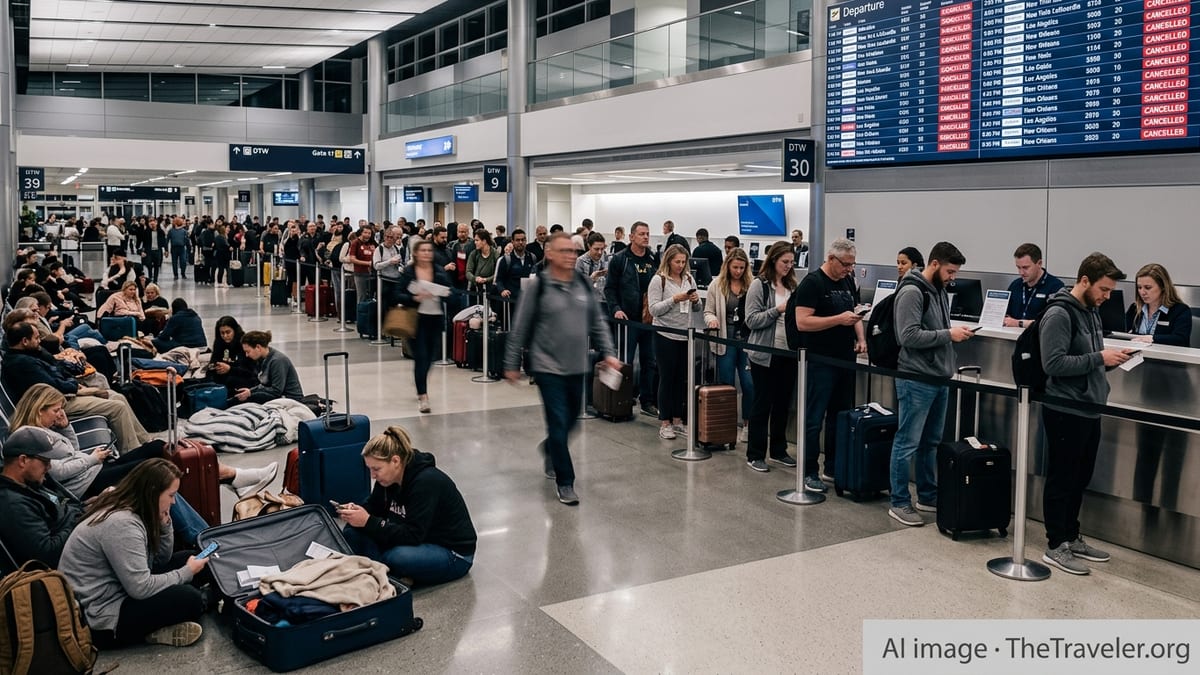
Thousands of travelers moving through Detroit Metropolitan Wayne County Airport this week have faced abrupt cancellations, snarled connections and overnight strandings as a powerful late winter storm system and subsequent operational disruptions rippled across the national air network, wiping out key departures to New York LaGuardia, Los Angeles and New Orleans and leaving carefully planned trips in disarray.
Get the latest news straight to your inbox!
Storm System Triggers Nationwide Disruptions
The latest wave of disruptions at Detroit Metro comes as airlines across the United States continue to recover from a sprawling March storm complex that buried parts of the Midwest and Great Lakes under heavy snow and brought high winds and severe thunderstorms to the East Coast. Publicly available weather analyses describe a multi day system that intensified over the central United States before sweeping through major aviation hubs from Chicago to New York, forcing widespread delays and cancellations.
National flight tracking data for the first half of the week show thousands of U.S. flights cancelled or heavily delayed, with Detroit repeatedly appearing among the harder hit airports. Airlines reduced schedules preemptively on some routes, then struggled to reposition crews and aircraft as conditions evolved, producing rolling cancellations that continued even after the worst of the weather had passed.
For Detroit, a critical connecting point between the Upper Midwest and the East and West Coasts, the timing proved particularly disruptive. Many flights that did manage to depart encountered arrival ground stops or congestion at downline airports affected by the same weather system, further complicating recovery.
Detroit Departures to Key Cities Abruptly Wiped From Boards
On peak disruption days, travelers at Detroit Metro reported seeing multiple banks of departures vanish from departure boards within hours, including morning and evening flights to New York LaGuardia, Los Angeles International and New Orleans. Reports from passengers on social media and travel forums describe overnight cancellations issued with little lead time, sometimes after boarding times had already shifted several times.
Passengers bound for LaGuardia detailed itineraries that collapsed mid trip when Detroit based connections were cancelled, cutting off one of the primary Midwest links to New York’s close in business airport. Travelers heading onward to Los Angeles and New Orleans shared similar accounts of last minute text alerts and app notifications informing them that their Detroit departures had been scrubbed, often without same day alternatives.
Public airline status dashboards on affected days showed slim or nonexistent remaining options on the Detroit to New York, Detroit to Los Angeles and Detroit to New Orleans corridors as carriers attempted to consolidate remaining demand onto a reduced number of flights. Seats on the few services still operating were quickly booked, leaving many travelers no choice but to wait, reroute through other hubs or abandon trips altogether.
Stranded Passengers Confront Packed Gates and Sold Out Hotels
Firsthand accounts from Detroit Metro this week describe concourses filled with passengers sleeping in chairs and along walls after repeated cancellations. Several travelers reported that rebooked flights from Detroit to East Coast and West Coast cities were subsequently delayed or cancelled again, extending what were meant to be short connections into multiday ordeals.
Comments shared on passenger discussion boards referenced long lines at airline service counters stretching deep into the terminal as customers tried to secure new itineraries, meal vouchers or lodging. Some travelers noted that by late evening, hotels near the airport were reported sold out, forcing passengers to remain in the terminal overnight while awaiting newly assigned flights.
Others described attempting to salvage disrupted trips by piecing together complicated reroutes, sometimes traveling by car to alternate airports in neighboring states when no viable options remained out of Detroit. In several cases, travelers who had planned straightforward itineraries to LaGuardia or Los Angeles through Detroit ended up flying into entirely different airports or cancelling their journeys outright.
Ripple Effects on LaGuardia, Los Angeles and New Orleans Operations
The problems in Detroit added pressure to airports already managing their own weather and congestion challenges. New York LaGuardia, which regularly operates near capacity, has been contending with storm related delays and traffic management initiatives that slow arrivals and departures. When Detroit based feeder flights were cancelled, it further disrupted carefully balanced schedules for airlines that rely on connecting traffic from the Midwest.
Los Angeles International, a major coastal gateway, has simultaneously been navigating unrelated infrastructure projects and operational constraints, leaving limited room in schedules to absorb a surge of reaccommodated passengers from disrupted Midwest flights. Travelers attempting to reach Southern California from Detroit during the height of the disruptions reported rebookings that required additional connections or forced them onto flights days later than originally planned.
New Orleans, a popular destination for leisure and convention travel at this time of year, also felt the impact of cancellations on the Detroit route. With aircraft and crews delayed or displaced elsewhere in the network, flights into the city from the Upper Midwest became less predictable. Some travelers reported missing events and cruises after Detroit based cancellations left them without timely alternatives into New Orleans.
What Travelers Can Expect in the Coming Days
Airlines are gradually restoring schedules as the March storm system moves away from major population centers, but operational data and public airline advisories indicate that residual disruptions may continue for several days. Crews that reached federally mandated duty limits during the worst of the storm related chaos must reset before returning to service, which can constrain staffing and keep cancellation rates above normal even under clear skies.
Industry observers note that Detroit’s role as a major connecting hub means it can take longer for operations there to normalize compared with smaller point to point airports. Travelers with upcoming flights touching Detroit, LaGuardia, Los Angeles or New Orleans are being urged in public advisories to monitor their reservations frequently, enable airline app notifications and consider allowing extra time for connections.
For those already en route, published guidance from airlines and travel experts emphasizes knowing the details of each carrier’s rebooking and compensation policies, keeping receipts for unexpected expenses and documenting communications and itinerary changes. While the worst of the weather has passed, the aftershocks for Detroit based flyers and those connecting onward to New York, Los Angeles and New Orleans are likely to be felt through the week as carriers work to realign aircraft, crews and schedules.