

More news on this day
Travelers passing through Detroit Metropolitan Wayne County Airport faced another difficult day as flight-tracking snapshots showed 106 delayed departures and arrivals and four cancellations, disrupting services on Delta Air Lines, regional partners SkyWest and Endeavor Air, low-cost carrier Spirit Airlines and several other operators on routes to Kansas City, Nashville, Cleveland and additional U.S. cities.
Get the latest news straight to your inbox!
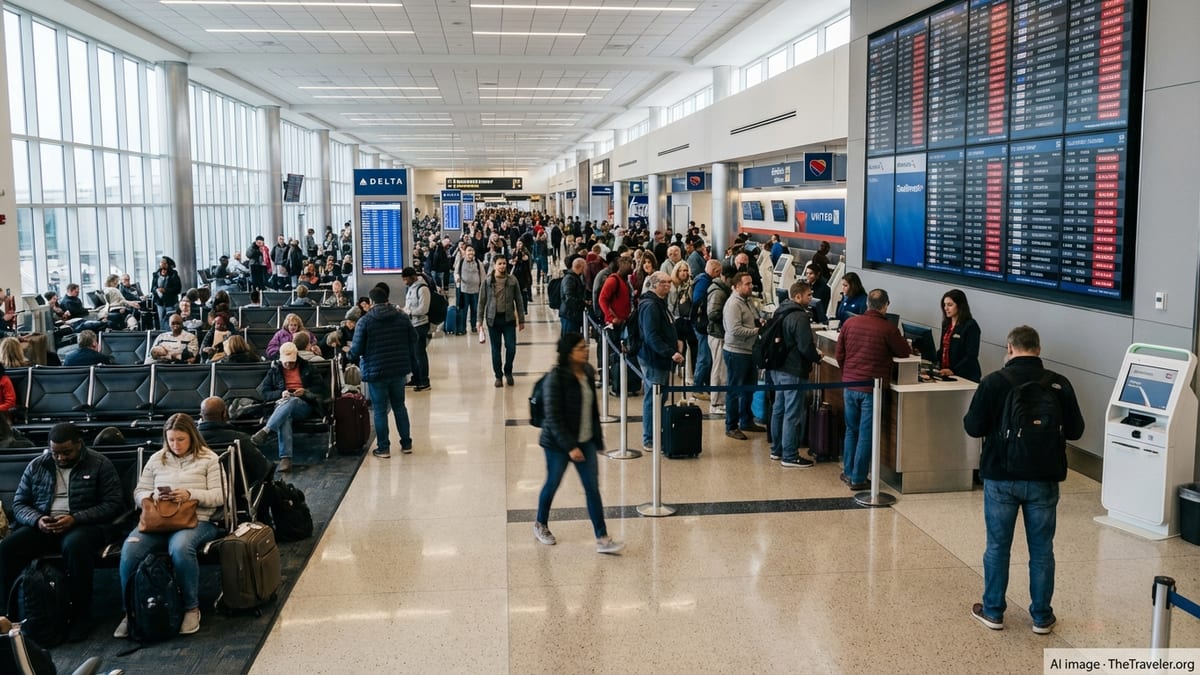
Network Strain Centers on Detroit Metro
Publicly available flight-tracking data for the latest operational window indicates that Detroit Metro has become a fresh pressure point in a wider pattern of disruption across the United States. The airport’s tally of 106 delayed flights alongside four cancellations placed it among the more heavily affected midwestern hubs, with irregular operations concentrated in busy morning and late afternoon banks.
The impact was most visible on short and medium haul domestic routes, where even modest delays tended to cascade through airline schedules. Detroit functions as both a major connecting hub for Delta and a focus city for several other carriers, so aircraft and crews arriving late from one region frequently departed late to the next, adding to congestion on the airfield and in nearby airspace.
Operational maps and timetable snapshots show the disruption rippling through a mix of business and leisure markets. Flights linking Detroit with other midcontinent and eastern cities shouldered much of the strain, as carriers attempted to rebalance rotations while keeping core frequencies intact during a busy early April travel period.
Delta, SkyWest, Endeavor and Spirit Among Most Affected
According to aggregated performance feeds, Delta Air Lines shouldered a significant share of Detroit’s delays, reflecting the carrier’s large presence at the airport and its dependence on tight connection windows. Delta’s mainline network, together with regional partners SkyWest and Endeavor Air, accounted for a substantial proportion of the late-running departures in and out of the Michigan hub.
SkyWest and Endeavor operate many of the shorter regional sectors under major airline brands, and disruption on these feeder routes can quickly limit options for connecting passengers. When one leg runs late, the next rotation for that aircraft and crew often departs behind schedule as well, particularly when spare capacity is already thin.
Low cost operator Spirit Airlines also appeared prominently in delay metrics from Detroit, mirroring patterns seen at other U.S. airports in recent days. Budget carriers tend to run high aircraft utilization with limited schedule slack, which can magnify the effect of each disruption. Once a morning departure is delayed, the same aircraft may complete the day several hours behind plan unless recovered by schedule adjustments.
Routes to Kansas City, Nashville, Cleveland and Beyond Disrupted
Route-level snapshots highlight irregular operations on services linking Detroit with Kansas City, Nashville and Cleveland, alongside a cluster of other midwestern and southern destinations. These city pairs are typically served multiple times per day, but even small delays can disrupt onward connections when itineraries are built around short connection windows.
Nashville and Kansas City have both featured in delay tallies across the broader U.S. network in recent weeks, and the latest figures suggest that Detroit fed into that trend. Late arrivals into those airports from Michigan reduced turnaround buffers, while departures back to Detroit often left behind schedule as carriers worked through congestion and crew duty-time limits.
Cleveland and other regional markets around the Great Lakes also experienced knock-on effects as aircraft arriving late from Detroit compressed ground times. When combined with seasonal weather variability and busy holiday-adjacent travel, this has left some passengers facing missed connections and rebookings onto later flights or alternative routings.
Part of a Wider Pattern of Early April Disruptions
The situation in Detroit aligns with a broader picture of elevated disruption across U.S. airports in early April. Recent reporting on nationwide operations has documented days with several thousand delayed flights and close to one hundred cancellations, affecting hubs such as Atlanta, Chicago, Miami, Los Angeles, New York area airports and Newark, along with secondary and regional fields.
In those broader snapshots, Delta, Spirit, United, Southwest, American and Alaska have all featured among the most impacted large carriers, while regional partners and low cost airlines have also faced operational headwinds. Factors cited in public coverage include unsettled spring weather, lingering congestion from the Easter travel period and tight crew and aircraft scheduling, all of which reduce resilience when irregular operations occur.
Detroit’s current totals, though smaller in scale than the largest coastal and southern hubs, are consistent with this pattern of strain radiating through interconnected networks. When several large airports experience pressure within the same multi day period, secondary hubs and focus cities can see their own performance metrics deteriorate as delayed aircraft and crews move through the system.
Passengers Urged to Monitor Flights and Consider Backup Plans
Consumer advisories referencing the latest disruption trends emphasize the importance for passengers of checking flight status frequently on the day of travel. Airline mobile apps and airport information displays typically offer the most up to date view of departure and arrival times, as well as information on gate changes and aircraft swaps that can accompany broader bouts of irregular operations.
Travel guidance for days with elevated delays often recommends allowing extra connection time, particularly when itineraries route through multiple busy hubs. Passengers with tight layovers in cities such as Detroit, Atlanta or Chicago may face higher risk of missed onward flights if upstream segments are already running late by the time they depart.
Advisories also suggest that travelers keep digital copies of boarding passes and confirmation numbers accessible, which can help speed rebooking at kiosks or via customer service channels in the event of cancellations. With disruption currently spread across both full service and low cost carriers, a flexible approach to routing and departure time can sometimes make the difference between same day arrival and an unplanned overnight stay.