

More news on this day
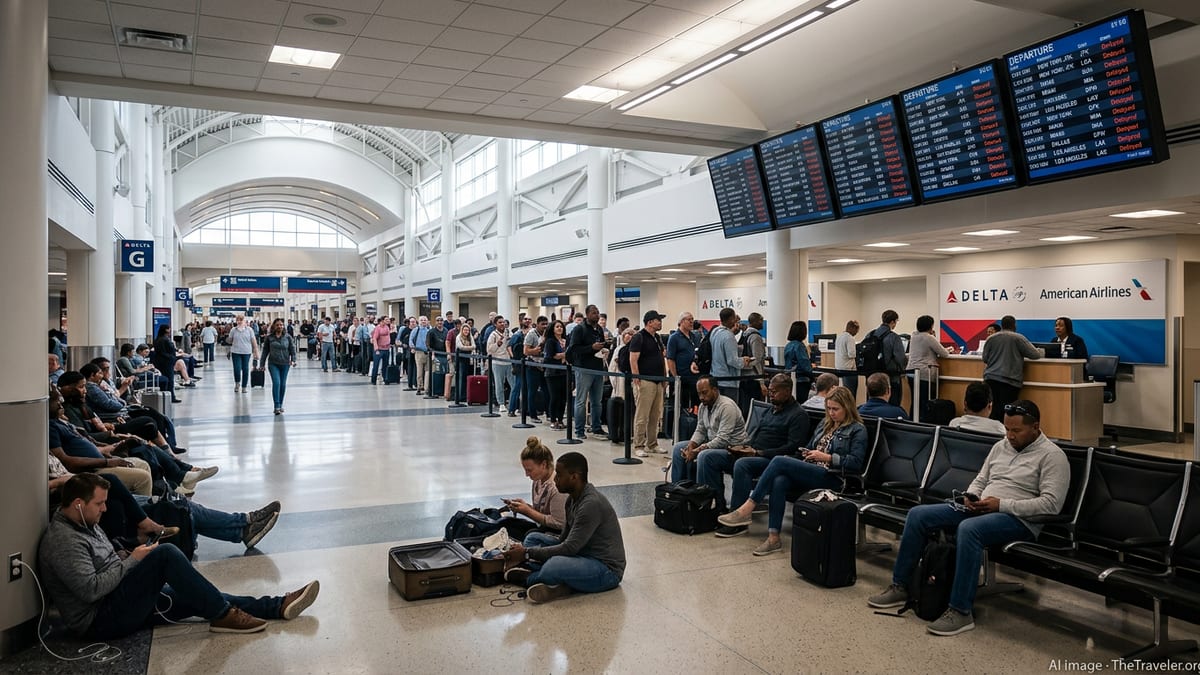
Hundreds of passengers at Detroit Metropolitan Wayne County Airport faced extended waits and missed connections on April 3 as flight-tracking data showed 104 delays and 13 cancellations affecting services from Delta Air Lines, Spirit Airlines, SkyWest, Envoy Air and several other carriers.
Get the latest news straight to your inbox!
Fresh Operational Strains Converge at Key Midwest Hub
The latest disruption at Detroit Metro comes during a busy spring travel period when airlines are already contending with tight schedules, high demand and constrained staffing on some routes. Publicly available tracking data for April 3 indicates that a mix of mainline and regional flights serving the airport encountered schedule problems, with departure and arrival times pushed back across much of the day.
Delta Air Lines, which maintains a major hub operation at Detroit, appears prominently in the list of affected services, alongside ultra low cost carrier Spirit Airlines and regional operators such as SkyWest and Envoy Air that fly under big-airline brands. While the total number of cancellations at Detroit remains modest relative to the airport’s overall daily schedule, the combined count of 104 delays has had a broad ripple effect on passengers connecting through the hub.
Tracking platforms also show that some Delta and regional flights into Detroit were scrubbed outright, including services linking the airport with other major centers such as Atlanta and Chicago. Even a limited number of cancellations can quickly compound delays across a hub-and-spoke network, as aircraft and crews fail to arrive in position for later departures.
Airport status pages for Detroit on April 3 show intermittent clusters of late departures rather than a uniform shutdown, suggesting that the disruption is severe enough to inconvenience hundreds of travelers but not on the scale of a full operational meltdown.
Multiple Airlines, One Bottleneck for Connecting Passengers
The involvement of several airlines at once has intensified the strain for travelers who rely on Detroit for onward connections. Delta’s large schedule at the McNamara Terminal, Spirit’s presence in the North Terminal, and regional partners operating for mainline carriers combine to funnel a significant volume of domestic and cross-border traffic through the airport each day.
When flights on Delta, Spirit, SkyWest and Envoy Air all encounter issues on the same day, the number of disrupted itineraries rises quickly. A delayed regional arrival operated by SkyWest or Envoy can cause travelers to miss onward Delta flights, while a late-running Spirit departure can leave point-to-point passengers and their checked bags out of position for ground transport or cruise departures.
Observers note that Detroit’s role as both a connection point and an origin-and-destination market magnifies the visible impact of irregular operations. Travelers starting journeys in Detroit face longer-than-expected waits at gates, while those connecting from other cities may find themselves sprinting between terminals or rebooking entirely when tight layovers evaporate due to schedule slippage.
Published coverage of this week’s broader United States flight disruptions indicates that Detroit’s difficulties are part of a national pattern, with hundreds of cancellations and several thousand delays recorded across the country on April 3. That backdrop suggests that constraints on aircraft and crew availability elsewhere in the network may be feeding into Detroit’s problems.
Weather, Network Congestion and Tight Crewing in the Spotlight
Available weather observations for Detroit on Friday afternoon point to relatively benign local conditions, with scattered clouds and mild winds reported at the field. That has prompted focus on other common drivers of disruption, including earlier weather systems in other parts of the country, national airspace congestion and tight crewing that leaves little room for recovery when one flight goes off schedule.
Federal transportation statistics show that carriers such as SkyWest and Envoy Air typically record a small but persistent share of cancellations and delays tied to broader system issues rather than severe local storms. Regional operations can be especially vulnerable when aircraft are scheduled to fly many short legs per day, since a single early delay can cascade through the rest of the rotation.
For Detroit, even a modest number of upstream issues can translate into a crowded departure board. If an incoming Delta or Spirit flight arrives late from another hub affected by congestion, the outbound segment from Detroit may also push back, particularly if crew duty-time limits are approaching. Once that pattern repeats across dozens of flights, the day’s operation can become difficult to normalize before late evening.
Industry data from recent months also highlight how quickly national disruption can build. On several busy days this spring, tracking services have logged thousands of delayed flights and several hundred cancellations across the United States, with major carriers and low-cost airlines alike experiencing pressure on their schedules.
What Travelers at Detroit Are Experiencing
Inside the terminals, the cumulative effect of 104 delays and 13 cancellations is visible in longer lines at service desks, crowded gate areas and heavier use of airport seating and charging stations. Many passengers whose flights are still operating are encountering rolling departure-time changes, with screens updating incrementally as aircraft and crews reposition.
For those whose flights have been canceled altogether, publicly available information suggests a mixed picture. Some travelers are being rebooked on later same-day departures or on alternative routings through other hubs, while others are facing overnight stays in Detroit when remaining seats for the day are already sold out. The situation can be particularly challenging for families and travelers connecting to international long-haul flights, cruises or time-sensitive events.
Because this disruption is concentrated at a single hub rather than driven by a visible local weather emergency, some passengers may struggle to understand why their particular flight is affected while others nearby depart relatively on time. Industry experts frequently point to complex operational considerations, such as crew duty regulations and aircraft maintenance requirements, that can result in uneven impacts across an airline’s schedule.
Reports from other airports around the country on April 3 show similar patterns of pockets of disruption, suggesting that many of Detroit’s difficulties stem from its embedded role within broader airline networks rather than from an isolated, airport-specific failure.
Options and Rights for Affected Passengers
With delays and cancellations adding up, many travelers at Detroit are turning to airline mobile apps, websites and staffed counters to explore their options. Standard choices include same-day rebooking, alternative routing through different hubs, or shifting travel to the following day when seats become available. Some passengers also look to low-cost competitors if mainline flights appear heavily constrained.
Guidance from consumer advocates emphasizes that the remedies available can vary depending on whether an airline categorizes a disruption as within its control or as the result of external factors such as weather or air-traffic constraints. In more controllable situations, U.S. airlines may offer meal vouchers, hotel accommodations or partial refunds, while in cases attributed to broader system issues the assistance may be more limited.
Travelers are also encouraged to monitor Detroit Metro’s official channels and carrier notifications closely, since same-day schedule adjustments can open new options as aircraft and crews are reassigned. Early awareness of likely delays can help passengers adjust connecting ground transport, hotel check-in times and other downstream plans.
As the day’s operation at Detroit evolves, the pattern of 104 delays and 13 cancellations underscores how even a relatively contained set of schedule disruptions can affect hundreds of U.S. travelers when multiple airlines and regional partners rely on a single, high-traffic hub.