

More news on this day
Hundreds of passengers were left stranded at Dallas–Fort Worth International Airport as a fresh wave of delays and cancellations involving American Airlines, Delta Air Lines, Spirit Airlines, and United Airlines disrupted travel to and from major U.S. cities including Los Angeles, New York, and Chicago.
Get the latest news straight to your inbox!
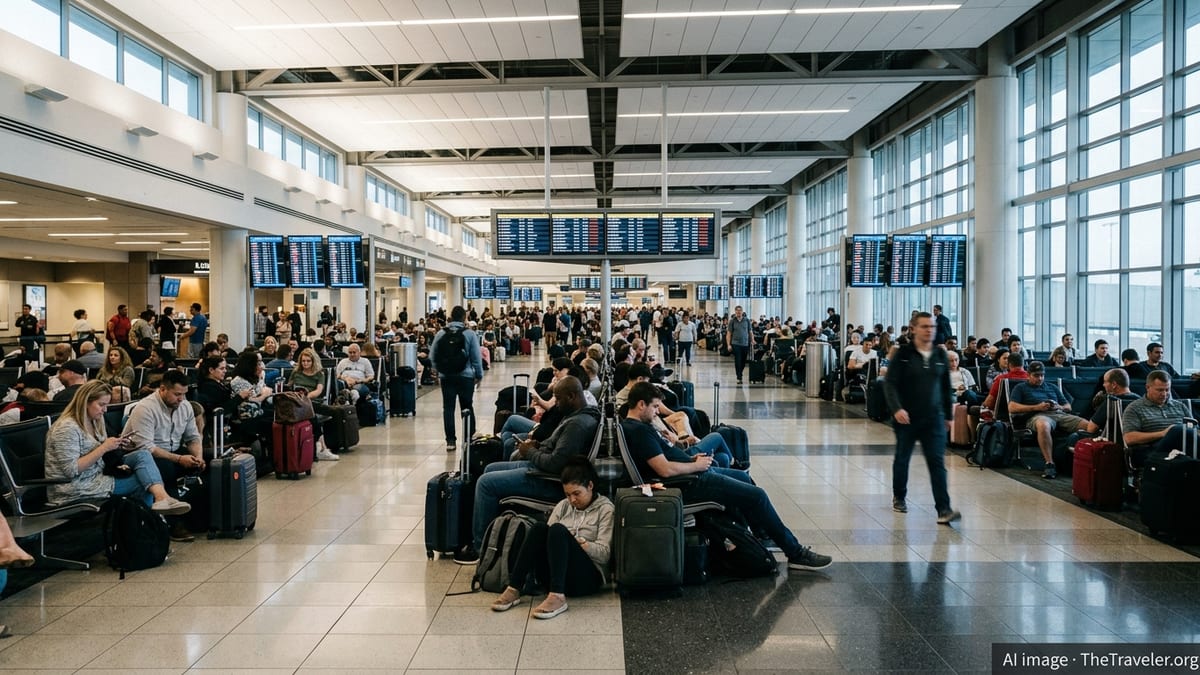
Chain Reaction of Disruptions at a Critical U.S. Hub
Publicly available flight-tracking data for the day show around 155 delayed departures and arrivals connected to Dallas–Fort Worth International Airport, with at least 10 outright cancellations affecting services operated by or marketed under American, Delta, Spirit, and United. The disruptions centered on Dallas but quickly rippled across the domestic network, as aircraft and crews scheduled to continue to other cities were forced out of position.
Dallas–Fort Worth is one of the busiest connecting hubs in the United States, and even a relatively contained operational problem can have an outsized impact. When multiple carriers are affected at the same time, relatively modest numbers of delayed or canceled flights can translate into hundreds of stranded travelers as missed connections accumulate and same-day rebooking options narrow.
Information compiled from flight status dashboards indicates that the delays stretched from short holds of 30 to 45 minutes to multi-hour waits in the terminal. While the numeric impact at DFW was lower than during major nationwide meltdowns seen in recent years, the concentration of disruptions across several leading airlines magnified the effect on passengers trying to reach large hubs such as Los Angeles, New York, and Chicago.
Knock-On Effects Across Los Angeles, New York, Chicago and Beyond
Because Dallas–Fort Worth functions as a key east–west and north–south connection point, irregular operations there quickly spread along high-traffic corridors. Flights linking DFW with Los Angeles International, New York–area airports, and Chicago O’Hare experienced rolling delays as inbound aircraft arrived late, crews approached legal duty limits, and departure slots needed to be reshuffled.
According to aggregated flight-status information, several cross-country services that were scheduled to operate through DFW departed hours behind schedule, while others were canceled outright when turnaround times tightened and crew availability became a constraint. In practical terms, this meant that passengers bound for major hubs often found themselves stranded partway along their journey, particularly those relying on tight connections.
Reports from airline operations summaries and historic on-time performance records also show how quickly such patterns can compound. When a hub like Dallas experiences multiple waves of delay in a single operating day, flights later in the schedule become increasingly vulnerable, leaving travelers in distant cities waiting for aircraft that never arrive or arrive too late to complete their planned rotations.
Weather, Congestion and System Strain Behind the Latest Turmoil
Recent transportation analyses point to a familiar mix of causes behind disruption patterns at Dallas–Fort Worth and other large hubs: convective weather systems in North Texas, air-traffic flow constraints, and tightly wound schedules that leave little slack when conditions deteriorate. Past government reviews of severe-weather days in the region have highlighted how thunderstorms and associated warnings can force large numbers of cancellations and diversions in a short period, straining airport capacity and airline recovery plans.
Operational data compiled over recent seasons for major U.S. carriers indicate that American, Delta, Spirit, and United all face mounting pressure from dense summer and holiday schedules, with high aircraft utilization and limited room to absorb delays. Once departure banks at a hub like DFW begin to slip, connection times shrink or disappear, and crews can quickly reach regulatory duty limits, forcing further cancellations even after weather improves.
Industry observers note that the broader system is still adapting to strong travel demand combined with staffing gaps in areas such as air-traffic control and ground handling. In such an environment, a disruption affecting about 150 flights at a single large airport can produce a visible ripple effect across multiple time zones, particularly along heavily traveled routes linking Dallas with coastal gateways.
Passenger Strain Highlights Ongoing Reliability Concerns
Accounts shared on public forums in recent months describe travelers at Dallas–Fort Worth International Airport facing long customer-service lines, repeated rolling delays, and, in some cases, overnight stays when connections through the hub collapsed. These experiences mirror the latest wave of disruptions, with stranded passengers searching for scarce hotel rooms, vying for limited standby seats, or turning to alternate airports and competing carriers to complete their journeys.
Consumer-facing data tools maintained by the U.S. Department of Transportation show that, even outside of headline-grabbing meltdowns, major U.S. airlines regularly contend with significant delay volumes at large hubs such as Dallas, New York, Chicago, and Los Angeles. Public dashboards summarizing airline commitments emphasize rebooking, meal vouchers, and hotel accommodation in certain circumstances, but travelers frequently report confusion about what assistance is available when multiple carriers and weather-related factors are involved.
Advocacy groups and transportation analysts have used recent events to renew calls for clearer communication and more robust contingency planning, particularly at key connecting hubs. They argue that as travel demand remains strong, episodic but intense disruptions like those seen at Dallas–Fort Worth will continue to test airlines’ ability to move passengers efficiently across the national network.
Major Carriers Face Scrutiny as Peak Travel Periods Approach
The latest operational difficulties at Dallas–Fort Worth arrive against a backdrop of heightened attention on airline reliability. Published coverage over the last two years has detailed how large carriers have grappled with technology outages, staffing challenges, and severe weather events that triggered thousands of cancellations and left travelers stranded for days across the United States.
American Airlines, Delta Air Lines, Spirit Airlines, and United Airlines collectively operate a substantial share of domestic capacity through DFW and other large hubs, so any simultaneous disruption at Dallas has implications far beyond North Texas. Industry performance statistics indicate that even incremental improvements in turnaround buffers, staffing resilience, and aircraft allocation strategies can meaningfully reduce the number of passengers impacted when severe weather or airspace constraints arise.
As peak travel seasons approach, analysts expect airlines and airports to lean more heavily on real-time data tools and more flexible scheduling strategies to mitigate the effect of localized disruptions. For travelers, however, the most visible measure remains whether flights depart and arrive close to schedule. The episode that left hundreds of passengers stranded at Dallas–Fort Worth, and rippled outward to cities like Los Angeles, New York, and Chicago, underscores how vulnerable the interconnected system remains when a single hub’s operations start to fray.