

More news on this day
Hundreds of passengers across the United States are facing unexpected overnight stays and missed connections after delays to 160 flights and the cancellation of four services linked to Dallas–Fort Worth International Airport disrupted operations for American Airlines, Spirit, Frontier and other carriers.
Get the latest news straight to your inbox!
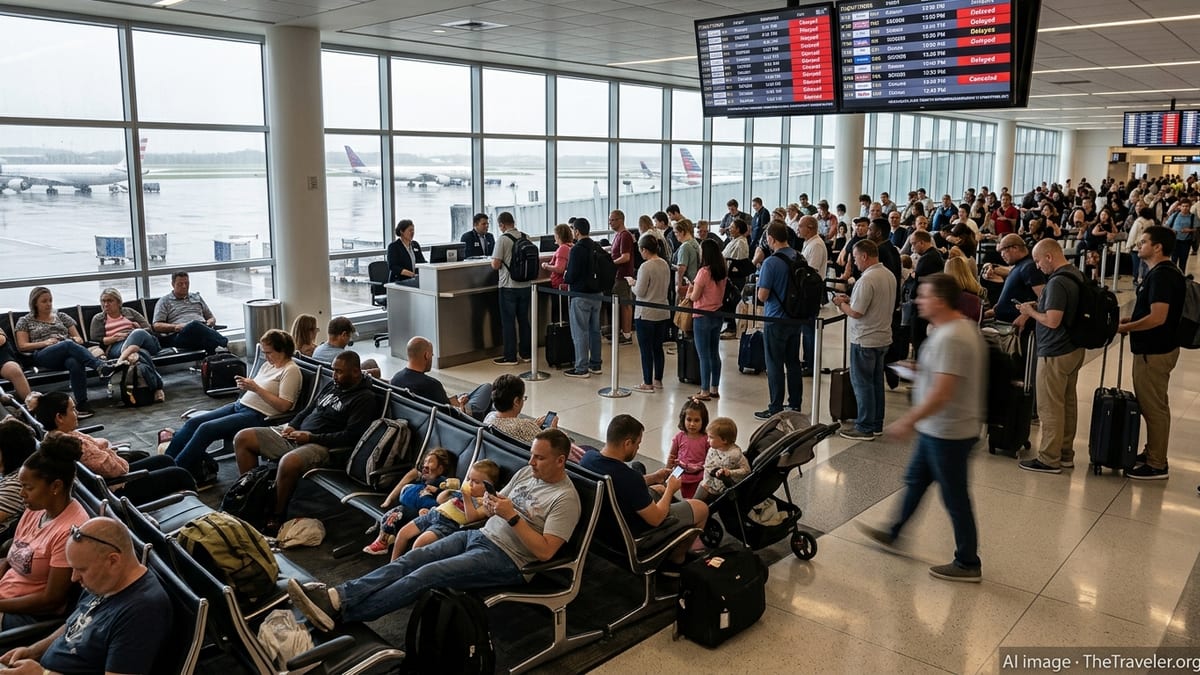
Delays at a Major Hub Trigger Nationwide Disruptions
Dallas–Fort Worth International Airport, one of the world’s busiest airline hubs, has again become a chokepoint for the U.S. air network as a wave of delays and a small number of cancellations cascades through airline schedules. Publicly available tracking data indicates that around 160 flights connected to the North Texas hub were delayed, with four outright cancellations, stranding and re-routing travelers not only in Dallas and Fort Worth but at airports across the country.
Reports indicate that the disruption coincides with unsettled spring weather patterns and ongoing operational pressures after a series of winter storms earlier in the season. As aircraft and crews run late into and out of DFW, knock-on effects are being felt in cities as far apart as Denver, Orlando and New York, with some passengers reporting long waits on the tarmac and crowded concourses as schedules slip further behind.
With DFW serving as the primary hub for American Airlines and an important destination or connection point for Spirit and Frontier, even a modest number of cancellations has had an outsized effect on travelers whose itineraries depend on tight banked connections through North Texas.
American, Spirit and Frontier Bear the Brunt
American Airlines, which bases a large share of its daily schedule at DFW, is experiencing the heaviest operational strain. According to flight-tracking snapshots and airline status boards, the majority of delayed services are tied to American’s complex web of domestic and international connections, leaving passengers in limbo as crews and aircraft arrive late from weather-affected regions.
Low-cost carriers Spirit and Frontier, which typically operate thinner schedules and depend heavily on high aircraft utilization, have been particularly vulnerable to schedule ripples. Delays on a single DFW rotation can quickly throw later departures out of sequence, forcing aircraft to arrive late at secondary airports and pushing late-evening departures toward or beyond curfew and staffing limits. Travelers connecting from these airlines onto other domestic or international services have reported missed onward flights and unexpected overnight stays.
Other U.S. carriers with a smaller presence in North Texas have also been touched by the disruption, largely through shared airspace congestion and gate constraints. Publicly available information shows regional operators and codeshare partners holding at outstations while they wait for gate availability or connecting traffic to stabilize in Dallas–Fort Worth.
Weather, Infrastructure and a Fragile Recovery
The latest delays follow a bruising winter for U.S. aviation, in which major storms and blizzards across multiple regions repeatedly forced airlines to trim schedules and reposition fleets. Analysts note that after a season of heavy disruption, aircraft and crew rotations remain susceptible to relatively minor weather events and infrastructure slowdowns at key hubs such as DFW.
In North Texas, recent federal documentation highlights ongoing airfield and navigation aid projects scheduled through early 2026, underscoring that portions of the airport’s infrastructure remain in transition. While these works are designed to improve long-term resilience, they can heighten operational complexity in the short term, narrowing margins when thunderstorms or low-visibility conditions move through the metro area.
Travel data specialists point out that when delays accumulate in a tightly timed bank of arrivals and departures, recovery is often slow. A delayed morning departure from Dallas–Fort Worth can disrupt multiple subsequent legs for the same aircraft and crew, turning a localized weather or equipment problem into a day-long challenge across several states.
Passengers Face Long Lines, Missed Events and Extra Costs
For travelers caught in the latest wave of disruption, the statistics translate into long queues, missed occasions and unplanned expenses. Social media posts and traveler forums show images of crowded gate areas, families stretched out on terminal floors and long lines at airline customer service desks as passengers seek rebooking options and compensation under carrier policies.
Many travelers connecting through DFW have reported missed cruises, sports events and family gatherings as they wait for available seats on later flights. For passengers booked on budget carriers, where reciprocal agreements with other airlines are limited, rebooking often means waiting for the next flight on the same carrier, which may not depart until the following day.
Accommodation and meal costs are emerging as a growing concern for those stranded overnight. While some passengers are being offered hotel vouchers when delays are linked to crew or aircraft availability, others report bearing the cost themselves when airlines classify the disruption as weather-related and therefore outside their control under existing policies.
What Travelers Can Do as Disruptions Continue
With spring weather unsettled and airline networks still recalibrating after a difficult winter, travel planners are advising passengers to build extra resilience into itineraries touching Dallas–Fort Worth. Published guidance from aviation and consumer advocates underscores the value of booking longer connection windows, traveling with carry-on luggage where possible and monitoring flight status through airline apps and flight-tracking services from the day before departure.
Travel experts also suggest that passengers consider alternative routings that bypass known congestion points when schedules allow, particularly for time-sensitive journeys. In some cases, routing through another hub, even with an extra stop, can reduce the risk of a single airport disruption upending an entire trip.
For those already affected by the delays, consumer organizations recommend keeping records of expenses, boarding passes and delay notifications in case later claims are possible under airline policies or credit card travel protections. With DFW expected to remain one of the most heavily used hubs in the United States, observers note that episodic disruption is likely to persist, making preparation and flexibility key tools for travelers navigating the busy North Texas skies.