

More news on this day
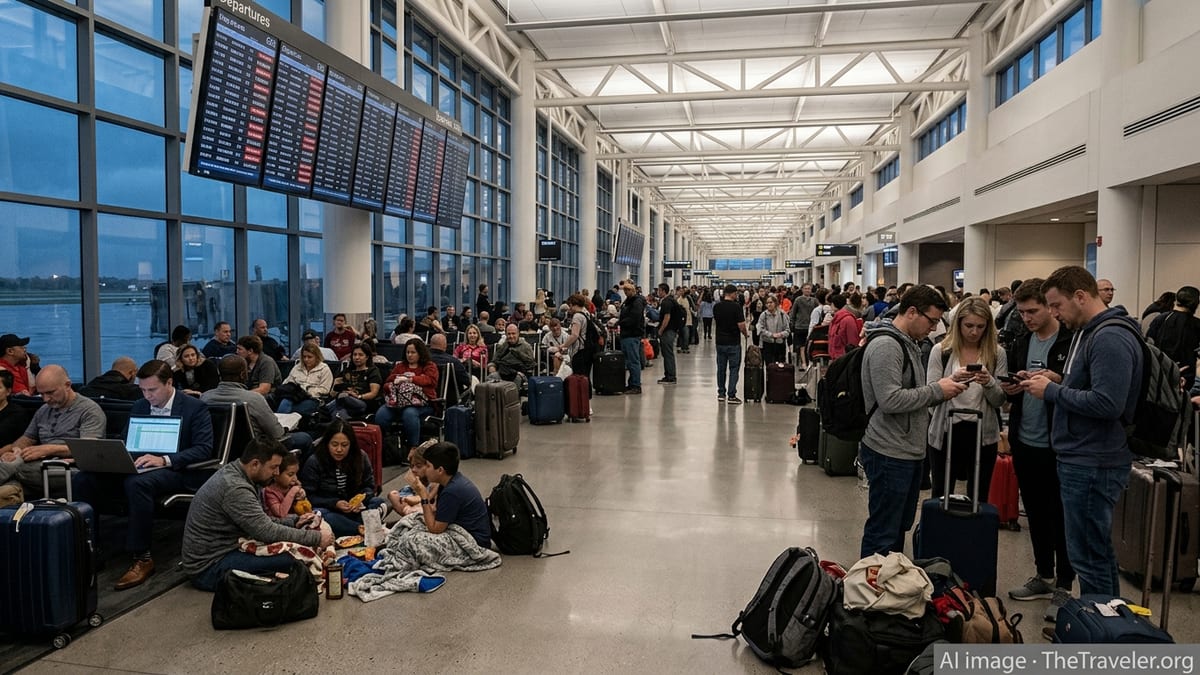
Hundreds of air travelers were left stranded in Dallas on March 20, as Dallas–Fort Worth International Airport (DFW) reported around 270 delayed flights and at least five cancellations, disrupting operations for major U.S. carriers including American Airlines, United, Delta, Southwest and others.
Get the latest news straight to your inbox!
Ripple Effects Across One of the Nation’s Busiest Hubs
Dallas–Fort Worth International Airport functions as one of the largest connecting hubs in the United States, and even a relatively modest number of cancellations can quickly cascade into widespread disruption. Publicly available tracking data on March 20 showed roughly 270 departures and arrivals running late at DFW, with a smaller number outright canceled, yet the impact spread far beyond North Texas as delayed aircraft and crews failed to reach their next scheduled flights.
Reports indicate that American Airlines, the dominant carrier at DFW, bore the brunt of the disruption, with delays rippling through its extensive domestic and international network. United Airlines and Delta Air Lines also reported delayed operations, particularly on connecting routes that rely on aircraft cycling through Dallas. Southwest Airlines, which concentrates its North Texas operation at nearby Dallas Love Field, was pulled into the broader disruption as missed connections and aircraft positioning issues created pressure across the region’s airspace.
For many passengers, the headline numbers of five cancellations and hundreds of delays did not fully capture the on-the-ground experience. Rolling delays, in which departure times were repeatedly pushed back in small increments before a final decision on departure or cancellation, left travelers uncertain about whether to seek hotel rooms, rebook connections or remain at the gate in hopes of a departure.
The disruption arrived at a time when U.S. airports were already under seasonal strain, with spring travelers filling flights and tight schedules leaving little buffer when weather or operational challenges arise. Aviation analysts note that in such conditions, even a limited number of cancellations at a major hub like DFW can create knock-on effects that last well beyond the initial day of disruption.
Weather, Congestion and an Overstretched System
The Dallas–Fort Worth region has faced repeated bouts of disruptive weather in recent months, including winter storms and high-wind events that have periodically forced ground stops and trimmed arrival and departure rates. According to published coverage of recent storm systems across the central United States, airlines have struggled to balance safety-driven schedule cuts with the need to reposition aircraft and crews once conditions improve.
On March 20, a combination of lingering weather in parts of the country and congestion in key air corridors contributed to extended ground times and missed connections. Public aviation data show that when arrival streams into a hub like DFW are slowed, controllers reduce the rate at which aircraft can land and depart, which in turn pushes flights into holding patterns or keeps planes at their origin airports until a slot becomes available.
In addition to meteorological factors, ongoing strains in the broader U.S. aviation system continue to shape how disruptions unfold. Research into delay propagation across major hubs has highlighted how staffing levels, aircraft utilization and tighter scheduling since the pandemic can leave airlines with limited flexibility to absorb irregular operations. When multiple carriers at the same hub are impacted simultaneously, the competition for gates, ramp space and available crews intensifies, often extending delays late into the day.
While each airline publishes its own explanation for individual delays, the pattern at DFW on March 20 resembled other recent disruption periods: a blend of weather-related constraints, air traffic management programs and operational challenges such as crew timing limits and aircraft maintenance checks that become more acute once a schedule is already stressed.
Passengers Face Long Waits, Missed Connections and Extra Costs
For passengers moving through DFW, the operational story translated into hours spent in terminal corridors and crowded gate areas. Travelers reported missed connections to destinations across the United States and abroad, with some facing unexpected overnight stays in Dallas after late-evening flights were scrubbed or delayed beyond legal crew duty limits.
Published accounts from recent disruption episodes at DFW describe travelers waiting much of the day for a flight that ultimately never departed, as departure times were repeatedly reset before a final cancellation. Similar patterns appeared on March 20, with some passengers being reassigned multiple times as airlines attempted to consolidate lightly booked flights and match remaining crews to available aircraft.
These rolling disruptions can also carry significant financial and logistical consequences. While airlines may offer meal vouchers, rebooking and, in limited circumstances, hotel assistance, many travelers end up paying out of pocket for last-minute accommodation, ground transportation or alternative flights on other carriers. Families traveling with children, older passengers and international visitors unfamiliar with the area often find it particularly challenging to secure suitable options when nearby hotels are near capacity.
Beyond the immediate costs, missed connections at DFW can unravel entire itineraries, from cruise departures and tour groups to business meetings scheduled on tight timetables. Travel advisors note that during periods of heightened delay risk, more passengers have begun building in longer connection times at major hubs like Dallas and purchasing travel insurance products that explicitly cover disruptions caused by weather and operational issues.
Airlines Adjust Schedules as Recovery Efforts Continue
In response to the latest wave of delays at DFW, airlines have focused on stabilizing their schedules and clearing backlogs of displaced passengers. Publicly available flight boards and tracking services on March 20 and into the evening indicated that carriers were consolidating some lightly booked departures, shifting passengers onto flights with greater seat availability and adjusting aircraft routing to restore normal operations.
Operational recovery typically continues for several days after a disruption of this scale. Aircraft that ended the day out of position must be returned to their usual routes, and crews who reached duty limits must be replaced or rescheduled. For a carrier with a large hub at DFW, that process can involve systemwide changes, including adjustments to flights that never touch Texas but rely on aircraft or crews originally scheduled through Dallas.
Recent federal and industry discussions about aviation reliability have underscored how even short-lived interruptions can expose structural vulnerabilities in airline networks. Reports examining past large-scale disruptions have emphasized the importance of investments in crew scheduling systems, real-time communications with passengers and more resilient hub operations to reduce the likelihood of extended cascading delays.
For now, travelers heading through Dallas in the coming days are being urged by publicly available advisories and travel industry commentary to monitor their flight status frequently, allow extra time for connections and consider flexible routing options where possible, as airlines work to absorb the lingering effects of the latest operational setback at one of the country’s most important aviation gateways.