

More news on this day
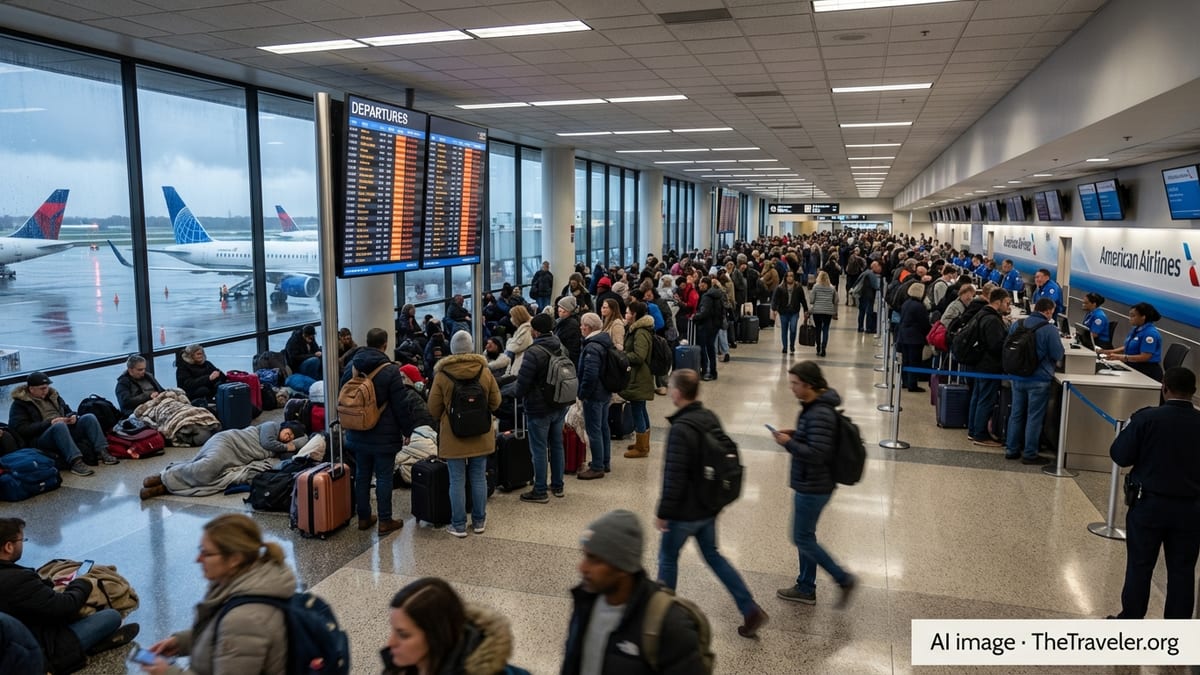
Hundreds of travelers were left stranded at Dallas–Fort Worth International Airport on Saturday as at least 252 flights were delayed and 12 canceled, triggering a fresh wave of disruptions for American Airlines, Delta Air Lines, United Airlines and other major carriers and snarling connections to key hubs including Houston, Chicago, New York and Los Angeles.
Weather and Operational Strains Converge at a Key U.S. Hub
The latest disruption at Dallas–Fort Worth International Airport (DFW) unfolded against the backdrop of a turbulent winter for U.S. aviation, with repeated storms and tight airline schedules leaving little room for error. Early Saturday, a mix of lingering winter weather in the region and ongoing operational pressures began to slow the flow of arrivals and departures, and by midday, flight-tracking data showed more than 250 departures and arrivals running significantly behind schedule.
Airport officials pointed to a combination of factors, including residual impacts from recent winter systems and heavy national traffic funneling through North Texas, which is one of the country’s most important aviation crossroads. DFW serves as the primary hub for American Airlines and a critical connecting point for Delta and United passengers moving between the East and West Coasts, the Midwest, and the Sun Belt. When operations falter in Dallas–Fort Worth, the impact is quickly felt across the national network.
While the number of outright cancellations was relatively modest compared with the massive shutdowns seen during Winter Storm Fern in late January, even 12 scrapped flights were enough to strand travelers who depended on tight connections or were already rebooked from earlier disruptions. For many, this latest episode felt like one more blow in a season defined by interrupted trips and uncertain itineraries.
By late afternoon, long lines had formed at ticket counters, self-service kiosks and customer service desks, as passengers scrambled to secure new itineraries. Overhead departure boards displayed a patchwork of revised departure times, gate changes and “crew delayed” messages that underscored how even minor schedule shocks at a hub the size of DFW can cascade throughout the system.
American, Delta and United Grapple With Knock-On Delays
American Airlines, based at DFW and by far the airport’s largest tenant, once again shouldered the brunt of the disruption. After a January stretch that saw the carrier cancel thousands of flights as Winter Storm Fern passed through North Texas and the broader U.S. network, American entered this weekend still working to normalize its schedules and reposition aircraft and crew. The 252 delays and 12 cancellations at DFW added yet another layer of complexity to that recovery.
Operational analysts noted that American’s banked hub structure in Dallas, where large waves of flights arrive and depart within tightly packed windows, can be highly efficient in normal conditions but leaves the airline exposed when weather or air-traffic constraints slow down the system. Once one bank is delayed, crews and aircraft assigned to subsequent flights may end up out of position, resulting in rolling disruptions that take hours to untangle.
Delta Air Lines and United Airlines, though smaller players at DFW, were not spared. Both carriers rely on northbound and eastbound connections from North Texas to feed their hubs in Atlanta, Houston, Chicago and New York. Delayed departures from Dallas–Fort Worth meant aircraft arrived late into those hubs, compressing already tight turnaround times and increasing the odds of further delays on evening departures.
Regional partners operating flights on behalf of the major carriers, including Envoy Air, SkyWest and other affiliates, also absorbed a share of the turmoil. These operators supply much of the short-haul connectivity between DFW and secondary cities across Texas and the central United States. When mainline flights run behind schedule, regional partners may be forced to hold departing flights for inbound connections or to swap aircraft and crew at short notice, a juggling act that can add strain to operations that are already finely tuned.
Ripple Effects Across Houston, Chicago, New York and Los Angeles
Because Dallas–Fort Worth is deeply embedded in the national route map, delays there quickly radiated outward to other major hubs. In Houston, Chicago, New York and Los Angeles, travelers arriving from or departing to DFW encountered crowded gate areas, revised boarding times and in some cases last-minute aircraft changes as airlines tried to absorb the disruption.
At Houston’s major airports, DFW-bound departures left late, sometimes by more than an hour, as carriers waited for incoming aircraft or cleared weather-related backlogs. Passengers with connections through Dallas found that what had seemed like comfortable layovers on paper suddenly shrank to tight sprints between gates. For those on the last flights of the day, missed connections translated into involuntary overnight stays.
Chicago, a critical hub for both American and United, experienced its own knock-on delays as late-arriving aircraft from North Texas compressed departure banks and created congestion on taxiways. Airline staff in Chicago reported that some connecting passengers who had already been rebooked once due to earlier storms were now facing second or third itinerary changes, amplifying frustration among frequent travelers.
In New York and Los Angeles, two of the nation’s busiest coastal gateways, the impact was subtler but still significant. Afternoon and evening flights linking New York’s main airports with DFW showed elevated delay times, especially on services operated with aircraft cycling through multiple hubs during the day. At Los Angeles International Airport, several Dallas-bound flights boarded on time only to wait at the gate or on the tarmac for release from air-traffic control, reflecting lingering capacity constraints along key air corridors.
Passengers Confront Long Lines, Limited Seats and Frayed Nerves
Inside DFW’s terminals, the human cost of the disruption was evident well before the official delay and cancellation tallies were complete. Families returning from school holidays clustered around scarce power outlets to keep phones and tablets charged. Business travelers paced between gates, juggling rebooked meetings and video calls as departure times shifted. International visitors navigated unfamiliar procedures amid the confusion, often relying on ad hoc assistance from fellow passengers.
With so many flights delayed rather than canceled, rebooking options were available but limited. Gate agents worked to protect onward connections where possible, prioritizing travelers facing international departures or those with few alternative routings. Yet in a hub that is still absorbing the effects of a record-breaking winter storm season, spare seats were hard to find, particularly on popular routes to Chicago, New York and the West Coast.
For some passengers, hotel vouchers and meal credits softened the blow of extended layovers, but others reported difficulty reaching airline call centers or securing timely information through mobile apps. In the age of real-time notifications, even short lags between operational decisions and customer communication can fuel anxiety, especially for those responsible for traveling with elderly relatives or small children.
Airport volunteers and customer service teams reported a noticeable uptick in requests for basic guidance, from directing travelers to quiet areas and children’s play spaces to helping them understand weather advisories and rebooking instructions. While tempers occasionally flared at ticket counters, most passengers appeared resigned, expressing a mix of fatigue and frustration after what for many has been a winter of repeated travel uncertainty.
Aviation System Still Recovering From Winter Storm Fern
Saturday’s turbulence at DFW did not occur in isolation. It followed a series of extreme weather events that have tested airline resilience across the continent this season. In late January, Winter Storm Fern swept from Texas to New England and into Canada, bringing heavy snow, ice and high winds that forced airlines to cancel more than twelve thousand flights nationwide over a single weekend and left millions of passengers facing widespread disruption.
At Dallas–Fort Worth specifically, Fern triggered the most extensive wave of cancellations in American Airlines’ modern history, with the carrier and its regional affiliates scrapping thousands of flights over several days. That level of interruption not only stranded travelers in the short term but also created a backlog of aircraft maintenance, crew repositioning and schedule adjustments that carriers have been working through well into February.
Even as skies have cleared in many regions, the underlying vulnerabilities exposed by Fern and subsequent storms remain. Airlines have had to operate dense winter schedules with limited slack in aircraft and crew rosters, leaving them susceptible to follow-on shocks from even modest weather or air-traffic disruptions. The situation at DFW on Saturday, while far smaller in scale than January’s paralysis, illustrated how fragile operations can remain weeks after a major storm system passes.
Industry analysts say that until spring brings a more stable weather pattern, travelers should expect an elevated risk of rolling delays and scattered cancellations, particularly at hub airports like DFW that sit at the intersection of north–south and east–west air corridors. Carriers are trying to balance the need to meet strong demand with the imperative to preserve flexibility, a process that may involve strategic schedule thinning or the proactive consolidation of lightly booked flights during forecast weather events.
Airlines Roll Out Weather Waivers and Flex Policies
In response to the ongoing volatility, major U.S. airlines including American, Delta and United have leaned more heavily on weather waivers and flexible rebooking policies. Ahead of forecast storms, carriers now regularly publish advisories allowing passengers to change travel dates or routes without incurring change fees, provided they rebook within specified windows and in the same cabin of service.
In recent days, Delta and American have both issued exception policies covering parts of the Northeast and Mid-Atlantic as fresh winter systems threaten to add new strain to already stressed hubs in New York, Boston and Philadelphia. While Saturday’s delays at DFW were driven largely by local conditions and residual national congestion, the waivers have given some travelers more options to reroute away from weather-prone cities or to shift departure dates to less risky windows.
However, the usefulness of such policies can be limited when flights are already heavily booked. Many travelers affected by delays in Dallas–Fort Worth reported that while change fees were waived, there were few open seats on alternative departures within the waiver period, particularly on nonstops to coastal cities and major business markets. In those cases, passengers faced a choice between multi-stop itineraries with long layovers or waiting a day or more for a more direct option.
Consumer advocates argue that clearer communication around waiver windows, seat availability and realistic rebooking timelines could help reduce stress at airports when disruptions occur. They also point to the importance of airlines proactively contacting affected passengers with concrete options, rather than expecting them to navigate complex policy language while standing in long lines at the gate.
What Travelers Can Do Ahead of Peak Spring Break Traffic
With the spring break period approaching and winter weather still active across large parts of the United States, travel experts say passengers passing through Dallas–Fort Worth and other major hubs should prepare for the possibility of further disruptions. That preparation starts long before arrival at the airport, with steps such as building extra connection time into itineraries, choosing early-day departures where feasible and closely monitoring forecasts along intended routes.
Booking nonstop flights when possible remains one of the most effective ways to reduce exposure to cascading delays. For travelers who must connect through DFW, Houston, Chicago, New York or Los Angeles, selecting itineraries with at least ninety minutes between flights can create a valuable buffer in case of minor schedule shifts. It may also be wise to avoid the last departure of the day to a destination, which leaves fewer fallback options if a flight is delayed or canceled.
Once at the airport, staying informed is critical. In addition to watching departure boards, travelers are encouraged to enable mobile notifications from their airline, check gate information frequently and make use of self-service tools in airline apps to join standby lists or request alternate routings. Those who encounter long lines at staffed counters may find that message-based customer service channels, where available, can sometimes produce faster results.
As Saturday’s events at DFW demonstrate, even a relatively modest number of cancellations can disrupt the plans of hundreds of people when they occur at a pivotal hub. While airlines and airports continue to refine their playbooks for managing severe weather and tight operations, passengers who plan ahead and remain flexible will be best positioned to navigate what remains of a challenging winter travel season.