

More news on this day
Dallas Fort Worth International Airport, one of the world’s busiest connecting hubs, is again at the center of a major travel disruption, with a surge in cancelled flights rippling across the United States and affecting global routes just as spring travel demand accelerates.
Get the latest news straight to your inbox!
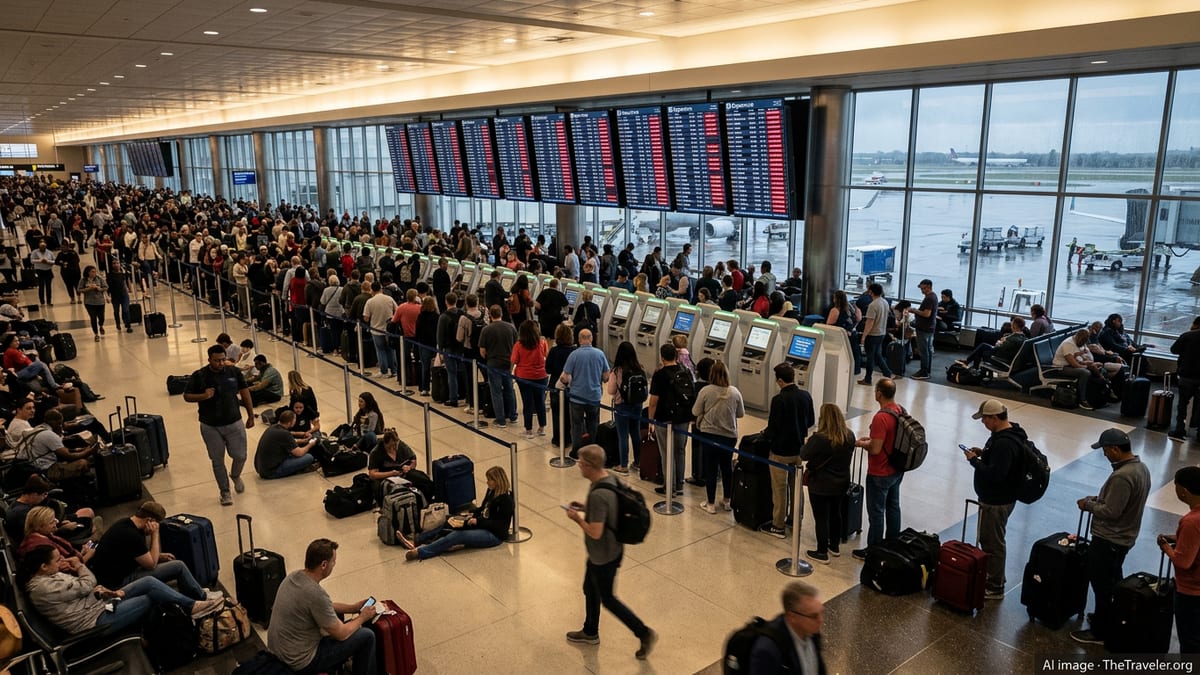
Hub Under Strain as Storm Systems Collide With Peak Demand
Recent storm systems sweeping across large sections of the country have collided with already stretched airline operations, placing extraordinary pressure on Dallas Fort Worth International Airport. Publicly available flight-tracking data shows that DFW has ranked among the hardest-hit U.S. hubs multiple times since January, with waves of cancellations and delays building around winter storms and now severe March weather.
Reports indicate that the latest round of disruptions is tied to a broader storm complex affecting the Midwest, South and East, which has already led to thousands of cancellations nationwide over the past 48 hours. As the system shifts across regions, DFW’s central position in many domestic and international networks has magnified the impact, turning local weather issues into a national and even intercontinental travel problem.
DFW’s role as the primary hub for American Airlines has intensified the situation. When flights cannot safely depart or arrive in North Texas, connections through Dallas break down, stranding passengers not only in the region but at feeder airports across the United States and at overseas gateways that rely on Dallas-bound traffic. Recent coverage of airline operations shows that when DFW slows, knock-on effects are quickly felt as far away as Europe, Latin America and the Asia-Pacific.
The latest cancellations come on the heels of a turbulent winter, including January’s Winter Storm Fern and a February blizzard that disrupted operations nationwide. Industry analysts note that this sequence of events has left carriers with little margin to recover, setting the stage for particularly severe consequences as new storms arrive in March.
Ground Stops, Weather Volatility and a Fragile Flight Network
DFW’s current troubles reflect a mix of severe weather and operational vulnerability. According to recent coverage of Federal Aviation Administration planning updates, the agency continues to rely on ground stops and ground delay programs to route aircraft away from dangerous conditions, a process that quickly cascades into large numbers of cancellations when visibility deteriorates or storms linger over major hubs.
In North Texas, lightning, low ceilings, high winds and rapidly changing precipitation types have all contributed to intermittent halts in arrivals and departures in recent weeks. Regional outlets have described periods when airport operations slowed to a crawl, with long lines of aircraft waiting for clearance and inbound flights holding or diverting. Even relatively short-lived ground stops can cause hours of disruption as crews and aircraft fall out of position, creating scheduling challenges that extend well beyond the time of the initial weather event.
Weather experts tracking the March storm complex highlight its broad geographic footprint, with snow and ice in the Midwest and heavy rain, thunderstorms and possible tornadoes in the South. This pattern has meant that DFW is not only dealing with its own local storms but is also absorbing delays from airports upstream and downstream in the network. When multiple hubs are constrained at once, airlines have fewer options to reroute passengers, and cancellations become the primary tool to keep the system safe and manageable.
Operational records from earlier this winter illustrate how quickly conditions can deteriorate. In late January, for example, local reporting documented nearly 1,000 cancellations tied to winter weather at DFW in a single day, with additional delays spreading to connecting cities. The current crisis follows a similar pattern, but during a busier spring travel period that includes spring break and major sporting events, intensifying passenger frustration.
Nationwide and Global Ripple Effects From a Single Hub
The cancellations centered on Dallas have quickly turned into a broader U.S. travel crisis. National flight-tracking tallies over recent days show hundreds to thousands of cancellations and delays on any given day, affecting not only Texas but also major hubs such as Atlanta, Chicago, New York and Houston. As DFW struggles to maintain its schedule, travelers in distant cities discover that flights without any local weather issues are being scrapped or heavily delayed because their aircraft or crew are tied up in the Dallas system.
Internationally, DFW’s status as a gateway to Europe, Latin America and the Pacific means that disruptions are being felt across global networks. Long-haul services to cities such as London, Tokyo, Sydney and key Latin American capitals depend on tight domestic feed through Dallas. Publicly available accounts from recent operational meltdowns show that once a hub like DFW loses rhythm, airlines often cancel complex long-haul rotations rather than risk aircraft and crews being stranded out of position for days.
Some of the sharpest impacts have been reported on transpacific and South Pacific routes, where aircraft utilization is already stretched and reserve capacity is limited. When one long-haul departure from Dallas is cancelled, subsequent flights that rely on the same aircraft cycle can also be affected, multiplying the disruption for travelers on multiple continents. A cancelled evening departure from DFW can therefore translate into missed connections in Asia or Oceania more than a day later.
The timing of the latest Dallas-centered crisis is particularly challenging for travelers heading to or from regions already affected by geopolitical tensions or separate weather events. With global networks still recalibrating after earlier winter storms and blizzards across North America, the renewed strain on DFW highlights how sensitive international travel remains to the fortunes of a handful of mega-hubs.
Passengers Face Long Lines, Limited Options and Confusing Policies
For travelers caught in the disruption, the experience has been characterized by long waits, repeated rebookings and an often confusing patchwork of airline policies. Social media posts and traveler forums over the past several weeks describe overnight stays on terminal floors, extended queues at customer service desks and fierce competition for scarce hotel rooms near the airport when large numbers of flights cancel at once.
Public guidance from major airlines and consumer advocates continues to emphasize that passengers are typically entitled to refunds when a flight is cancelled and they choose not to travel, although assistance beyond that depends heavily on whether the airline classifies a disruption as related to weather or as a controllable operational issue. Online guides updated for 2026 note that new U.S. Department of Transportation rules are shaping how carriers communicate these distinctions, but many passengers on the ground in Dallas and at other hubs report significant uncertainty about what they can reasonably expect.
Many recent accounts suggest that travelers are turning increasingly to mobile apps and third-party flight-tracking tools to stay ahead of schedule changes, often learning of cancellations before information is widely posted in terminals. However, when major hubs like DFW experience a sudden spike in cancellations, rebooking options can disappear quickly, especially for groups, long-haul itineraries and travelers connecting to smaller markets with limited daily service.
Industry observers also point to staffing challenges at airlines and airports as a contributing factor. Publicly available information from earlier winter disruptions indicates that crew time limits, staff shortages and the complexity of repositioning aircraft after storms can all prolong recovery, even after weather clears. At DFW, where a large share of daily flights depend on precise timing of crews and equipment across multiple terminals, relatively small delays can snowball into larger cancellations if staffing is already stretched.
What Travelers Can Do as the Crisis Evolves
With the storm system still working its way across the country and air traffic managers continuing to adjust routes and ground delays, travel experts recommend that passengers with upcoming trips through Dallas Fort Worth take proactive steps. Public advisories from airlines and the FAA stress the importance of monitoring flight status frequently on official channels, allowing extra time at the airport and considering voluntary rebooking options when carriers issue travel alerts for DFW and other affected hubs.
For those who have not yet started their journeys, consumer advocates suggest checking whether flexible travel waivers are in place that allow itinerary changes without additional fees. When multiple hubs are under weather threat, shifting a connection away from DFW or moving travel a day forward or back can sometimes prevent being caught in the worst of the cancellations. Some travelers may also find it useful to book longer connection times through Dallas during volatile periods, trading convenience for a greater margin of safety.
Travel planning services and aviation analysts underline that the current Dallas-centered crisis illustrates a broader structural vulnerability in modern air networks: a heavy reliance on a small number of mega-hubs to connect vast domestic and international systems. As long as storms continue to target these key nodes during peak travel periods, passengers can expect recurrent episodes of widespread disruption, even when skies are clear in their own departure or arrival cities.
For now, Dallas Fort Worth remains a focal point of that volatility. With the March storm complex still unfolding and airlines working to realign crews and aircraft after a punishing winter, the coming days are likely to test both the resilience of airline operations and the patience of travelers across the United States and around the world.