

More news on this day
Days after a historic winter storm swept across much of the United States, Dallas–Fort Worth International Airport remains at the center of a cascading air-travel meltdown, with large-scale flight cancellations, rolling delays and stranded passengers rippling across airline networks nationwide.
Get the latest news straight to your inbox!
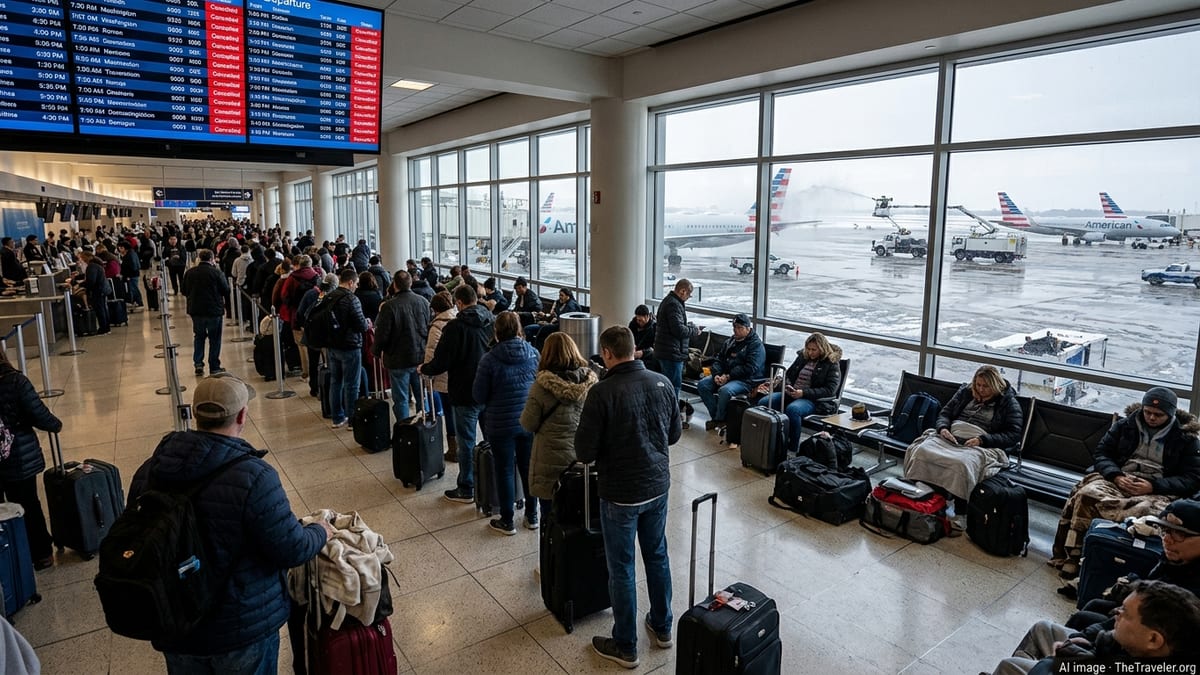
Weather Disaster Turns DFW Into Ground Zero
From January 23 to January 27, 2026, a sprawling winter storm system, widely referred to in media coverage as Winter Storm Fern, buried large swaths of the country in snow and ice, triggering one of the most disruptive aviation events in recent years. Publicly available data on the storm shows that it produced deadly conditions and crippling infrastructure impacts from northern Mexico through the Southern and Northeastern United States and into Canada.
Although snowfall totals at Dallas–Fort Worth International Airport on January 25 were relatively modest compared with northern states, the combination of ice, subfreezing temperatures and high winds proved especially damaging for aviation. Spanish-language reporting on the event notes that even a few centimeters of frozen precipitation at DFW set local records and contributed to a sharp deterioration in runway and taxiway conditions, deicing operations and ground transportation around the airport.
As the core of the storm passed, the operational picture at DFW did not immediately normalize. Ice on equipment and parked aircraft, continued low temperatures and lingering wind gusts left airlines struggling to restart complex hub operations. The result was a prolonged period of cancellations and delays that continued well beyond the worst of the weather.
Mass Cancellations Snarl American’s Largest Hub
DFW is the primary hub for American Airlines, and the storm’s timing during a busy winter travel period magnified the impact. According to published coverage of the January 2026 storm, January 25 quickly became one of the highest-cancellation days for weather in U.S. aviation history, with more than ten thousand flights canceled nationwide by midday and over eleven thousand by day’s end.
At DFW alone, local news and airport-focused reporting indicated that airlines proactively scrubbed more than one thousand departures and arrivals over a single weekend as the storm approached North Texas. The vast majority involved American and its regional affiliates, which dominate operations at the airport. Those preemptive cuts were followed by additional cancellations as crews and aircraft failed to arrive where they were needed.
American Airlines later described the episode in corporate communications as one of the largest weather-driven disruptions in its history, noting that the January storm primarily affected its hubs at DFW and Charlotte. The carrier emphasized that large-scale cancellations were a safety-driven response to conditions that made normal operations impossible, even as passengers grappled with long lines, crowded terminals and limited rebooking options.
Passengers Stranded For Days Amid System Overload
For travelers, the numbers translated into a deeply personal ordeal. Social media posts and traveler forums in late January and early February described passengers sleeping on airport floors at DFW for multiple nights as flight after flight was delayed, then canceled. Some reported being rebooked repeatedly onto new itineraries that never departed, while others abandoned their tickets and purchased seats on competing carriers from other airports to escape the gridlock.
Accounts from those trapped at the hub detail a mix of weather constraints and staffing bottlenecks. Travelers cited cancellation codes tied to crew time limits, crew misplacements and lack of available staff to bring aircraft out of hangars, alongside standard weather-related justifications. These operational knock-on effects are consistent with how major storms can disrupt crew rotations and aircraft positioning across an entire network, even after skies clear.
Reports from North Texas residents during the same period suggest that, at times, road conditions around Dallas–Fort Worth improved faster than flight schedules, feeding public frustration. While ice remained a concern on bridges and side streets, some travelers questioned why flights continued to be canceled once highways reopened, underscoring the disconnect between what passengers see on the ground and the complex web of constraints that govern airline operations after a major storm.
Ripple Effects Across the U.S. Airline System
The DFW disruption did not stay in North Texas. Because American relies heavily on its Dallas–Fort Worth hub to connect domestic and international itineraries, cancellations there quickly cascaded throughout the United States. Published data on the January storm shows that routes across the South, Midwest and East Coast were affected as aircraft and crews that were supposed to pass through DFW never arrived.
Other carriers also felt the strain. National coverage of the storm described widespread cancellations at airports from the Southern Plains to the Northeast, with low-cost and legacy airlines alike trimming schedules or halting operations entirely at times. In some cases, carriers cancelled flights preemptively from distant hubs because downline connections through DFW or other storm-hit airports would no longer be viable.
The result was a de facto systemwide slowdown, with travelers in cities far from Texas encountering sudden schedule changes attributed to weather, air traffic control constraints or knock-on operational issues. Even days after Winter Storm Fern moved away, rebooking backlogs and aircraft imbalances left many passengers facing multi-day delays or convoluted rerouting through secondary hubs.
Scrutiny Intensifies Over Resilience and Recovery
The scale of the Dallas–Fort Worth shutdown has renewed debate about how resilient U.S. airlines and major hub airports are to increasingly volatile weather. Commenters in aviation forums and local discussions around DFW pointed out that while severe winter events are relatively rare in North Texas, the region has now experienced multiple crippling storms within a few years, each time leading to widespread cancellations and multi-day recovery periods.
Publicly available documents from DFW’s governing board show that airport leaders have been reviewing recent winter disruptions, including January’s event, with attention to deicing capacity, ramp operations during ice accumulation and communication strategies for large-scale irregular operations. The airport has highlighted the unprecedented thickness of the ice accretion during the storm and the resulting impact on both runways and aircraft handling.
Airlines, meanwhile, are facing growing scrutiny from travelers and consumer advocates over how they handle mass cancellations, including the transparency of their explanations and the speed of recovery once weather hazards subside. Policy summaries and guidance materials on major carriers’ sites stress that safety remains the primary factor in cancellation decisions, and that storms of the magnitude seen in January 2026 can overwhelm even robust contingency plans.
For passengers, the DFW meltdown has become another stark reminder that a single powerful winter storm can still bring U.S. air travel to a near standstill, leaving thousands stranded and exposing the fragility of a system built around a handful of sprawling, weather-vulnerable hubs.