

More news on this day
Thousands of air travelers across the United States faced another bruising day on Sunday as Dallas Fort Worth International Airport (DFW) grappled with 67 flight cancellations and 204 delays, snarling connections on major carriers including American Airlines, United Airlines and Delta Air Lines and intensifying an already difficult winter for U.S. aviation.
DFW Emerges as a Major Flashpoint in Nationwide Disruptions
The fresh wave of disruption at Dallas Fort Worth came as U.S. airlines and airports continued to struggle with the combined impact of winter weather systems, tight crew availability and heavy traffic on key long-haul and domestic routes. While New York, Boston and other East Coast hubs have taken the brunt of a powerful winter storm, DFW’s high volume of connecting traffic means even a relatively modest number of local cancellations and delays quickly ripples nationwide.
According to live operational data compiled from flight-tracking services on Sunday, DFW’s tally of 67 cancellations and 204 delays placed it among the hardest-hit airports for schedule reliability, even though far larger totals were being reported systemwide. More than 2,900 flights across the United States were canceled and almost 1,900 delayed by late morning, underscoring how a regional weather event can cascade into a national breakdown in air travel.
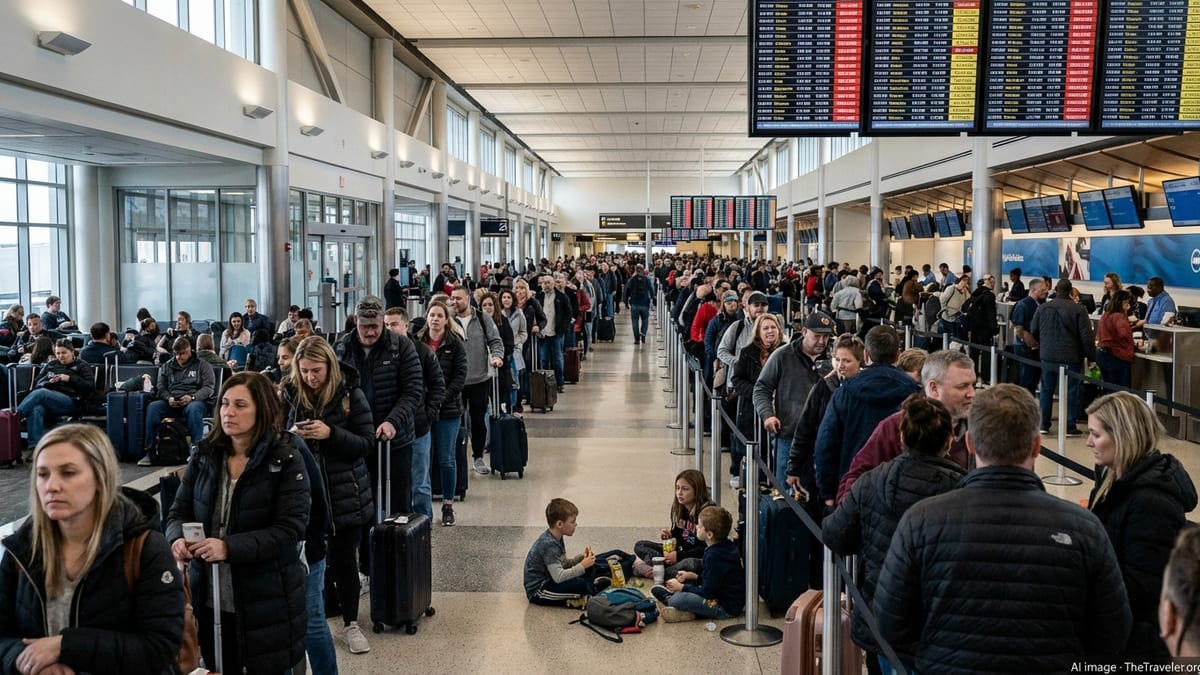
DFW, one of the country’s busiest hubs by daily movements, regularly handles more than 1,600 flights a day. With roughly one in five of its departures affected by delays and a noticeable share scrubbed entirely, the airport’s sprawling terminals became crowded chokepoints, with long queues forming at customer service desks and rebooking kiosks as passengers tried to salvage disrupted itineraries.
Airport officials urged passengers to check directly with airlines before traveling to the terminal and to allow significantly more time than usual for check-in and security. However, with cancellations and rolling delays shifting through the day as conditions and crew availability changed, even those who followed guidance closely often found their plans upended just before boarding.
American, United and Delta Struggle to Stabilize Their Schedules
American Airlines, whose largest hub is at DFW, bore a substantial share of the disruption as the carrier attempted to recover from earlier weather-related upheaval and protect aircraft and crew positioning for the days ahead. The airline has already spent much of this winter operating on thin operational margins, responding to storms with advance schedule cuts and rolling waivers that allow passengers to rebook without fees.
United Airlines and Delta Air Lines, which operate busy connecting banks through Dallas Fort Worth in addition to their own primary hubs elsewhere, also reported elevated disruption. While American led in the raw number of affected flights tied to DFW, passengers booked on United and Delta reported misconnected itineraries when Dallas-bound or Dallas-originating segments were pulled from the schedule or pushed back by several hours.
Data from nationwide trackers on Sunday showed American, Delta, United and their regional affiliates among the top carriers for cancellations and delays across the country. Earlier in the day, statistics indicated hundreds of scrubbed flights for each of the three largest legacy carriers nationwide, highlighting that DFW’s problems were part of a much larger network-wide strain.
In statements over recent weeks addressing similar operational stress, major U.S. airlines have pointed to a combination of severe weather, air traffic control constraints in crowded corridors and lingering staffing challenges in both flight crews and ground operations. Although full statements for Sunday’s events were not immediately available, the patterns at DFW closely resembled those seen during earlier winter disruptions.
Passengers Face Long Lines, Missed Connections and Uncertain Rebookings
Inside DFW’s terminals, passengers described long waits to speak with airline agents, as well as packed gate areas where travelers watched departure times slide back in 30-minute increments before flights were finally canceled. Families headed to school vacations, business travelers and international passengers on connecting itineraries all found themselves competing for a shrinking pool of available seats later in the day and into the week.
The high proportion of connecting traffic at DFW amplified the human cost of the local disruption. Travelers who had already completed long domestic or international legs arrived in Dallas only to discover that their onward segment had been delayed for hours or dropped entirely. For some, this meant unexpected overnight stays in North Texas; for others, it required complete rerouting through alternate hubs such as Houston, Atlanta, Chicago or Denver.
With call centers and airline apps under heavy load, many passengers resorted to standing in line at ticket counters while simultaneously trying to rebook using mobile devices. In several cases during recent disruptions, customers have reported that online systems lagged or crashed at peak times, though airlines say they continue to invest in digital infrastructure to improve resilience under stress.
Hotel availability around the airport tightened quickly through the afternoon as stranded passengers sought accommodation. Some travelers reported being offered discounted “distressed passenger” rates at nearby hotels, while others said they were placed on waitlists or advised to consider lodging further from the airport due to high demand.
Weather, Crew and Congested Skies Combine to Fuel Chaos
While Dallas Fort Worth was not in the direct bull’s-eye of the heaviest snowfall and blizzard warnings affecting the Northeast on Sunday, it sat at the intersection of several complicating factors. Airlines had repositioned aircraft and crews in anticipation of days of disruption across New York, Boston, Philadelphia and other East Coast hubs, with knock-on effects for fleet and staffing flexibility at DFW.
Persistent winter weather across large portions of the country has also created chronic strain on contingency reserves. When storms force airlines to slow operations or suspend flights entirely, the process of restarting normal schedules can take days, especially when crews “time out” under federal limits on duty hours. At DFW, that meant some flights could not depart despite open runways and flyable conditions because airlines lacked a full, legal crew complement.
Air traffic control programs also played a role, as the Federal Aviation Administration implemented ground delays or flow restrictions into already-stressed East Coast and Midwest airports. A departure from Dallas bound for a storm-affected city may be held back or shifted to a later time slot, even if weather at DFW itself is relatively benign. Over the course of a day, these small adjustments accumulate into sizeable departure banks that no longer align neatly with inbound connections.
Industry analysts note that today’s air network is highly optimized for efficiency under normal conditions, with limited slack built into schedules. While this allows airlines to offer more frequencies and destinations during stable periods, it also means the system is more vulnerable to wide-scale breakdowns when severe weather or other shocks occur across multiple regions simultaneously.
DFW’s Strategic Role Magnifies the Impact Nationwide
Dallas Fort Worth’s role as one of the country’s top five busiest airports ensures that any operational wobble resonates far beyond North Texas. The airport is a primary hub not only for domestic traffic but also for long-haul routes to Europe, Latin America and Asia, with many international itineraries relying on tight connections through DFW to smaller U.S. cities.
When 67 flights are canceled and more than 200 delayed in this environment, it can trigger a cascading effect. Passengers headed from smaller regional airports to international destinations via Dallas may find that a canceled feeder flight breaks the chain to their transatlantic or transpacific connection. Conversely, inbound long-haul arrivals that land significantly late can overload later departure banks as travelers are rebooked on alternative routings.
Recent government data has already identified DFW as one of the U.S. airports with a relatively high proportion of delayed operations, even in less volatile periods. The airport’s central location and hub structure make it an efficient connecting point in principle, but also expose it acutely to nationwide disruptions when storms, staffing shortfalls or airspace constraints hit multiple regions at once.
Local businesses and the wider North Texas travel industry are watching closely. Hotels, car rental companies and convention organizers rely heavily on predictable air access through DFW. Extended periods of unreliable schedules can have knock-on economic impacts as visitors miss events, cut trips short or reconsider travel plans to the region.
Airlines Roll Out Waivers and Urge Flexible Travel Plans
In response to the wave of cancellations and delays, several major U.S. airlines have been expanding or extending travel waivers that allow passengers to change itineraries without traditional penalties when flying to, from or through affected airports. These policies, which have become more common in recent years, are designed to encourage travelers with flexible plans to move trips away from the worst disruption windows.
For passengers routed through DFW on Sunday, that meant monitoring airline advisories closely for eligibility windows and origin-destination combinations covered by waivers. In many cases, customers could shift departure dates, reroute through alternate hubs or switch to earlier or later flights within a limited time frame, subject to seat availability.
Airlines and airport authorities have also continued to emphasize basic resilience strategies for travelers. Booking morning departures, choosing nonstop flights where possible, building longer connection times in winter months and signing up for real-time alerts from both airlines and airports can all slightly improve the odds of avoiding the worst disruptions.
Nonetheless, travel experts caution that in major systemwide events like Sunday’s, even well-prepared passengers may find themselves at the mercy of fast-changing operational constraints. In such scenarios, having backup plans, travel insurance that covers significant delays and a willingness to accept alternate routing can be critical.
What Today’s Disruptions Signal About the Rest of Winter
The difficulties at Dallas Fort Worth and other U.S. hubs on Sunday add to mounting evidence that this winter will be another stress test for the aviation system. With staffing levels still rebuilding in some areas, aircraft utilization pushed high to meet demand, and climate patterns delivering frequent, volatile storms, the margin for error remains thin.
Industry observers note that carriers have grown more proactive about canceling flights in advance of severe weather to avoid chaotic, last-minute scrambles. While that strategy can reduce the number of passengers stranded at airports during the peak of a storm, it also means headline numbers for cancellations can appear dramatic, as seen across U.S. networks this weekend.
For DFW and its partner airlines, the priority over the coming days will be clearing stranded passengers, repositioning aircraft and crews, and restoring a stable schedule before the next weather threat emerges. How quickly they can accomplish that will determine whether Sunday’s disruption becomes an isolated spike or part of a rolling pattern of instability through the remainder of the season.
For travelers, the events serve as another reminder that winter flying in North America carries heightened risk of interruption, especially through major connecting hubs. Those with critical trips in the coming weeks may increasingly weigh the benefits of booking more conservative itineraries or building in additional buffer days to absorb potential delays.