

More news on this day
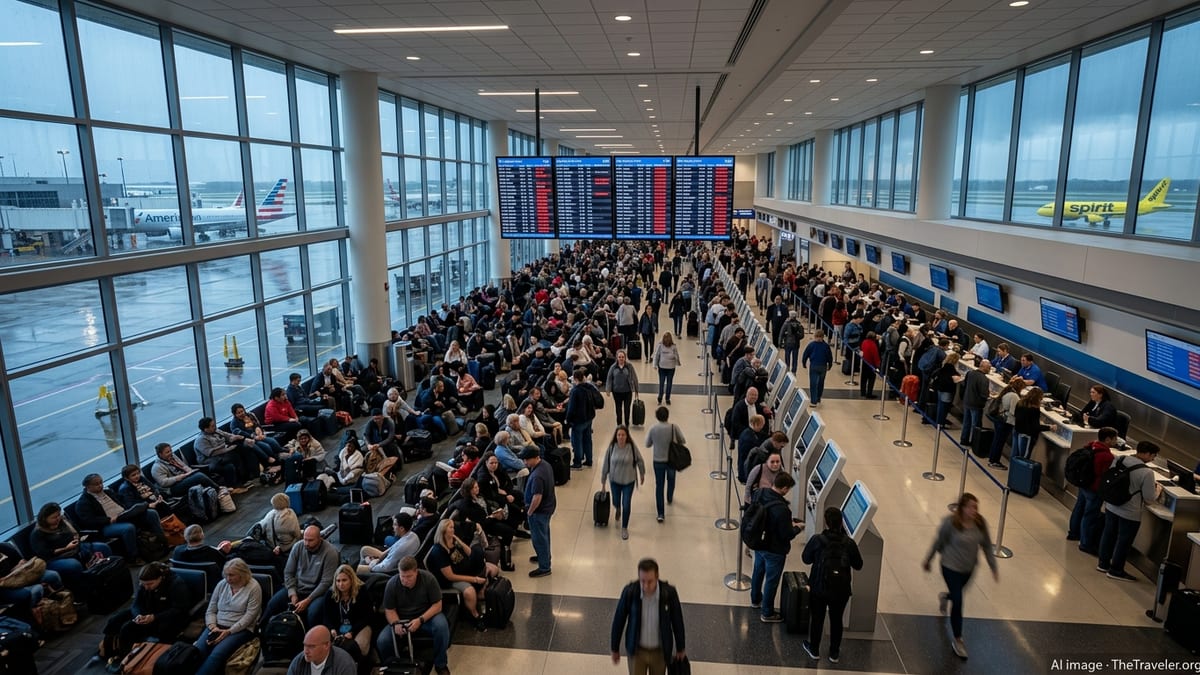
Hundreds of passengers were left in terminals and on tarmacs on March 19, 2026, as Dallas-Fort Worth International Airport became the focal point of a fresh wave of disruption that rippled across the U.S. and overseas, with 197 delays and 5 cancellations recorded on services operated by PSA Airlines, American Airlines, Qantas and Spirit Airlines in Dallas, New York, London, Miami and other cities.
Get the latest news straight to your inbox!
Storm System Over U.S. Drives Widespread Flight Disruptions
Publicly available aviation and weather data indicate that the latest disruption coincides with a powerful storm system affecting large parts of North America between March 13 and March 19, 2026. The system has brought a mix of heavy rain, wind and low visibility to major air corridors, conditions that typically lead to ground stops, flow-control programs and tighter safety margins for takeoffs and landings.
Dallas-Fort Worth, one of the nation’s busiest hubs and a key connecting point for American Airlines and its regional affiliate PSA Airlines, saw operations slow sharply as the storm’s impacts peaked. Runway capacity reductions and air-traffic control spacing requirements often compound quickly at such large hubs, converting relatively short weather windows into hours of accumulated delay for inbound and outbound flights.
According to operational summaries and airport-status tracking platforms, knock-on effects extended well beyond North Texas. Flights touching New York–area airports and Miami, along with transatlantic links to London, experienced rolling delays as aircraft and crews struggled to remain in position amid disrupted schedules. This pattern is consistent with previous high-impact weather days, where a single hub’s constraints radiate across the national network.
Aviation system analyses published in recent years describe such days as rare but highly disruptive clusters, when a combination of weather and congestion triggers a disproportionate share of annual delay minutes. The current storm-driven episode appears to fit that profile, with Dallas-Fort Worth at its center and other hubs absorbing secondary effects.
Passengers Stranded at DFW and Other Major Hubs
As the delays mounted on March 19, travelers at Dallas-Fort Worth reported extended waits at departure gates, crowded concourses and rebooking lines stretching through terminal corridors. Some passengers remained on aircraft during rolling pushback and departure holds, while others were asked to deplane as departure estimates continued to shift.
Similar scenes were reported at other major airports tied into the affected route network. In New York, congested departure banks and inbound flow restrictions led to late-evening arrivals and missed connections for passengers traveling onward to secondary U.S. cities. At Miami, a key gateway for American’s Latin American operations, delayed arrivals from Dallas and the Northeast cut into connection times and forced some travelers into overnight stays.
Disruptions also extended onto long-haul routes. Services involving London were affected when delayed aircraft and crews from Dallas and U.S. East Coast gateways arrived late into transatlantic departure windows. In a tightly timed long-haul operation, even modest schedule slips can require retiming or consolidating flights, increasing the risk of outright cancellations on the margins of the schedule.
For individual passengers, the practical impact ranged from several extra hours in the terminal to lost workdays and missed events. While many flights ultimately operated, the cumulative delays scattered travelers across multiple cities, complicating efforts to secure accommodation and alternative transport at short notice.
PSA Airlines, American, Qantas and Spirit Feel Operational Strain
The 197 delays and 5 cancellations recorded across the day involved flights marketed or operated by PSA Airlines, American Airlines, Qantas and Spirit Airlines, reflecting the intertwined nature of modern schedules rather than a single-carrier technical issue. PSA, which operates regional flights under the American Eagle brand, plays a crucial role in feeding smaller markets into American’s Dallas-Fort Worth hub, meaning that any slowdown at DFW can quickly cascade through its shorter-haul network.
American Airlines, the dominant carrier at Dallas-Fort Worth and a major operator at New York and Miami, saw a broad spread of delays across domestic and international routes. Publicly available performance data from recent years show that large network carriers are particularly exposed on severe-weather days, as tightly banked hub schedules provide limited slack for absorbing prolonged arrival and departure restrictions.
Qantas, which partners with American on transpacific and connecting services, was also affected through code-share and equipment-sharing arrangements touching Dallas-Fort Worth and other U.S. gateways. Even when a long-haul aircraft and crew are ready, delays in delivering connecting passengers, baggage or transfer services from domestic flights can force schedule adjustments.
Spirit Airlines, a major ultra-low-cost carrier in the U.S. market, experienced delays on routes linked to the affected hubs, including services to and from Florida and other East Coast points. Point-to-point carriers often recover more quickly once weather clears, but their dense utilization patterns mean that early-day disruptions can reverberate into late-night operations.
Operational Pressures, Crew Constraints and Limited Spare Capacity
Travel-industry analysts note that, across the U.S. network, airlines continue to operate with relatively tight spare capacity in both fleets and staffing, making it harder to bounce back quickly from major weather disruptions. When a storm system stalls over a broad region or lingers for several days, aircraft and crews can rapidly fall out of their intended positions.
Crew duty-time regulations and required rest periods create additional operational constraints once delays begin to accumulate. Flights that appear on departure boards as marginally delayed may eventually require crew changes or substitutions if thresholds are exceeded, introducing further complexity. These dynamics are especially challenging at banks of late-evening departures, when alternative staffing options are limited.
In hub-and-spoke systems such as that centered on Dallas-Fort Worth, one missed connection can trigger a chain of rebookings, baggage reroutes and schedule changes. Regional affiliates like PSA Airlines shoulder much of the burden of repositioning passengers and aircraft once the mainline schedule begins to fray, while international partners such as Qantas must decide whether to hold long-haul flights for connecting traffic or depart with empty seats to protect onward schedules.
Spirit and other low-cost carriers, while less dependent on a single hub, are still exposed when large sections of the airspace experience capacity reductions. With aircraft flying near-continuous rotations, even a brief ground stop at a major airport can place the rest of the day’s schedule out of alignment, especially at congested coastal gateways.
What Travelers Can Expect in the Coming Days
With the current storm system expected to weaken around March 19, publicly accessible forecasts and air-traffic analyses suggest that conditions for flight operations should gradually improve toward the weekend. However, recovery at large hubs such as Dallas-Fort Worth often lags behind the weather, as airlines work through backlogs of displaced passengers, aircraft and crew.
Passengers scheduled to travel through DFW, New York–area airports, Miami or London in the next 24 to 48 hours may still encounter residual delays as carriers rebalance their networks. Aircraft that ended the storm period in the wrong city must be ferried back into place, while maintenance checks deferred during the disruption window may briefly take additional planes out of service.
Consumer advocates regularly advise travelers to monitor flight-status tools closely, allow extra connection time when possible and remain aware of their rights to rebooking and accommodation under carrier policies and applicable regulations. On high-impact weather days, same-day schedule changes, earlier departures or routing around the most affected hubs can sometimes reduce the risk of becoming stranded.
For now, Dallas-Fort Worth once again serves as a reminder of how quickly America’s tightly coupled air travel system can become strained when severe weather converges with already-busy spring traffic. As operations normalize, detailed performance data from this period are likely to feed into future planning for both airlines and airports seeking to build more resilience into their schedules.