

More news on this day
India’s aviation watchdog is moving toward a more flexible regulatory approach for airlines, as fatigue limits, volatile fuel costs and intense capacity pressures expose mounting strains in one of the world’s fastest growing air travel markets.
Get the latest news straight to your inbox!
Operational Turbulence Pushes Regulator Toward Flexibility
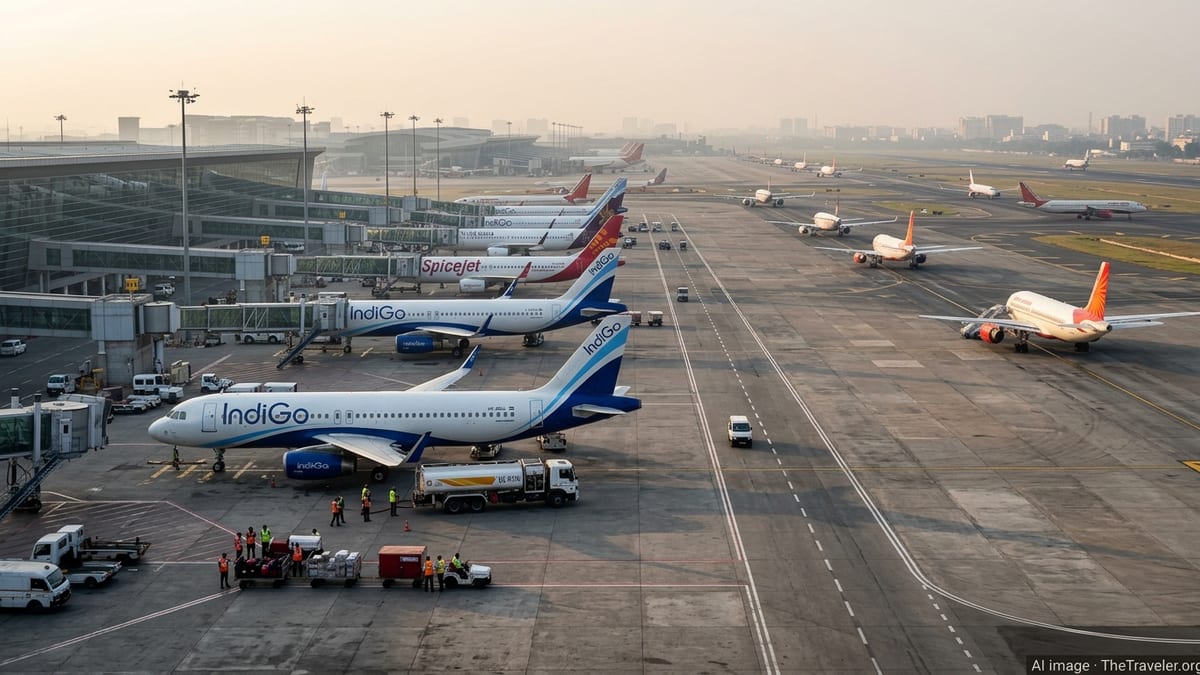
Publicly available information shows that the Directorate General of Civil Aviation is under pressure to recalibrate how strictly it applies existing rules at a time when passenger demand and airline cost burdens are rising together. A series of high profile disruptions, including widespread schedule cuts by IndiGo during the rollout of stricter pilot duty rules, highlighted how quickly the system can seize up when carriers have little room to adjust their operations.
Reports indicate that in late 2025 and early 2026 the regulator granted temporary relaxations from new Flight Duty Time Limitations to ease immediate bottlenecks and allow airlines to rebuild schedules. At the same time, the DGCA ordered additional scrutiny of contingency plans, rostering practices and fatigue risk management, signalling that flexibility on paper would be accompanied by closer day to day oversight of how airlines actually run their operations.
The IndiGo scheduling crisis, in which hundreds of flights were cancelled as the carrier struggled to align staffing with the revised fatigue framework, has become a reference point in the debate. Coverage of the episode shows that the DGCA eventually coupled limited rule easements with financial security requirements and a phased compliance roadmap, underscoring its attempt to avoid a precedent of open ended waivers even as it responded to operational realities.
Fatigue Norms At The Heart Of The Policy Debate
The most sensitive area for potential easing remains pilot fatigue management, where new Civil Aviation Requirements that took effect in 2024 and 2025 tightened limits on night flying, duty hours and rest periods. Aviation experts quoted in domestic media have warned that any sustained rollback of court endorsed fatigue protections could weaken a cornerstone of flight safety, particularly as Indian carriers expand aggressively on longer international sectors.
Pilot groups have already raised concerns that selective dispensations undercut the principle of equal treatment and risk turning safety standards into negotiable items. Published commentary argues that when one airline is allowed to stretch flight and duty parameters for commercial reasons, other carriers will inevitably seek similar concessions, creating pressure for a broader dilution of the framework.
The regulator’s recent stance appears to acknowledge those warnings while still seeking room for manoeuvre. Public documents and reporting describe relaxations that are time bound, tied to specific rescheduling plans and subject to enhanced monitoring of fatigue data and incident trends. In practice, the DGCA is attempting to redraw the line between rigid rule enforcement and a more adaptive, risk based approach that can accommodate short term shocks without permanently weakening protections.
Cost Pressures, Fare Volatility And Capacity Demands
Beyond duty time rules, the DGCA is also navigating a wider set of challenges that are pushing airlines to ask for easier operating conditions. Jet fuel prices have remained volatile, affected by global supply tensions, while a price sensitive domestic market limits how far carriers can pass higher costs on to passengers. Several large airlines have introduced or raised fuel surcharges on international and domestic routes, citing a need to protect fragile balance sheets.
At the same time, policymakers have leaned on airlines to keep airfares in check on busy routes and during festival peaks. Ministry statements cited in national coverage describe the regulator nudging carriers to add temporary capacity during high demand periods to dampen price spikes, with IndiGo, Air India and others deploying hundreds of extra flights on select routes. That push for more seats, coming just as new fatigue and staffing rules tighten the supply of crew hours, has compounded the strain on airline planning.
Parliamentary committees have flagged gaps in the current oversight model, recommending a more sophisticated, data driven mechanism to track and curb exploitative pricing while still leaving room for market based fares. Those recommendations sit alongside calls for quasi judicial powers for the DGCA on tariffs, highlighting how economic and safety regulation are increasingly intertwined as the sector matures.
Balancing Consumer Rights With Airline Viability
Recent regulatory changes have also expanded passenger protections in ways that alter the economics of airline operations. New refund norms taking effect in March 2026 give travellers a limited window to cancel or modify tickets without extra fees under defined conditions, reducing the flexibility airlines traditionally enjoyed in managing revenue from no shows and last minute changes. Social media and forum discussions suggest these rules are popular with frequent flyers, but industry commentary points to additional revenue pressure for carriers already operating on thin margins.
Separately, a suite of measures on seat selection, family seating, disclosure of passenger rights and ancillary fees has strengthened the information and choice available to travellers. According to publicly available summaries of the changes, airlines must now provide clearer visibility of entitlements and charges at the time of booking, and allocate a significant proportion of seats without extra payment.
These consumer oriented reforms are reshaping the balance between base fares and add on income, especially for low cost carriers that rely heavily on paid extras. In response, airlines are lobbying for regulatory breathing space in other areas, such as scheduling, crew utilization and network expansion, arguing that a cumulative build up of obligations could erode their ability to invest in new aircraft and routes.
Implications For Travellers And India’s Aviation Growth Story
For passengers, a shift toward more flexible rules for airlines is likely to be felt less in the wording of regulations and more in the reliability and pricing of day to day travel. If carefully calibrated, targeted easements on fatigue implementation timelines or rostering constraints could improve on time performance and reduce mass cancellations during periods of stress, while still preserving fatigue safeguards in normal conditions.
However, analysts quoted across Indian business media caution that any perception of a regulatory retreat on safety critical issues could invite scrutiny from international partners and aviation bodies. India’s carriers are rapidly expanding overseas networks, and their ability to maintain strong safety rankings with foreign regulators is seen as essential to sustaining that growth trajectory.
The DGCA’s evolving stance will therefore influence more than just airline profit and loss statements. It will help determine how quickly India can add capacity on underserved routes, how affordable tickets remain for first time flyers, and how confidently global travellers view the country’s aviation system. As the regulator weighs when to ease rules and when to hold the line, the broader experiment of building a mass market air travel ecosystem on top of tight safety oversight will continue to play out in real time.