

More news on this day
With spring break travel ramping up, a protracted funding lapse at the Department of Homeland Security is rippling through U.S. airports, where tens of thousands of Transportation Security Administration officers are working without pay and mounting staffing shortages are triggering long security lines, missed flights and growing concern about what comes next.
Get the latest news straight to your inbox!
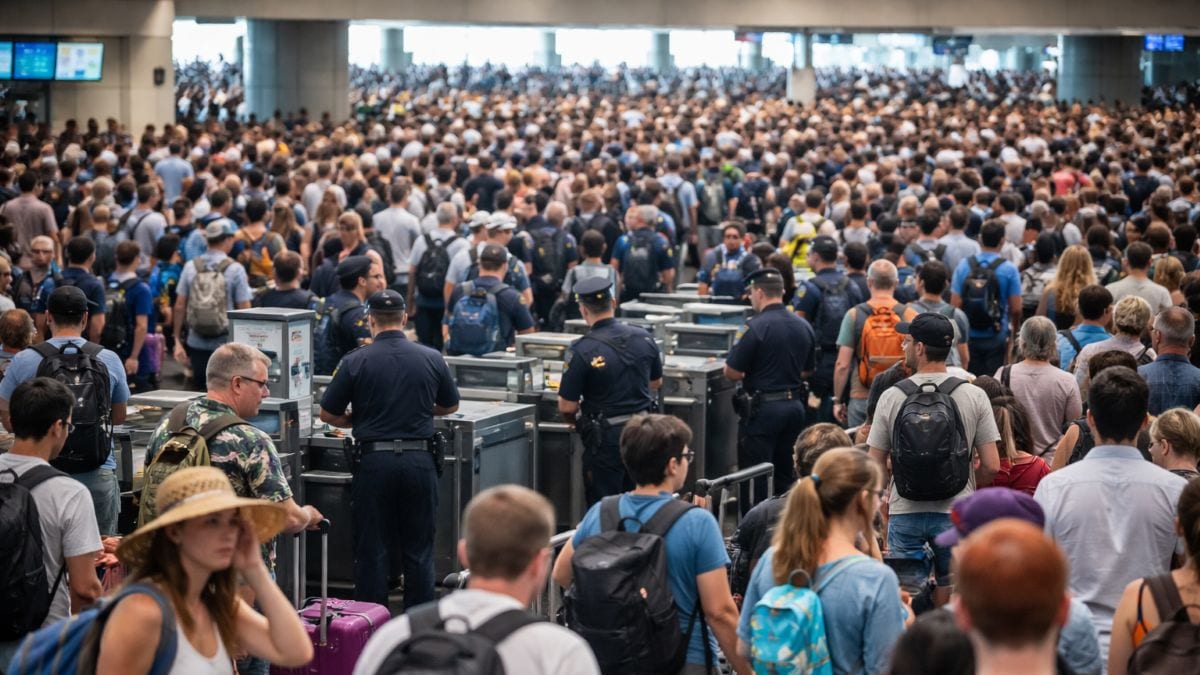
Image by Travel And Tour World
How the DHS Shutdown Reached the Airport Checkpoint
The current disruption traces back to a Department of Homeland Security funding lapse that began in mid February 2026 after Congress failed to reach agreement on a spending bill tied to immigration and border enforcement. DHS agencies responsible for airport security, including the Transportation Security Administration, have been operating under contingency plans that keep essential workers on the job but suspend their pay until funding is restored.
Publicly available budget analyses show that roughly 50,000 to 60,000 TSA screeners are classified as essential personnel. They have been required to report for duty at more than 400 commercial airports while paychecks are delayed, mirroring patterns seen in previous federal shutdowns that disrupted aviation. The result is a workforce under intense financial strain at the very moment passenger volumes are climbing for spring break and Easter travel.
According to recent coverage of the standoff, lawmakers have floated several proposals that would guarantee pay for TSA screeners and Federal Aviation Administration safety staff during future shutdowns, but those efforts remain stalled. For now, TSA officers depend on after the fact back pay, leaving many to bridge weeks of missed income through savings, credit, community assistance or emergency relief programs.
Staffing Shortages, Sickouts and Airport Gridlock
Reports from major hubs over the past two weeks describe three hour security waits at peak times, partial lane closures and rolling delays as TSA struggles to cover checkpoints with fewer available officers. Coverage from multiple outlets notes that hundreds of screeners have resigned since the shutdown began, while others are calling out more frequently as financial pressure mounts, contributing to callout rates that are significantly above normal.
In response, DHS has relied on measures such as sending members of TSA’s National Deployment Force to the hardest hit airports and, in some cases, drawing on Immigration and Customs Enforcement personnel to help staff security lines. These stopgap deployments have eased bottlenecks at certain locations but have not eliminated longer wait times, especially during early morning and late afternoon banked departure periods.
Passenger experiences remain highly uneven from airport to airport. Some mid sized and regional facilities report relatively normal screening times, while large hubs that serve as connecting gateways for popular beach and resort destinations are seeing more severe backups. Travel industry analysts note that even modest staffing shortfalls can cascade quickly when flights are tightly scheduled and terminals are operating close to capacity.
For airlines, the primary impact has been departure delays as carriers hold flights for passengers stuck in security queues. While there is no indication of systemic safety issues, operational data shows a rise in late departures and missed connections linked to screening bottlenecks rather than weather or mechanical problems.
Financial and Human Toll on Unpaid Security Officers
Union statements and worker testimonials gathered by news organizations depict a workforce under intense financial and emotional stress. TSA officers, many of whom earn modest base salaries, are reporting skipped bill payments, eviction notices, car repossessions and difficulty paying for fuel, child care and medication while they continue reporting for duty without a paycheck.
Advocacy groups representing federal employees point out that TSA officers have experienced similar hardships during past shutdowns, but the current lapse arrives on the heels of an earlier, lengthy government wide funding gap in 2025 that also forced them to work without pay. With limited savings left to cushion another extended disruption, many officers are facing difficult choices about whether they can afford to remain in their jobs.
Labor organizations argue that the situation could have long term implications for aviation security if experienced screeners permanently leave the workforce. Training and certifying new officers takes time, and high turnover can reduce the depth of on the job expertise at busy checkpoints. Some airport managers have publicly expressed concern that continued attrition would make it harder to ramp up quickly for the peak summer season even if DHS funding is eventually restored.
At the same time, community groups and charitable organizations in several cities have stepped in with food drives, financial assistance and donated services aimed at helping unpaid federal workers cover essentials. While these efforts provide short term relief, they cannot substitute for regular income, and many TSA employees remain in a tenuous position as the political impasse in Washington continues.
What Spring Break Travelers Can Expect at U.S. Airports
For travelers heading out in late March and early April, the immediate effect of the DHS shutdown is most visible in unpredictably long security lines. Travel data and on the ground reports suggest that waits are generally longer at large coastal hubs and high volume vacation gateways, particularly during early morning departures and Sunday peak periods when spring break traffic is heaviest.
Industry analysts recommend that passengers plan conservatively, building in extra time for check in, baggage drop and security screening, especially at airports that have reported extended waits in recent days. Families traveling with children and larger groups may be more susceptible to delays, as it typically takes longer to prepare carry on items for screening and move everyone through ID checks and security scanners.
Within terminals, some airports are adjusting operations by opening additional checkpoints when staffing allows, redirecting travelers between concourses and posting real time wait estimates on internal displays. However, these measures depend on the availability of trained TSA officers, which remains constrained as long as the shutdown persists.
Travelers who miss flights because of lengthy security queues are generally being rebooked under individual airline policies, which may or may not include fee waivers. Travel experts advise checking carrier notifications frequently on the day of departure, using mobile boarding passes when possible and being prepared for rebooking options that may involve longer layovers or less direct routings.
Uncertain Timeline, Partial Relief and the Road Ahead
The political path out of the shutdown remains unclear. Recent congressional discussions have focused on short term measures that would restore DHS funding through a temporary continuing resolution, paired with separate negotiations over immigration enforcement policy and oversight of border agencies. Publicly available reporting indicates that while some bipartisan proposals exist, there is no final agreement in place as of the final weekend of March 2026.
In an effort to ease immediate pressure on unpaid officers, an executive action announced in late March authorizes DHS to direct available funds to cover at least a portion of back pay for TSA employees, with agencies indicating that paychecks could resume as early as the end of the month. Policy experts caution that such steps may provide short term relief without fully resolving the underlying budget dispute, raising the risk that similar disruptions could occur again.
Aviation and labor groups continue to press for legislation that would permanently exempt critical aviation safety and security personnel from the financial effects of funding lapses. Supporters argue that travelers should not face cascading delays at airports because of political impasses in Washington, and that frontline officers should not be asked to work indefinitely without pay in order to keep the system running.
For now, travelers planning spring break trips are entering an environment shaped by ongoing political negotiations, strained security staffing and elevated demand for air travel. Until a durable funding solution emerges, those heading to the airport in the coming weeks are likely to encounter a system that is functioning, but under noticeable and sometimes chaotic stress.