

More news on this day
Oxford is experiencing a fresh wave of global visitors from the United States, Germany, France, Spain, Italy, Mexico, Japan and across the United Kingdom, as new digital tools such as the Discover app reshape how travellers navigate the historic city and spend with local businesses.
Get the latest news straight to your inbox!
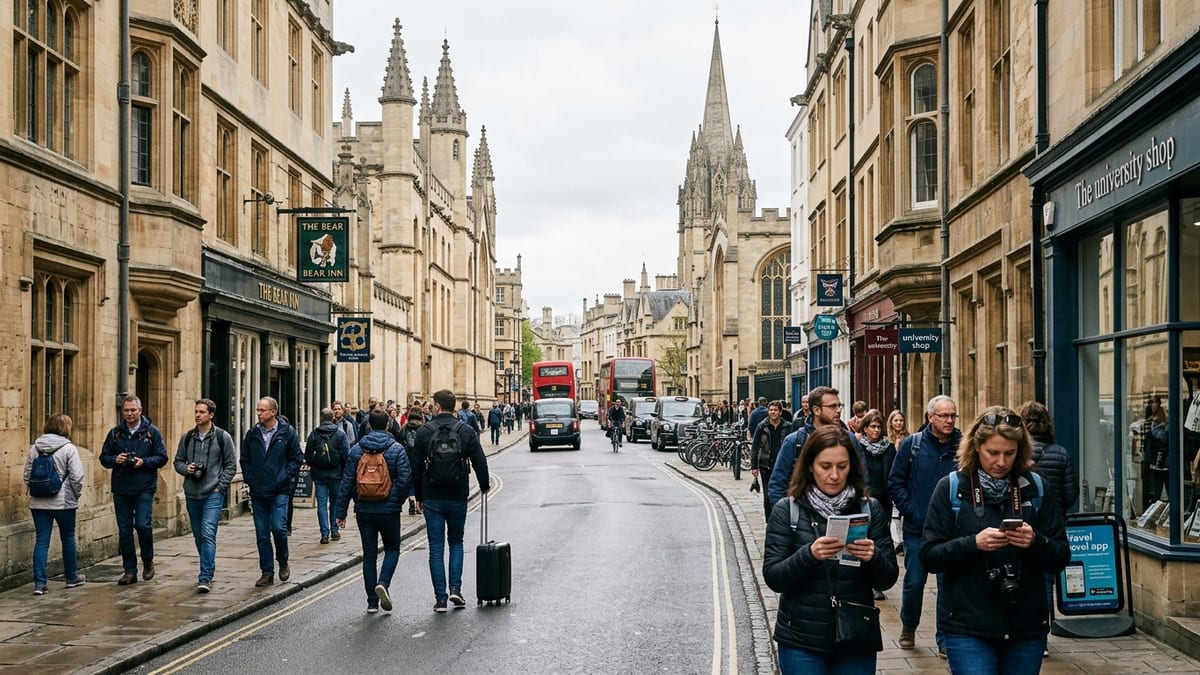
Oxford’s Visitor Economy Surges On International Demand
Recent tourism data show Oxford consolidating its position as one of the United Kingdom’s strongest city destinations, with visitor spending and footfall rising sharply. Local monitoring reports indicate that millions of people are now passing through the city centre each quarter, with counts between September and November 2024 significantly higher than in the same period a year earlier. Citywide visitor economy infographics for 2024 point to more than five million trips and hundreds of millions of pounds in related expenditure, placing Oxford among the top UK cities for tourism revenue.
National statistics add context to this surge. The United Kingdom welcomed more than forty million international visits in 2024, with residents of the United States providing the largest single share, followed by France and Germany. Industry analyses highlight Oxford alongside London, Edinburgh and other heritage destinations as key beneficiaries of this demand, especially among long-haul travellers looking for university cities and picture-book historic streets beyond the capital.
Forecasts from tourism bodies suggest this momentum will continue, with American and European travellers expected to set new spending records in the UK through 2025 and 2026. Oxford’s mix of renowned colleges, river scenery and compact walkable districts positions it strongly in campaigns aimed at city-break visitors from Germany, France, Spain, Italy, Mexico and Japan, who are increasingly combining London stays with side trips by rail to regional hubs.
Within the UK itself, domestic travel trends also favour Oxford. Visitor surveys point to British residents taking more short cultural breaks closer to home, and Oxford regularly appears in top-ten lists of preferred day-trip destinations, reinforcing year-round demand that underpins hotels, restaurants and attractions.
Discover App Launch Puts Hidden Corners On The Tourist Map
In March 2026, Oxford City Council introduced the Discover app as part of its long-running strategy to improve wayfinding and diversify the visitor experience. Publicly available information about the launch describes a mobile platform that brings together maps, transport details, itineraries, accessibility information and listings for attractions, independent shops and food venues across the city.
The app is designed to guide visitors beyond the most crowded central landmarks toward lesser-known neighbourhoods, green spaces and cultural venues. Rather than focusing solely on headline sights, Discover curates themed trails, family-friendly walks and free activities that encourage longer stays and wider exploration. The emphasis on active navigation also responds to demand from travellers who prefer to self-guide via smartphones instead of traditional paper maps or group tours.
Digital tools of this kind are becoming a standard feature of competitive urban destinations, but Oxford’s approach is notable for the breadth of local data integrated into a single interface. The Discover app links practical information, such as public transport connections and opening hours, with editorial-style highlights that foreground local stories and heritage. This combination aims to make spontaneous exploration easier for international visitors unfamiliar with the city’s layout.
Early feedback from local tourism partners reported in regional coverage suggests that visitors are using the app to seek out quieter cafés, bookshops and galleries, particularly in streets just beyond the densest tourist corridors. For local government, the tool also supports crowd-management goals by encouraging time in lesser-visited zones, which can ease pressure on narrow historic streets and college entrances during peak months.
Boost For Independent Businesses, Hospitality And Airlines
The rise in digitally driven tourism is feeding directly into Oxford’s local economy. Visitor economy summaries for 2024 show tourism generating hundreds of millions of pounds in direct and indirect spending, supporting thousands of jobs in accommodation, food service, retail and cultural venues. By listing independent traders and neighbourhood attractions alongside major sights, the Discover app aims to distribute this spending more evenly across the city.
Many of Oxford’s smaller businesses rely heavily on passing trade from visitors. Inclusion in an official discovery tool increases their visibility to travellers from the United States, continental Europe, Mexico and Japan who might otherwise remain focused on a small cluster of central attractions. Industry observers note that city apps are increasingly functioning as digital shop windows, directing tourists to locally owned restaurants, artisan producers and specialist shops that differentiate a destination from global chains.
The airline and rail sectors are also positioned to benefit from Oxford’s heightened profile. Strong transatlantic demand into London, combined with extensive rail links from the capital, has made Oxford a straightforward add-on for US travellers who are already visiting the UK and mainland Europe. Carriers serving North American, European and Asian hubs promote multi-city itineraries in which Oxford appears as a compact, culture-rich stop between major gateways.
Regional hospitality operators report, through publicly available statements and analyses, solid growth in city-break bookings tied to this international interest. Hotels, guesthouses and short-let properties in Oxford have seen higher occupancy during shoulder seasons, as travellers from Germany, Spain, Italy and France extend their trips beyond peak summer months and seek out university cities associated with film locations, literature and academic history.
Competing For Global Travellers In A Digital-first Era
Oxford’s embrace of the Discover app reflects a broader shift in how destinations market themselves to tech-savvy travellers. International visitors from the United States, Japan, Mexico and major European economies increasingly plan and adapt trips via mobile devices, favouring cities that offer clear digital guidance, real-time updates and curated recommendations. In this environment, an official app becomes both a promotional tool and a service layer that shapes behaviour on the ground.
Analysts observing European tourism trends point out that cities which successfully disperse visitors beyond a few landmark sites are better able to balance growth with residents’ quality of life. By highlighting walking routes along the rivers, neighbourhood parks and smaller museums, Oxford’s Discover platform aligns with a growing policy focus on sustainable tourism and inclusive economic benefits.
The app also helps Oxford compete with other historic destinations in the UK and continental Europe that have already introduced digital passes or city apps integrating transport, attractions and deals. As American, European and Asian travellers weigh up whether to allocate an extra day to Oxford, Cambridge, Bath or regional cities abroad, the promise of an easy-to-use digital guide can influence decisions at the itinerary-planning stage.
Looking ahead, tourism planners are likely to track how features such as multilingual support, push notifications about temporary exhibitions, and integrations with local events calendars affect visitor behaviour. As the volume of travellers from the United States, Germany, France, Spain, Italy, Mexico, Japan and the domestic UK market continues to grow, Oxford’s experience with Discover may serve as a test case for how mid-sized heritage cities can harness apps to channel demand while preserving their distinctive character.