

More news on this day
On a stretch of Brazil’s southern Bahian coast where rainforest meets ochre cliffs and quiet coves, Trancoso has evolved from an isolated fishing village into one of the country’s most coveted beach escapes, combining barefoot bohemian culture with some of South America’s most talked-about luxury stays.
Get the latest news straight to your inbox!
From Hippie Hideout to High-End Beach Refuge
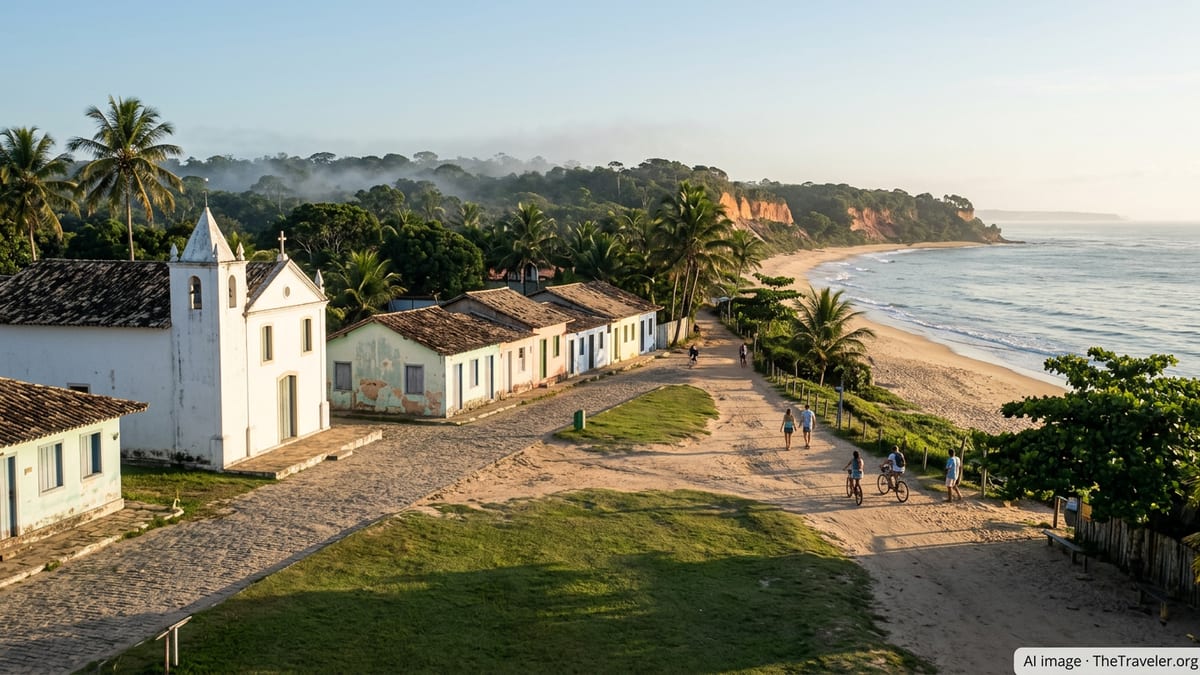
Reports describe Trancoso as a car-lite village set on a plateau above the Atlantic, with sandy lanes leading to the Quadrado, a grassy main square edged by low, pastel-colored houses and a simple white church overlooking the sea. Once largely unknown beyond Bahia, the destination began drawing Brazilian artists and creatives in the late 20th century and gained broader attention around 2000 as travelers sought quieter alternatives to more developed resort towns.
Recent travel coverage characterizes Trancoso as a place where rustic architecture, dense Atlantic forest and long, undeveloped beaches remain central to its appeal, even as upscale boutiques and design-forward guesthouses have appeared behind restored façades on the Quadrado. Visitors often remark on the relaxed rhythm of village life: mornings on the beach, long lunches in shaded beach bars, and evenings when the square glows with lantern light and open-air restaurants.
The local tourism narrative emphasizes an enduring sense of Bahian identity. Publicly available information notes that many hospitality projects highlight regional materials such as reclaimed wood and local stone, while menus focus on moquecas, fresh-caught fish and Afro-Brazilian street foods like acarajé. This emphasis on place has helped Trancoso preserve a distinctive atmosphere despite its rising international profile.
Golden Beaches, Clifftop Views and Nature-Focused Escapes
Travel guides describe a coastline of wide, golden-sand beaches framed by low cliffs, coconut palms and patches of mangrove, with calmer seas in sheltered stretches and natural pools forming at low tide. Praia dos Nativos, the village’s closest and best-known beach, is lined with simple kiosks, daybeds and a handful of higher-end beach clubs, making it a focal point for first-time visitors.
To the north, Rio da Barra and nearby Praia das Tartarugas are frequently highlighted for their scenery where river and ocean meet beneath red cliffs. Promotional material for nearby resorts points to generally calm waters, opportunities for swimming and paddleboarding, and small beach restaurants serving grilled seafood directly on the sand. Farther south, Praia do Rio Verde and Itapororoca are often recommended for travelers seeking quieter walks and more secluded swimming spots.
Several recent features position Trancoso as a wellness and retreat destination, citing yoga sessions under palm trees, open-air spa pavilions and nature excursions into the surrounding Atlantic forest. Local organizations promoting sustainable tourism emphasize low-rise development, preservation of native vegetation and encouragement of environmentally conscious practices such as minimizing plastic use and supporting community-led initiatives.
Inside Bahia’s Most Talked-About Luxury Stays
Among Trancoso’s accommodation options, a cluster of boutique hotels and villa-style retreats has attracted sustained international attention. Publicly available information from Bahia-focused real estate and hospitality platforms describes the village as one of Brazil’s densest pockets of high-design beach houses, many created by well-known Brazilian architects and interior designers, mixing polished concrete, tropical hardwoods and open-plan living spaces.
UXUA Casa Hotel & Spa, a small property spread across restored fishermen’s houses around the Quadrado and a rustic beach lounge among mangroves, remains one of Trancoso’s best-known names. According to recent coverage, the hotel has been repeatedly recognized in global “best hotels” lists and, in late 2025, was the only Brazilian property selected for Condé Nast Traveler’s Gold List 2026, underscoring its role in placing Trancoso firmly on the international luxury map.
Other prominent high-end stays highlighted in current travel reporting include villa complexes set within the Terravista development on clifftops above Rio da Barra, with access to a private airstrip and one of South America’s most noted coastal golf courses. Newer boutique hotels emphasize wellness, locally sourced cuisine and low-impact construction, catering to travelers seeking spa programs, meditation decks and quiet gardens rather than large-scale resort entertainment.
Alongside these exclusive addresses, Trancoso still offers smaller pousadas and design-led guesthouses tucked into side streets or foliage near the beach. This range of options, from simple bungalows to fully staffed villas with infinity pools and private chefs, allows the village to appeal both to backpackers exploring Bahia and to guests arriving by private jet.
Planning Your Journey: Access, Seasons and On-the-Ground Tips
Most visitors reach Trancoso via Porto Seguro, a city about 25 kilometers away that serves as the main air gateway for this stretch of Bahian coast. Travel guides explain that from Porto Seguro, travelers typically cross the Buranhém River by ferry and then continue by road for a roughly one-hour drive to the village, using either private transfers, rental vehicles or shared vans. Some higher-end properties within the Terravista complex also make use of a nearby private airstrip for charter flights.
Published travel advice notes that Trancoso is a year-round destination, with warm tropical temperatures and sea breezes. The drier, sunnier months from roughly July to January are favored by many international visitors, while the Brazilian summer and New Year period can be particularly busy, as domestic travelers flock to the coast. Carnival and local festivals, including an annual film event that screens works around the Quadrado, can add to crowd levels and accommodation demand.
Once in the village, visitors often rely on walking, beach taxis and local drivers, as the historic center is compact and many streets are unpaved. Travel writers recommend lightweight clothing suitable for heat and humidity, while suggesting more modest dress away from the beach. Although Trancoso is widely described as relaxed and relatively calm, standard urban travel precautions around valuables and late-night movements are still advised.
Publicly available information on health and safety also highlights Brazil’s seasonal mosquito-borne illness risks, encouraging travelers to stay informed about current conditions, carry repellent and consult health professionals before departure. Many upscale stays now incorporate mosquito screens and natural repellents into room design and amenities.
Culture, Cuisine and Responsible Travel in a Bohemian Village
Beyond its beaches and boutique hotels, Trancoso’s cultural fabric reflects a blend of Indigenous, Afro-Brazilian and Portuguese influences. The church on the edge of the Quadrado and annual religious festivals, along with newer artistic events such as the local film festival, illustrate how long-standing traditions coexist with contemporary creative scenes. Evenings in the square often feature live music, artisanal markets and open-front ateliers displaying regional crafts and fashion.
Culinary coverage of Trancoso highlights a spectrum from rustic to refined: open-air beach huts grilling fish, restaurants serving regional seafood stews with coconut milk and dendê oil, and chic Quadrado dining rooms offering tasting menus built around local produce. Many luxury hotels and villas now emphasize farm-to-table dining, drawing on small-scale organic farms and, in some cases, dedicated properties that grow fruit, vegetables and cacao for in-house kitchens and spa programs.
Organizations dedicated to Trancoso’s long-term tourism management present the village as a testing ground for sustainable coastal development in Brazil. Their public materials stress the importance of balancing economic growth with environmental protection, calling for careful control of construction density, conservation of native forest and mangrove areas, and deeper integration of local residents into tourism-related decision-making and employment.
As visitor numbers grow, travel advisories encourage guests to choose operations with transparent environmental and social policies, support community businesses and respect informal local norms, such as keeping noise levels low at night and minimizing single-use plastics on the beach. In doing so, travelers can experience the village’s celebrated combination of bohemian ease and discreet luxury while contributing to the preservation of the landscape and culture that made Trancoso one of Bahia’s standout coastal destinations.