

More news on this day
Disney Cruise Line’s largest ship, the Singapore-based Disney Adventure, has made its long-awaited commercial debut, but early guest reactions are casting a shadow over the fanfare, with complaints surfacing about cabin comfort, unconventional bedding and the reliability of key attractions onboard.
Get the latest news straight to your inbox!
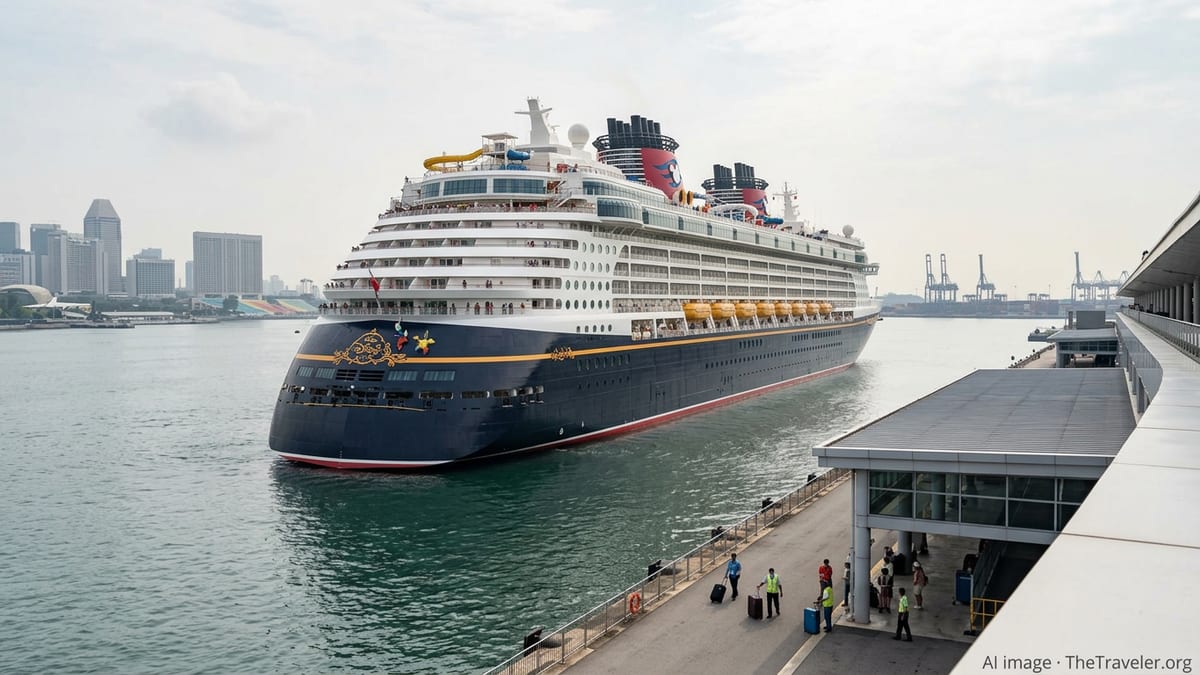
A Splashy Debut in Singapore Under Scrutiny
The Disney Adventure, christened in Singapore last week as Disney Cruise Line’s first year-round ship based outside the United States, arrived with high expectations after a much-publicized three-month delay to its maiden voyage. The ship is now sailing three and four night cruises from Marina Bay Cruise Centre, positioning Singapore as Disney’s flagship hub for the Asian cruise market.
The ship, converted from a partially built mega-liner acquired during the pandemic, has been promoted as a showcase of immersive storytelling, new entertainment concepts and Asia-focused retail and dining. A pre-inaugural media sailing spotlighted features such as San Fransokyo Street, the largest Disney water park at sea and extensive character programming tailored to multigenerational families.
Yet, even as Disney orchestrated a cinematic christening and celebrated the start of regular voyages, social media posts, cruise forums and early passenger reports began to highlight operational and design issues. For many travelers following from the United States and beyond, those mixed reviews are raising questions about whether the line rushed its newest ship into service after the postponement.
Cabin Layouts and Storage Spark Guest Frustration
Among the most pointed criticisms so far are complaints about the design and practicality of some staterooms. While Disney reduced overall capacity compared with the ship’s original specification to improve service ratios, some guests on the first sailings say that key family cabins feel cramped, with tight circulation space around beds and limited storage for luggage on short but packed itineraries.
Photos and cabin walk-throughs shared by early passengers show clever touches familiar to Disney loyalists, such as split bathrooms and convertible sofas, but also unusual layouts created by the ship’s complex retrofit. In certain categories, beds and wardrobes appear wedged into former structural constraints, leading to awkward angles and narrow passageways between sleeping and seating areas.
Travel agents who toured the ship in Singapore note that not all stateroom types are affected, but warn that guests used to the more standardized layouts on Disney’s U.S. based fleet may find the variety and quirks on the Disney Adventure surprising. Advisers are already urging clients to study deck plans carefully and to be realistic about how much time a family of four will comfortably spend in a compact cabin on a sea day intensive itinerary.
Mattress Controversy Puts Comfort in the Spotlight
The most eyebrow raising feedback to emerge from the debut concerns bedding. Several passengers on the early sailings report that some pull-down and convertible sleeping surfaces are fitted with thin, built in cushions rather than traditional standalone mattresses, describing the experience as closer to sleeping on a firm couch than on a bed.
In online posts, guests have shared photos of upper berths and sofa beds that appear to rely on upholstered bases instead of full depth mattresses, prompting a flurry of debate among Disney Cruise Line fans about whether the company economized on an element long regarded as a strong point of its ships. A viral post from one guest described their bunk as lacking an “actual mattress,” galvanizing concern from families booked in similar cabin categories later this spring.
While reports of mattress quality vary by stateroom type, the controversy has already pushed bedding to the forefront of pre cruise planning for many would be guests in both Asia and North America. Some travel planners say clients are now asking which cabin classes have conventional beds for all sleepers and whether Disney will retrofit problematic berths if feedback continues to mount over the coming weeks.
Ride Delays and Operational Hiccups Mar Early Voyages
Alongside the cabin discussion, questions are swirling around the reliability of key attractions and entertainment systems. During the pre inaugural media cruise and the earliest paying sailings, passengers reported intermittent closures and delayed openings for some marquee experiences, including elements of the water park and headline shows that are central to the ship’s appeal.
Guests have recounted lining up for signature family thrills only to encounter unscheduled downtime or limited operating windows, while others noted last minute schedule changes for theater productions and character events. Some reviewers characterized the pattern as a ship still working through dress rehearsal level issues even after its official ribbon cutting.
Industry analysts point out that new ships often face a shakedown period as crews fine tune operations and address technical glitches. However, the Disney Adventure is under particular scrutiny because its commercial debut followed a high profile construction delay and because its short itineraries leave little room for guests to reschedule missed experiences. For travelers flying long haul from the United States, even a few hours of attraction downtime can represent a disproportionate hit to perceived value.
Disney Balances Expectations in Key Asian and U.S. Markets
The early turbulence comes as Disney Cruise Line seeks to cement its presence in Asia while maintaining strong demand in its core U.S. markets. The Disney Adventure is central to that strategy, offering families in the region a way to experience the brand without traveling to Florida or California, and tempting American fans with a new reason to pair a cruise with a broader Southeast Asia trip.
Travel advisers in Singapore say interest remains strong despite the criticism, driven by Disney’s powerful name recognition and the city state’s reputation as a safe, efficient gateway. Some sailings following the maiden voyage are already heavily booked, particularly school holiday periods, underscoring the appeal of short, sea day focused getaways that keep logistics simple for multigenerational groups.
For now, prospective guests in the United States are watching closely to see how Disney responds. The line has a track record of adjusting operations and soft goods based on feedback during the first months of a new ship’s life, and observers expect similar tweaks on the Disney Adventure, particularly around bedding and attraction capacity. How quickly those adjustments are made may determine whether the ship’s early criticism becomes a lingering narrative or a brief prologue to a long run in Singapore’s busy cruise calendar.