

More news on this day
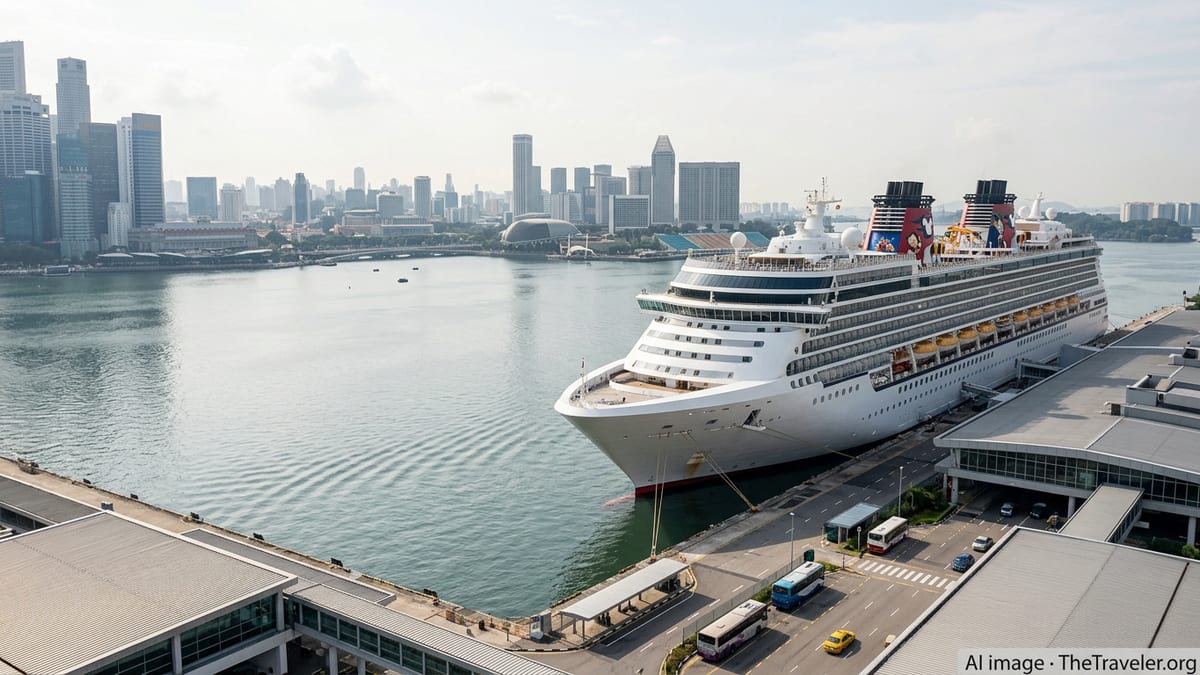
Singapore has officially welcomed the Disney Adventure, Disney Cruise Line’s largest ship to date, marking a high-profile debut that positions the city-state as the launchpad for a new era of family cruise travel in Asia.
Record-Breaking Ship Anchors Disney’s Asia Strategy
Christened in a music-filled ceremony at Marina Bay Cruise Centre on March 4, 2026, the Disney Adventure is the eighth and largest vessel in the Disney Cruise Line fleet. The ship arrives as the brand’s first year-round homeported vessel outside the United States, underscoring how critical Asia has become to Disney’s long-term cruise strategy.
Weighing in at around 208,000 gross tons and stretching roughly 343 meters in length, the Disney Adventure is substantially larger than Disney’s Wish-class ships, boosting capacity by about 45 percent. With space for approximately 6,700 guests at maximum occupancy and nearly 2,000 staterooms, the vessel is designed to absorb surging regional demand for short, experience-led holidays at sea.
The ship arrived in Singapore on March 3 after an attention-grabbing repositioning voyage that included transits via Port Canaveral, Los Angeles and Tokyo, as well as a record-setting passage through the Panama Canal as one of the largest passenger ships ever to navigate the waterway. Its arrival cements Singapore’s status as a premier homeport for Southeast Asian cruising.
Disney officials describe the deployment as the centerpiece of a multiyear expansion of the cruise line, supported by a long-term agreement with the Singapore Tourism Board to base the ship in the city for at least five years. For both partners, the Adventure’s debut is framed as a gateway to new family travel markets from across Asia-Pacific.
Seven Immersive “Lands” Bring Theme Park Storytelling to Sea
The Disney Adventure has been conceived as a floating resort that borrows heavily from Disney’s theme park playbook. At the heart of the concept are seven distinct “lands,” each blending dining, live entertainment, attractions and character encounters built around Disney, Pixar and Marvel stories.
On the top decks, Marvel Landing houses one of the ship’s signature features: Ironcycle Test Run, Disney Cruise Line’s first roller coaster at sea. The ride sends guests racing more than 820 feet along the upper deck with sea views on one side and the ship’s futuristic superstructure on the other, signaling the line’s intention to compete directly with the thrill attractions long offered by rival mega-ships in the region.
Elsewhere on board, San Fransokyo Street, inspired by “Big Hero 6,” recreates a stylized streetscape with casual eateries, neon-lit details and interactive entertainment designed to appeal to multigenerational Asian audiences familiar with the film. The open-air Disney Imagination Garden serves as a central hub, framed by layered terraces and greenery, where evening shows and fireworks at sea can be staged against the Singapore skyline or open ocean.
Additional zones such as Toy Story Place, Discovery Reef, Wayfinder Bay with its “Moana” inspiration, and Town Square anchor family pools, kids’ clubs, retail and lounges, giving the ship a layout that feels closer to a compact theme park than a conventional cruise vessel. The aim is to keep families immersed in storytelling throughout short three- and four-night itineraries, even without extensive port calls.
Designed for Asia’s Short-Haul Family Holiday Market
The deployment of Disney Adventure from Singapore targets a rapidly growing segment: families from across Asia seeking short, hassle-free getaways that combine entertainment, dining and child-friendly amenities in a single package. Initial itineraries focus on three- and four-night sailings, mirroring the length of many popular regional city breaks.
Singapore’s air connectivity is expected to be a key advantage. Changi Airport serves as a major hub for travelers from markets such as India, China, Indonesia, Australia and the Middle East, making it relatively easy to package fly-cruise holidays centered on the Disney Adventure. Promotional campaigns already underway in the airport’s terminals highlight the ship’s themed areas and on-board experiences to passing travelers.
On board, Disney is tailoring its offer to multigenerational groups and first-time cruisers, with a mix of immersive kids’ clubs, family activity spaces and adults-only venues. Broadway-style shows, including a new production titled “Remember,” are programmed alongside character meet-and-greets and fireworks at sea in an effort to differentiate the product from mainstream mass-market lines while maintaining broad regional appeal.
Pricing and itinerary length position the ship as an aspirational but accessible option for families used to theme park vacations in Tokyo, Hong Kong or Shanghai. By bringing its cruise product directly to Southeast Asia, Disney is betting that many of those guests will now be willing to sample its at-sea version of the brand without long-haul flights to Florida or Europe.
Singapore Strengthens Its Role as a Regional Cruise Hub
For Singapore, the arrival of Disney Adventure is both a symbolic and practical win in the highly competitive regional cruise market. The city-state has spent years investing in cruise infrastructure and marketing itself as a turnaround port for large vessels, and securing Disney’s largest ship gives that strategy a high-visibility flagship.
Officials expect the ship’s homeporting to generate a steady flow of regional visitors who will spend pre- and post-cruise nights in the city, supporting hotels, attractions and retail. The partnership also deepens the alignment between Singapore’s position as a family-friendly destination and its ambition to anchor major cruise deployments in Southeast Asia.
The move comes as Asian cruise markets gradually rebuild capacity and confidence following several years of disruption. With Disney Adventure joining a growing roster of megaships calling at or homeporting in Singapore, the Marina Bay Cruise Centre is set to handle higher volumes of large-vessel traffic, raising the city’s profile among global cruise brands.
Industry observers note that Disney’s decision to base its largest ship in Singapore, rather than in a more traditional North American or European market, signals a belief that Asia’s family travel segment is poised for significant long-term growth. The success of the Adventure’s inaugural seasons is likely to influence future deployment decisions for both Disney and competing lines.
A Technological Step Forward for the Fleet
Beneath the entertainment-focused headlines, the Disney Adventure also represents a technological evolution for Disney Cruise Line. Originally ordered as part of a different series of ships and later acquired and reimagined by Disney, the vessel incorporates a new propulsion and energy profile for the brand.
The ship is equipped with azimuthing podded propulsion, designed to improve maneuverability in busy harbors such as Singapore’s and to support efficient routing on short regional itineraries. It is also configured to operate on methanol, a lower-emission fuel compared with conventional marine oil, positioning the vessel as a test bed for Disney’s stated sustainability ambitions even as the supply of green methanol in Singapore remains limited.
Cabin and public-space layouts have been reworked to reflect Disney’s family-centric approach, with a high proportion of connecting staterooms and suites aimed at multigenerational groups. At the same time, the design team has carved out expanded adults-only lounges, specialty dining and spa areas to appeal to couples and extended families traveling with children.
As the ship prepares for its maiden voyage from Singapore on March 10, 2026, the industry will be closely watching how successfully Disney translates its theme park-style storytelling to a megaship tailored for Asian travelers. For Singapore, and for the broader regional cruise sector, the Disney Adventure’s debut is being viewed as an early indicator of how strongly family cruising in Asia can rebound and grow in the years ahead.