

More news on this day
Disney Cruise Line’s newly announced Disney Believe, shifting operational conditions in Middle Eastern waters and a packed slate of 2026 European river itineraries are converging to redefine how and where travelers plan to sail in the year ahead.
Get the latest news straight to your inbox!
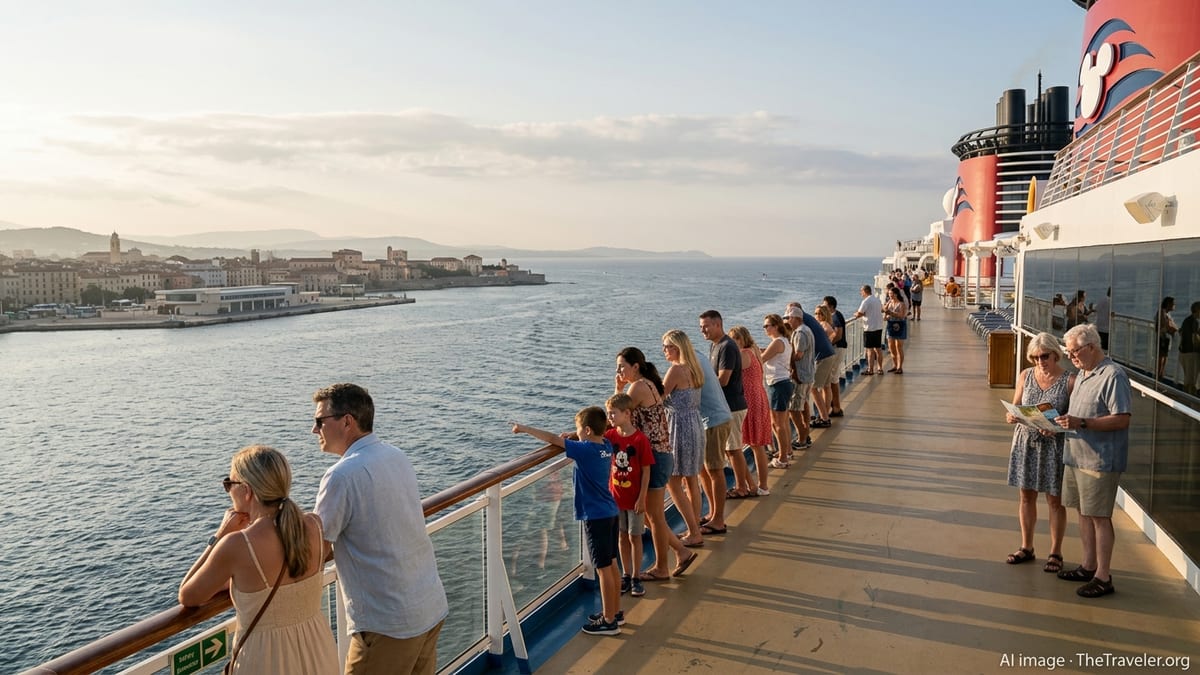
Disney Believe Extends the Line’s Ambitions Into 2026
Publicly available information indicates that Disney Cruise Line is pressing ahead with a rapid fleet build-out, with Disney Believe announced in March 2026 as the fourth ship in the Wish-class series following Disney Wish, Disney Treasure and Disney Destiny. The vessel is scheduled to enter service in 2027, but the announcement is already influencing how families think about cruise planning for late 2026 and beyond.
The addition of Disney Believe comes as Disney finalizes the introduction of Disney Adventure in March 2026 and deploys the recently launched Disney Destiny, widening the range of short-break and weeklong itineraries that transit European and Asian hubs. Industry coverage notes that the line is leaning into the idea of the ship as “both the journey and the destination,” particularly on sailings that emphasize at-sea experiences over intensive port calls.
For travelers mapping out 2026 vacations, that shift matters. Premium family-focused vessels such as Disney Believe are expected to feature expanded immersive entertainment and dining concepts aligned with Disney’s broader franchise strategy. Travel advisors are already positioning 2026 ocean sailings as a bridge year that allows guests to experience the current fleet while eyeing new deployments and booking windows that will open for the new ship in 2027.
Although detailed itineraries for Disney Believe are not yet on sale, the timing of the announcement against a backdrop of changing conditions in the Middle East and strong demand for European sailings suggests that the line is preparing for continued global diversification, with more options for guests who may be reconsidering certain regions.
Middle East Cruise Landscape Adjusts to Operational and Security Realities
In parallel with new ship announcements, the cruise map for 2026 is being redrawn across the Middle East. Recent maritime and logistics bulletins report that tensions in the region have temporarily closed the Strait of Hormuz and disrupted traffic near key chokepoints, prompting carriers to suspend or reroute some services. Several Gulf ports remain operational but are experiencing limitations, while others have seen partial or temporary suspensions of activity.
Despite these short-term constraints, governments and port operators across Saudi Arabia, the United Arab Emirates, Qatar, Oman and Jordan continue to promote a long-term strategy of cruise growth. Coverage from sector conferences and trade forums describes ambitious infrastructure programs, with new cruise terminals, upgraded logistics zones and enhanced passenger facilities being rolled out in Red Sea and Gulf ports as part of wider tourism and transport plans.
Saudi Arabia’s Cruise Saudi initiative, backed by the country’s sovereign wealth fund, has outlined plans to develop multiple Red Sea private island destinations and expand ports such as Al Wajh into homeport-ready facilities. Reports indicate that these projects are aimed at attracting more international lines and building a year-round or extended-season operation that can link the Eastern Mediterranean, Suez region and Red Sea with emerging itineraries.
Across the wider region, organizers of port development gatherings highlight investments in smart-port technologies, shore power readiness and security systems intended to reassure both cruise brands and passengers in the longer term. For travelers looking at Middle East cruises in late 2026, itineraries may reflect a cautious return to affected areas, with more emphasis on Red Sea and eastern Mediterranean ports while operators continue to monitor conditions in and around the Gulf.
Europe’s Rivers Gear Up for a Packed 2026 Season
While the Middle East manages near-term volatility, Europe’s inland waterways are preparing for one of their busiest river cruise seasons yet in 2026. River specialists and premium tour operators have already opened bookings for extended 2026 programs, citing strong demand for slower-paced, scenery-focused travel along the Rhine, Danube, Rhône, Seine and Douro.
Press material from several lines shows a clear trend toward diversified itineraries and longer operating windows. Companies such as Emerald Cruises, Scenic, VIVA Cruises and Nicko Cruises have announced new or expanded sailings for 2026, including extended shoulder-season departures, new ports of call on lesser-visited rivers and additional capacity on popular routes in Portugal and Central Europe.
One notable development is the emphasis on the Douro and other sun-drenched waterways, where lines are basing additional ships and adding more departures to meet continued interest in wine, gastronomy and cultural touring. At the same time, operators are introducing more flexible cruise lengths, from short four-day getaways on the Danube to longer journeys of up to two weeks or more that combine multiple river systems.
Industry commentary also underscores how European river cruises are benefiting from advances in ship design, including quieter propulsion, energy-efficient systems and more spacious public areas. For travelers who may be wary of complex air-sea connections or changing conditions in some ocean regions, these river itineraries provide a comparatively controlled environment with frequent access to well-connected European cities.
How Travelers Are Rebalancing Between Ocean and River in 2026
The interplay between Disney’s growing ocean fleet, the evolving Middle East cruise environment and Europe’s robust river offerings is already visible in booking trends for 2026. Travel trade reporting suggests that some guests who once prioritized exotic ocean itineraries through the Gulf and Red Sea are temporarily shifting interest toward Europe’s rivers or to family-focused sailings in more established ocean markets.
Shorter three and four night ocean cruises, including those operated from major Asian and European ports, are attracting families seeking Disney-style entertainment without committing to longer or more complex itineraries. These trips are frequently paired with land stays in major cities or theme park destinations, reflecting a desire for flexibility amid an unsettled geopolitical backdrop.
At the same time, river cruises in Europe are drawing travelers who value predictable timetables, dense cultural content and easy rail or air access between embarkation and disembarkation points. With 2026 programs already on sale, operators are using early-booking promotions and bundled city extensions to capture demand from guests who might have otherwise considered a Middle East or broader Mediterranean ocean voyage.
Analysts following the sector note that this rebalancing does not signal a retreat from the Middle East over the long term. Instead, it points to a more segmented market in which travelers mix large-ship ocean experiences on vessels such as Disney Destiny and the forthcoming Disney Believe with smaller-scale river journeys, timing their choices around both safety assessments and new product launches.
What 2026 Holds for Cruise Planning
Looking ahead through the 2026 season, publicly available schedules and infrastructure announcements suggest that travelers will encounter a cruise landscape defined by both innovation and uneven regional conditions. On the innovation side, families will see the full impact of Disney’s expanded fleet, with the arrival of Disney Adventure and the ramp-up to Disney Believe’s debut encouraging early bookings and multi-year planning.
In Europe, the breadth of river options is set to make 2026 a pivotal year, with new itineraries on established waterways and expanded offerings on routes like the Douro and the Seine. These sailings are positioned as an appealing alternative for guests seeking immersive cultural travel without the uncertainties associated with some ocean choke points.
In the Middle East, long-term investment in ports and cruise tourism remains significant even as operators navigate the effects of route closures and shifting security calculations. For travelers, that combination means paying closer attention to advisories and itinerary updates while recognizing that the region’s ambition to become a major cruise hub has not diminished.
For now, travelers planning 2026 have a wide spectrum of options, from Disney-branded family adventures at sea to intimate river voyages through Europe’s historic heartlands. How they balance those choices, and how quickly Middle East cruise routes resume their growth trajectory, will help define the next chapter of global cruise travel.