

More news on this day
Fifteen years after its maiden voyage in January 2011, the Disney Dream is marking a milestone that industry observers see as a turning point in the evolution of modern family cruising.
Get the latest news straight to your inbox!
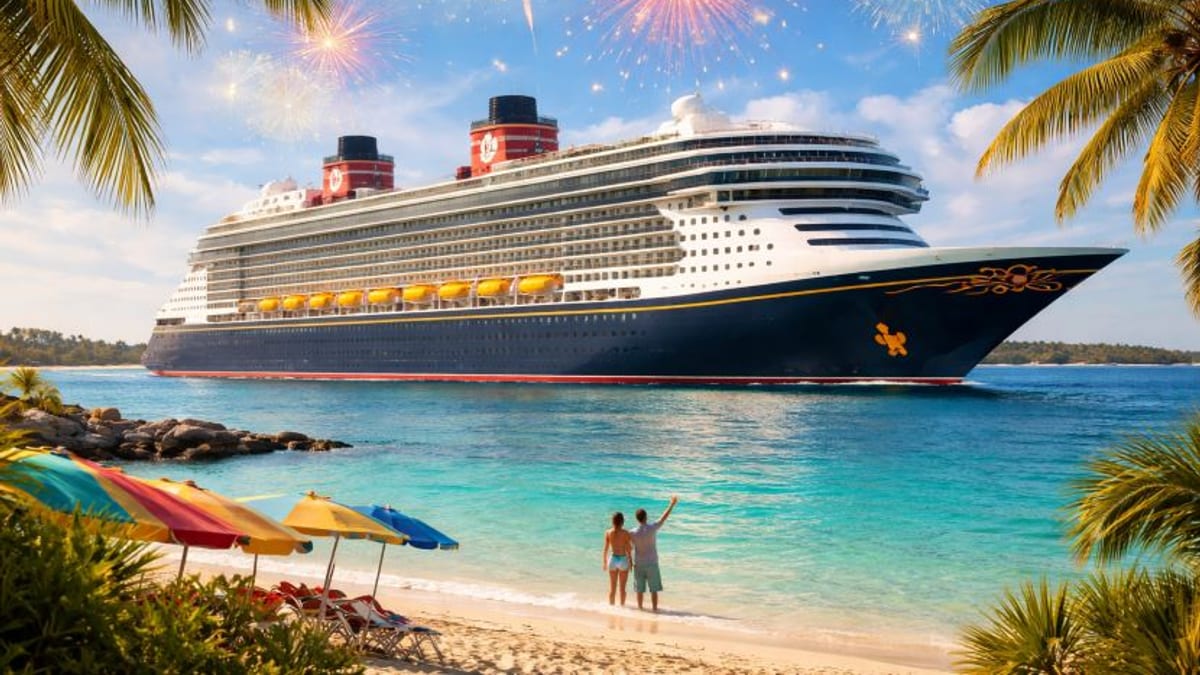
Image by International Cruise News: Latest Cruise Line & Cruise Ship News
A 2011 Debut That Redefined Disney At Sea
Launched into service on January 26, 2011, the 128,000‑ton Disney Dream arrived as Disney Cruise Line’s first newbuild in more than a decade and nearly doubled the size of the company’s original ships. Publicly available information shows that the ship was constructed at the Meyer Werft yard in Germany and completed in December 2010 before crossing the Atlantic to its first U.S. homeport at Port Canaveral in Florida.
Reports on the ship’s early operations indicate that the Dream’s three and four night itineraries to Nassau and Disney’s private island Castaway Cay quickly became a core product for the brand. The vessel’s larger capacity, with around 1,250 staterooms and space for about 4,000 passengers, allowed Disney Cruise Line to scale up while keeping a strong focus on families and multigenerational groups.
Industry timelines note that the Dream inaugurated what became known as the Dream class, followed by sister ship Disney Fantasy in 2012. Together, these ships set a new size benchmark for the company at the time and helped shift Disney Cruise Line from a niche operator into a more prominent player in the global cruise market.
Innovations That Became Cruise Industry Signatures
When Disney Dream entered service, it introduced a range of features that analysts say helped reshape expectations for family cruising. Prominent among them was the AquaDuck, a water coaster that winds high above the pool deck and was widely cited as one of the first true “theme park at sea” style attractions on a mainstream cruise vessel.
The ship also debuted so called virtual portholes in interior cabins, using real time exterior video feeds to give guests in windowless rooms a view of the ocean. Trade coverage at the time highlighted this as a notable guest experience innovation, blending technology and storytelling in a way that aligned closely with Disney’s broader entertainment strategy.
Beyond headline attractions, the Dream’s design placed heavy emphasis on character driven dining and theater experiences that changed throughout a voyage. Observers of the sector note that this approach, later expanded and refined on newer Disney ships, helped cement the company’s reputation for integrating orchestrated entertainment into nearly every part of the onboard experience.
From Caribbean Workhorse To European Mainstay
For much of its first decade, Disney Dream operated primarily from Florida, cycling through Port Canaveral, Miami and Port Everglades for short cruises to the Bahamas and Caribbean. Cruise deployment data show that these routes made the ship a workhorse of the fleet, consistently sailing itineraries built around calls at Castaway Cay.
In recent years, however, the ship has taken on a broader geographic role. Public schedules for summer 2024 placed Disney Dream in the Mediterranean and Western Europe, sailing from Barcelona and Southampton on itineraries that included stops in ports such as Civitavecchia for Rome, Naples, and various Northern European cities. Travel trade reporting further indicates that the vessel is scheduled to return to the United Kingdom market again in 2025, underlining Disney’s long term interest in European deployment.
These seasonal moves have allowed Disney Dream to serve as a flexible platform, introducing the brand to new source markets while filling gaps created as newer ships enter service in North America and Asia. For ports such as Southampton and Barcelona, the ship’s calls have been described in industry commentary as helpful in attracting family focused cruise passengers and diversifying local cruise offerings.
A Cornerstone In An Expanding Disney Fleet
Since Disney Dream’s debut, the cruise division of The Walt Disney Company has expanded from a small four ship operation to a growing fleet that includes the Wish class and additional vessels under construction or conversion. Fleet overviews published in 2025 and 2026 show that by the time newer ships such as Disney Adventure and Disney Destiny enter service, Disney Cruise Line expects to operate more than ten ships worldwide.
Within that larger lineup, Disney Dream is now considered a mid sized vessel, no longer the newest or largest but still central to the brand’s deployment strategy. Its role as a proven, versatile ship makes it suitable for experimenting with new homeports and itineraries in Europe, the Caribbean and potentially other regions as the network expands.
Industry analysts often point to the Dream’s successful introduction as a key proof point that Disney themed cruising could scale beyond two small ships without losing its highly curated onboard experience. The vessel’s performance over the past 15 years is frequently cited in trade coverage as one reason the company has continued to invest heavily in cruise growth alongside its theme parks and resorts business.
Fifteen Years On, Lasting Impact On Family Cruising
As the ship passes its 15 year mark, travel industry commentary suggests that many of the concepts pioneered or popularized on Disney Dream have been echoed across the wider cruise sector. Water coasters at sea, immersive family dining that blends performance and technology, and interior cabins enhanced by digital views are now common talking points in new ship announcements by multiple brands.
The Dream’s longevity also underscores how cruise lines increasingly view major vessels as long term platforms that can be updated through refits, new entertainment and refreshed itineraries rather than replaced. Fact sheets from Disney Experiences note ongoing work to standardize and enhance guest technology and sustainability features across the Magic and Dream class ships, signaling continued investment in the vessel well into its second decade.
For Disney Cruise Line, the 15 year milestone is less a capstone than a reference point. Publicly available deployment schedules into the late 2020s show the ship continuing to move between North America and Europe, serving as both a familiar favorite for repeat guests and an introduction to Disney at sea for first time cruisers in new markets.