

More news on this day
Marking fifteen years since its launch, Disney Dream is rolling out an expanded program of European and Caribbean itineraries that highlights both the ship’s evolution and the broader resurgence of global cruise tourism.
Get the latest news straight to your inbox!
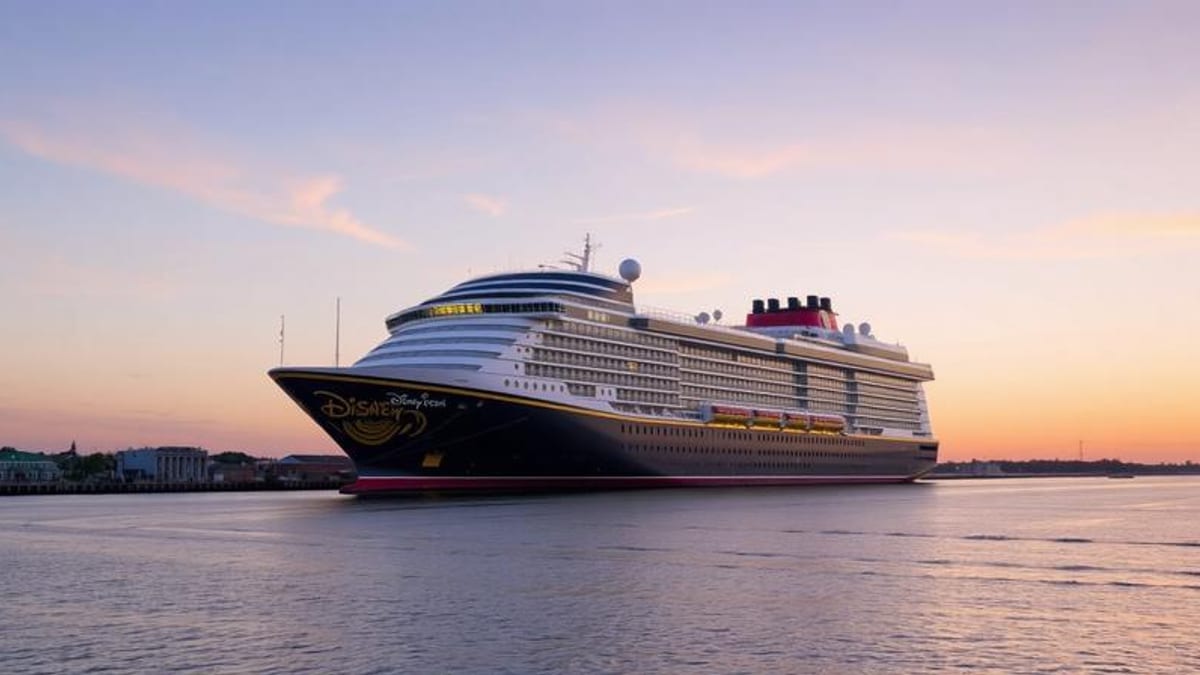
Image by International Cruise News: Latest Cruise Line & Cruise Ship News
Fifteen Years of Disney Dream at Sea
Disney Dream entered service in early 2011 as Disney Cruise Line’s third vessel and its first in a new generation of larger family-focused ships. Fifteen years on, the ship has become one of the line’s most versatile vessels, shifting between short-break sun itineraries and longer seasonal deployments.
Publicly available fleet information shows that Disney Cruise Line now operates an eight-ship fleet, with Disney Dream positioned alongside newer vessels such as Disney Wish, Disney Treasure and Disney Destiny. The expansion has allowed the brand to experiment with new homeports, mix of voyage lengths and deployment patterns while keeping legacy tonnage like Disney Dream at the center of that strategy.
Over the past decade and a half, Disney Dream has moved from its early role in the Bahamas and Caribbean to more complex routing that includes transatlantic crossings and European seasons. Travel planners note that this kind of flexible deployment reflects how cruise brands increasingly use established ships to probe new markets and respond to seasonal demand.
The ship’s fifteenth year finds it operating in a cruise sector that has not only recovered from the pandemic-era shutdown but is now exceeding pre-2020 passenger records. Industry data suggests that established, family-oriented vessels such as Disney Dream are playing an outsized role in attracting both repeat cruisers and first-time guests back to the oceans.
New Europe Season From Southampton and Beyond
Recent Disney Cruise Line schedules indicate that Disney Dream will once again cross the Atlantic to operate a summer season in Europe, with itineraries built around Southampton in the United Kingdom and other regional departure points. A Disney-published itinerary overview for summer 2026 highlights seven-night Western Europe sailings and Northern Europe routes that include ports in Denmark and Norway.
The program includes a Disney Vacation Club member cruise round-trip from Southampton, described in member communications as a seven-night Northern Europe sailing featuring Scandinavian ports and multiple sea days. Other sailings listed on third-party cruise planning sites show Disney Dream combining British turnaround calls with visits to Iberian, Atlantic and North Sea ports, positioning the ship as a premium option in an increasingly competitive European family-cruise market.
Travel industry analysis points out that Disney’s decision to base Disney Dream in Southampton for another season aligns with a broader push by major cruise lines to court the UK and Northern European source markets. Regional homeporting reduces the need for long-haul flights, an attractive factor for families, and contributes to local economies through hotel stays, dining and transportation spending before and after each cruise.
Port schedules and trade coverage further indicate that these European deployments are timed to capture peak summer demand while fitting around dry dock and repositioning windows for Disney’s growing fleet. For Disney Dream, the result is a high-profile role as the brand’s flagship in Europe during select seasons of its fifteenth year in service.
Caribbean and Bahamas Itineraries Support Core Markets
Outside its European seasons, Disney Dream continues to focus heavily on the Caribbean and Bahamas, a region that Cruise Lines International Association data identifies as the most popular global cruise destination by passenger volume. Schedules for 2025 and 2026 compiled by independent cruise guides show the ship operating four- and five-night voyages from Florida, serving both the Bahamas and short Caribbean routes.
These itineraries, often sailing from Fort Lauderdale and other Florida ports, are structured around visits to Disney’s private destinations in the Bahamas alongside calls in Nassau and select Caribbean ports. Industry observers note that shorter sailings like these are effective entry products for new-to-cruise families, helping to widen the customer base for the entire sector.
According to recent cruise industry reporting, North America remains the largest source market for ocean cruising, and Florida’s major embarkation ports continue to handle record throughput. By keeping Disney Dream in the Caribbean and Bahamas for substantial parts of the year, Disney Cruise Line reinforces its presence in this core market while using newer ships to extend its geographic reach elsewhere.
Analysts also highlight that frequent, shorter itineraries are operationally efficient, allowing high utilization of berths and regular calls at private islands where onboard and shore spend are largely captured by the cruise brand. In this context, Disney Dream’s Caribbean deployments are seen as an important engine of both revenue and brand visibility during its fifteenth anniversary year.
Disney Dream’s Role in a Booming Cruise Sector
Latest figures from Cruise Lines International Association show that global ocean cruise passenger volume reached roughly the mid-30-million range in 2024, surpassing 2019 records and setting the stage for projected growth toward nearly 40 million passengers by the latter half of the decade. Forecasts published in CLIA’s 2025 State of the Cruise Industry report point to 37 million or more passengers in 2025, with additional gains expected in 2026 and 2027.
Within this expanding market, the Caribbean and wider Americas remain dominant, but European deployment is growing as cruise brands pursue new source markets and diversify itineraries. Reports from trade publications emphasize that the combination of marquee ships, family-focused offerings and expanded homeport choices is a key factor behind record booking trends and higher onboard spending.
Disney Dream’s dual deployment pattern, splitting time between Europe and the Caribbean, mirrors this global realignment. By operating from Southampton in summer and returning to Florida for Caribbean and Bahamas seasons, the ship participates directly in two of the industry’s most dynamic regions. Travel economists note that such deployments help distribute cruise tourism’s economic impact across port communities, from hotel and restaurant demand to shore excursion and transportation services.
Broader tourism data indicates that international travel overall continues to rebound, with global tourist arrivals climbing into the hundreds of millions and cruise tourism regaining its position as a growing niche within that larger market. In this environment, long-serving ships like Disney Dream act as stable platforms for experimentation with new routes and experiences without sacrificing capacity in established regions.
Implications for Destinations and Future Growth
The expansion of Disney Dream’s Europe and Caribbean itineraries carries implications not only for passengers but also for ports and coastal destinations. Economic impact studies referenced in recent cruise industry reports show that cruise tourism supports hundreds of thousands of jobs worldwide across port operations, hospitality, retail and tour services.
Destinations on Disney Dream’s routes, from Southampton and Northern Europe capitals to Caribbean islands and Florida homeports, benefit from pre- and post-cruise stays as well as day visits. Industry research indicates that a majority of cruise guests spend at least one night in a hotel at embarkation or disembarkation and that many later return to destinations first visited on a cruise, extending the long-term value of each port call.
At the same time, the ship’s evolving deployment highlights ongoing pressures on ports to invest in infrastructure, manage visitor flows and address environmental concerns associated with growing cruise traffic. Recent CLIA and trade reports stress that ships and ports are increasingly focusing on cleaner fuels, shore power connections and destination stewardship programs to align growth with sustainability goals.
For Disney Cruise Line, Disney Dream’s fifteenth year underscores how a single vessel can anchor multiple strategic objectives, from deepening presence in legacy Caribbean markets to expanding into European homeports. For the wider industry, the ship’s new itineraries are another indicator that cruise tourism is not only recovering but entering a phase of renewed global expansion shaped by diversified routes, new ships and rising passenger demand.