

More news on this day
Travelers booked on Pacific-bound routes from the United States may be entitled to cash refunds when their flights are significantly delayed, rerouted, or canceled, as recent federal rules and airline policies strengthen protections for disrupted journeys across the ocean.
Get the latest news straight to your inbox!
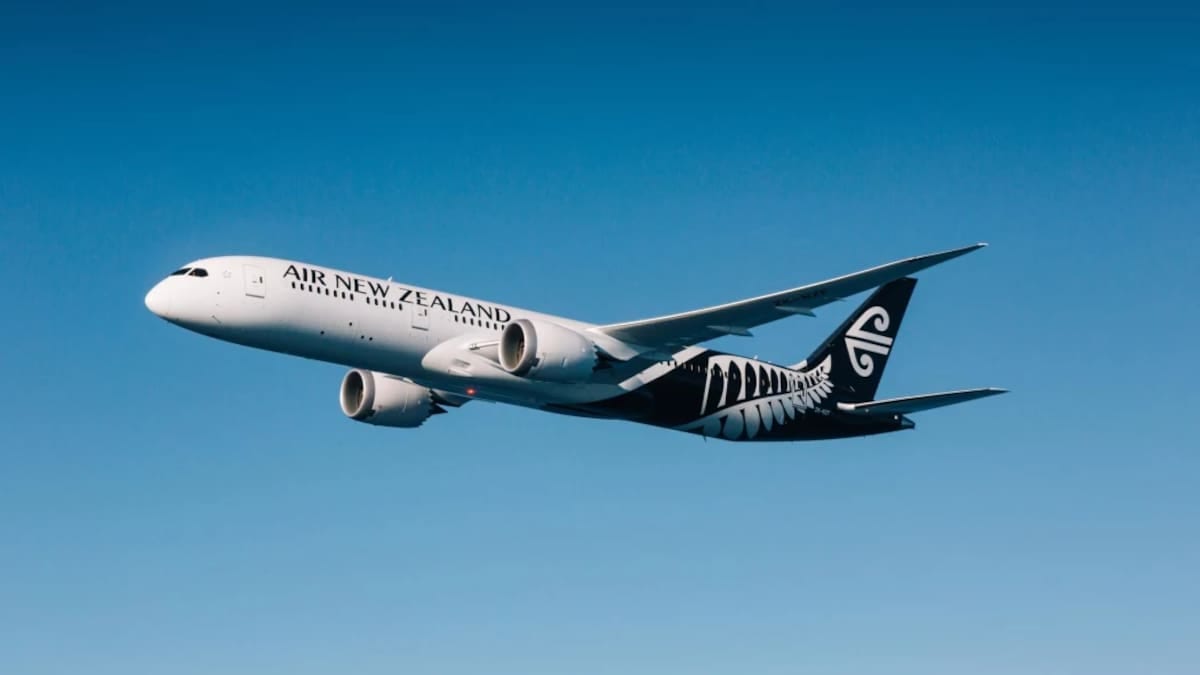
Image by NZ Herald
New Refund Rules Reshape Long-Haul Travel
Pacific-bound itineraries often involve long flight times, complex connections, and premium fares, making disruptions particularly costly for travelers. Recent federal rulemaking on refunds has clarified when passengers can get their money back instead of accepting rebooking or credits, and these standards apply to many flights heading toward Asia and the Pacific region from U.S. airports.
According to publicly available information from the U.S. Department of Transportation, airlines must refund passengers when a flight is canceled or significantly changed and the traveler chooses not to take the altered itinerary. A significant change typically includes large schedule shifts, departure or arrival from a different airport, additional or longer connections, or downgrades to a lower cabin than originally purchased on flights to, from, or within the United States, including transpacific routes.
Consumer advocates note that these rules now cover nonrefundable tickets in many cases. That means someone booked on a discounted economy seat to Tokyo, Sydney, or Honolulu may still be owed a refund if the airline substantially alters the journey and the traveler decides not to go. The key factor is whether the passenger accepts the revised itinerary or alternative compensation.
Although earlier proposals for broader compensation for delays were scaled back, the current framework has still expanded the circumstances in which cash refunds are due. This shift is particularly relevant on long-haul flights, where schedule changes can disrupt vacation plans, cruise departures, or interline connections across the Pacific.
How “Significant” Disruptions Are Defined
For Pacific-bound flights, the definition of a “significant” disruption is critical. Publicly available summaries of federal rules indicate that long delays, major schedule shifts, and routing changes may qualify a traveler for a refund if they opt out of the new plan. On international routes, such as those linking the U.S. mainland to East Asia or Oceania, delays of several hours can cross the threshold for a significant change.
Schedule changes that move a flight by many hours, push an overnight departure into a next-day takeoff, or extend total travel time through new connections are among the scenarios that may count as significant. Likewise, if a flight that originally went nonstop from a West Coast gateway to a Pacific destination is replaced with a one-stop itinerary via another U.S. hub, some passengers could be eligible to claim their money back rather than fly the revised route.
Cabin downgrades are another key trigger. If a traveler paid for business class on a transpacific sector but is rebooked into a lower cabin because of equipment changes or overbooking, current rules call for at least a partial refund of the fare difference, even if the traveler proceeds with the new seat. For those who decline the changed service entirely, the refund rights may be broader, depending on how the airline handles the rebooking.
On top of federal rules, individual carrier contracts of carriage often spell out when the airline treats a route change, missed connection, or downgraded seat as a material alteration. Passengers on Pacific-bound flights are increasingly encouraged by consumer agencies and travel advisers to review those terms when a disruption occurs and to document any schedule or routing change that increases their total travel time or alters their arrival plans.
Automatic Cash Refunds Gain Ground
A notable shift for travelers is the growing expectation that refunds be processed automatically when required, rather than only after passengers navigate call centers and online forms. Federal announcements over the last two years describe a move toward automatic cash refunds for canceled flights and qualifying significant changes, paid back to the original form of payment within a defined timeframe.
For Pacific-bound travelers, this could mean that when a carrier cancels a Los Angeles to Honolulu or San Francisco to Tokyo flight for reasons within the airline’s control, it should initiate a refund without requiring a formal request if the passenger chooses not to accept a rebooked option. The same principle applies when long-haul flights are rescheduled so substantially that they meet the official threshold for a significant change.
However, legal and regulatory developments remain in flux. Some provisions related to delayed flights and broader compensation have been scaled back or postponed after industry pushback, and enforcement priorities may evolve through 2026. Aviation lawyers and consumer organizations underline that what is guaranteed today are refunds for cancellations and clearly defined significant changes, rather than general compensation for every long delay.
In practice, automatic processing does not always function perfectly. Reports from travelers show that some refunds still require follow-up with airlines or ticket agents, especially when itineraries involve code shares or multiple carriers across the Pacific. Even so, the regulatory expectation of prompt, cash-based refunds has raised the baseline for what travelers can demand when a journey is upended.
What Travelers Should Watch on Pacific Routes
While the updated rules apply broadly, individual experiences on Pacific-bound flights can vary depending on the cause of disruption and the airlines involved. Weather events, air traffic control restrictions, and geopolitical issues can all affect long-haul schedules across the ocean, and not all of these scenarios will always meet the criteria for a refund.
Consumer information from government agencies stresses that passengers remain entitled to a refund when a flight is canceled by the airline and they decide not to travel, regardless of cause. The gray areas often involve long delays rather than outright cancellations, or situations where carriers offer an alternative routing that may be inconvenient but technically gets the traveler to the same destination.
Experts in passenger rights recommend that travelers on Pacific routes keep careful track of original and revised itineraries, including departure and arrival times, connecting airports, and cabin classes. When disruptions occur, it is important to compare the new plan to the original ticket and determine whether it crosses into the territory of a significant change. If it does, passengers may be entitled to request a refund instead of accepting the altered journey.
For those who booked through online travel agencies or third-party platforms, refund processing can take additional coordination. Nevertheless, current federal rules place responsibility on airlines and ticket agents to provide refunds when they are due, and published guidance makes clear that travelers should not be forced to accept expiring vouchers or credits in place of cash if they choose not to travel on a significantly changed flight.
Growing Scrutiny of Long-Haul Disruptions
Disruptions on Pacific-bound flights have drawn more attention in recent seasons as airlines rebuild long-haul networks and weather-related and operational challenges ripple through transpacific schedules. Travel industry coverage from early 2026 highlights multiple instances of cascading delays at major U.S. hubs that affected services to Hawaii and Asia, with passengers facing missed connections and extended layovers.
These high-profile events have amplified calls from passenger advocates for clearer, more predictable redress when long-haul journeys are disrupted. While the current rules focus on refunds rather than broader compensation, they represent a concrete step that directly affects the financial stakes for travelers who decide a heavily altered trip is no longer worthwhile.
As peak summer and holiday travel periods approach, experts expect greater scrutiny of how airlines apply refund obligations on Pacific routes. Consumer groups are watching whether carriers proactively inform travelers of their rights when schedules shift, and whether automatic refund systems work smoothly for complex, multi-segment itineraries that cross the Pacific.
For travelers, the practical takeaway is that a ticket for a Pacific-bound flight may now come with stronger protections than in previous years. When a journey is canceled, extensively delayed, or substantially rerouted, many passengers can legitimately opt out and recover their money, turning what was once a confusing patchwork of policies into a more defined set of rights at the check-in desk and beyond.