

More news on this day
Hundreds of British Airways passengers endured a two day disruption in subzero temperatures after their London to Houston flight diverted to St. John’s, Newfoundland, highlighting once again how quickly a routine medical emergency can unravel into a prolonged travel crisis.
Get the latest news straight to your inbox!
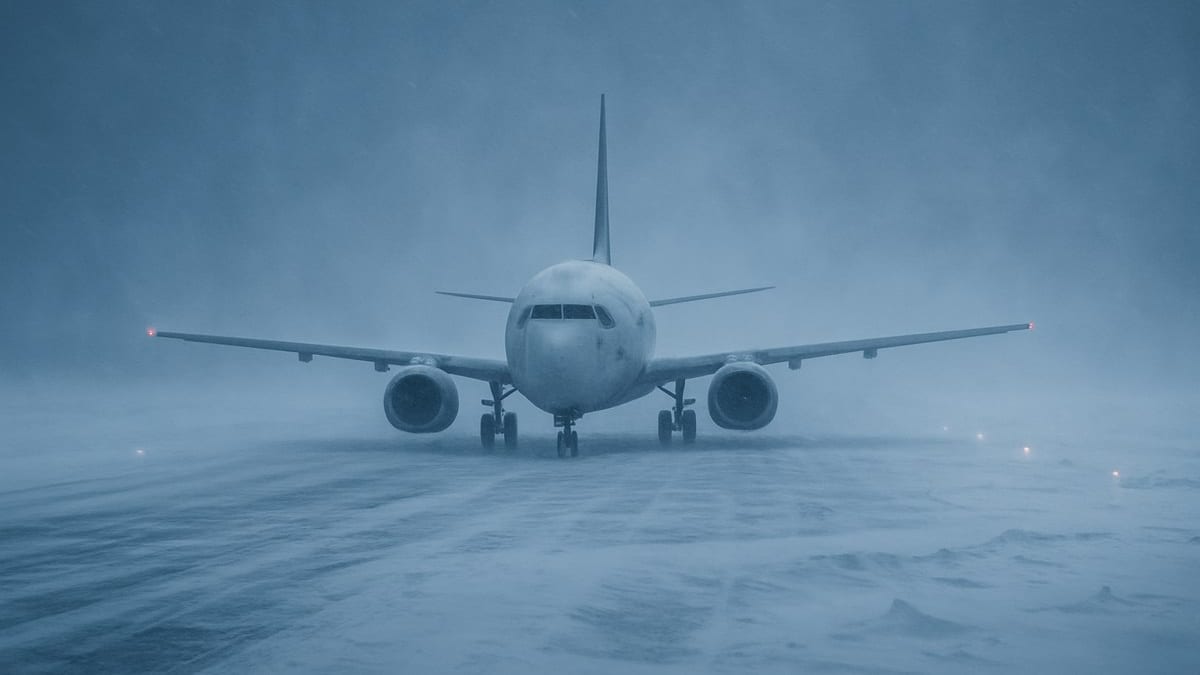
Medical Emergency Triggers Unexpected Atlantic Detour
The disruption began when British Airways flight BA195 from London Heathrow to Houston was diverted over the North Atlantic after a serious medical situation arose on board. Publicly available flight data and media coverage indicate that the aircraft, a Boeing 777, altered course toward St. John’s, the capital of Newfoundland and Labrador, on what should have been a roughly ten hour transatlantic journey.
Reports describe crew informing passengers several hours into the flight that a medical emergency required an immediate landing. St. John’s, located on an island off Canada’s Atlantic coast, is a common diversion point for long haul routes between Europe and North America because of its geographic position and runway length.
Once on the ground, the aircraft remained at St. John’s while medical personnel attended to the affected traveler. The diversion itself aligned with standard long haul safety practice, with priority given to securing timely medical attention in a location capable of handling an international wide body jet.
What followed the landing, however, turned a necessary safety decision into a protracted ordeal that stranded 265 people far from their intended destination and far from their luggage in winter conditions.
Forty Eight Hour Ordeal in Freezing St. John’s
After the medical diversion, the Boeing 777 did not continue on to Houston as originally scheduled. According to multiple news and passenger accounts, a technical issue discovered after landing kept the aircraft on the ground, forcing travelers into an unplanned two day stay in St. John’s as temperatures hovered well below freezing.
Passengers were initially held on board for several hours before being allowed to disembark. Many reported having no immediate access to their checked luggage, which meant winter coats, heavier clothing, and some essential items remained locked in the aircraft hold while they navigated frigid outdoor conditions between terminal, transport, and accommodation.
Local coverage and traveler testimonies describe nighttime temperatures around minus 10 degrees Celsius, with wind chill adding to the cold. While hotels and airport facilities were heated, the short but repeated walks between buildings, buses, and the terminal left some passengers struggling without appropriate winter gear, given that their original destination was subtropical Texas.
The two day delay culminated in passengers being rebooked and transported onward to Houston and other connecting cities, but only after missed holidays, derailed business plans, and an exhausting series of schedule changes.
Communication, Care and the Passenger Experience
The incident has reignited long running debates about how major carriers manage disruption on remote or weather exposed diversion routes. Reports from those on board point to confusion at key moments, including uncertainty over whether the original aircraft would be repaired in time, when replacement equipment might arrive, and what expenses the airline would cover during the enforced stay.
Passengers have complained publicly of inconsistent information, changing departure estimates, and limited clarity about access to luggage and essentials. Some accounts describe travelers queuing repeatedly at airport desks to obtain vouchers, hotel assignments, or updates, only to receive conflicting timelines as maintenance checks and crew duty time limitations evolved.
Travel industry analysis notes that large global airlines operate intricate long haul schedules that leave limited slack for unexpected diversions to smaller airports. When disruption occurs late in the day in a geographically isolated location, the availability of spare aircraft, technical staff, and standby crew can be constrained, amplifying delays.
At the same time, consumer advocates point out that clear, consistent communication, rapid provision of basic necessities, and proactive rebooking options can significantly ease the strain on stranded travelers, even when complex operational challenges limit how quickly a flight can resume.
Regulatory Protections and What Passengers Can Expect
The diversion to Newfoundland also highlights the complex web of passenger rights that apply when an international flight is rerouted mid journey. BA195 departed from the United Kingdom, was operated by a European carrier, diverted to Canada, and was bound for the United States, placing it at the intersection of several regulatory regimes.
European Union and United Kingdom compensation rules typically require airlines to provide assistance and, in some cases, financial compensation when flights are heavily delayed or canceled. However, medical emergencies and certain technical issues can be classified as extraordinary circumstances, limiting compensation while still obliging airlines to offer care such as meals and accommodation.
Canadian rules on air passenger protection focus primarily on flights departing from or within Canada, but consumer organizations note that once a flight lands there, airlines often coordinate with local partners to ensure access to hotels, transportation, and food for stranded travelers. The details of eligibility, reimbursement, and claim procedures can be difficult for passengers to navigate while they are still in the midst of disruption.
Travel law specialists routinely advise affected passengers to keep receipts for out of pocket expenses, record flight numbers and times, and document communications with airlines, as these can be crucial when seeking refunds, reimbursements, or goodwill gestures after long delays.
Broader Questions for Long Haul Disruption Planning
Beyond the immediate frustrations of those on BA195, the Newfoundland diversion raises broader questions for airlines and regulators about resilience on long haul routes. The combination of a medical emergency and subsequent technical problem created a chain of events that left travelers dependent on contingency plans in a cold, remote setting far from home.
Industry observers suggest that carriers may need to revisit how they position spare aircraft and crew near common diversion airports, particularly along busy transatlantic corridors. Enhanced planning for winter conditions, quicker access to checked luggage in the event of overnight stays, and better integration with local hospitality providers are among the measures being discussed in aviation forums.
For the passengers involved, the episode turned a routine journey into a two day test of patience and preparedness. For airlines, it serves as another reminder that the reputational impact of a disruption often hinges less on why it began and more on how it is handled once travelers are unexpectedly grounded, particularly in locations where freezing temperatures and limited infrastructure make every hour of delay feel longer.