


On October 28, 2026, the U.S. Federal Trade Commission opened a new inquiry into whether major airlines and other travel brands use personal data to tailor prices to individual customers. For travelers who already feel like airfares change every time they hit refresh, the announcement sounded like confirmation of a long held suspicion. But while the investigation shows regulators are taking the issue seriously, it does not prove that airlines are secretly raising prices based on your search history. To understand what is really happening on your screen, it helps to separate normal dynamic pricing from truly personalized pricing and to look at what evidence exists so far.
Get the latest updates straight to your inbox!
What the October 28 FTC inquiry is actually about
On October 28, 2026, the Federal Trade Commission used its special fact finding powers to order nine large companies, including three major U.S. airlines, to turn over detailed information about how they use consumer data in setting prices and paying workers. According to the FTC’s announcement, the goal is to study so called personalized or surveillance pricing, where the price you see might depend on data such as your location, purchase history, or browsing behavior rather than only on broader market conditions.
The agency did not accuse any airline of wrongdoing in this step. Instead, it launched what is essentially a research style investigation, similar to earlier FTC studies on "surveillance pricing" across digital markets. In its recent policy work, the FTC has warned that using hidden personal data to offer different people different prices could be considered deceptive if companies fail to disclose what they are doing. The October orders are meant to uncover whether that kind of opaque pricing is happening and, if so, what kinds of data feed the algorithms.
For air travelers, the important point is that an FTC inquiry is not the same thing as a legal finding. Regulators want to know whether airlines and online platforms are inching toward the kind of one to one price setting already tested in some other industries. The outcome is unknown. Until the agency publishes its findings, all we can say with confidence is that the government is concerned enough to ask detailed questions, not that airlines have been caught charging different people different fares simply because they searched more often.
The inquiry also covers ride hailing and food delivery apps, which already rely heavily on real time data and sometimes use individually targeted bonuses or pay adjustments for workers. Looking across these sectors will help the FTC compare airline practices with other forms of digital pricing and determine whether any special rules or enforcement actions are warranted.
Dynamic pricing versus customer specific pricing
The confusion around airline prices often starts with a basic but crucial distinction. Dynamic pricing means that the fare for a given seat can change over time based on factors like remaining availability, competition on the route, day of the week, school holidays, and how far in advance you are booking. Almost every major airline uses this kind of dynamic pricing through sophisticated revenue management systems that update fares many times per day.
A simple real world example is a New York to Los Angeles economy ticket that sells for 220 dollars on a Tuesday morning but jumps to 310 dollars by that evening. Nothing about you changed. Instead, the lower priced fare bucket may have sold out, a competitor may have raised its fare, or an event in Los Angeles may have spiked demand. Everyone searching that route at that moment will generally see the same higher price, whether they are a first time visitor to the airline’s site or a frequent flyer logged into an account.
Customer specific pricing, by contrast, is what many travelers fear. This happens when two people search at essentially the same time for the same flight and seat, yet are shown different prices because the system has profiled one person as willing to pay more. In theory, an airline or online travel agency could factor in data such as your frequent flyer tier, the type of device you use, your ZIP code, or past purchase patterns to predict your willingness to pay and adjust prices just for you.
In other sectors, versions of this already exist. For example, some e commerce sites and subscription services quietly test different offers based on user segments, and a major low cost airline in Asia has publicly experimented with using customer data to personalize baggage fees. The FTC’s October 28 inquiry is meant to determine whether anything similar is starting to happen with base airfares and, if so, whether travelers are being misled or harmed.
What research and industry statements show so far
Despite widespread suspicion, journalists and academics have struggled to find clear, repeatable evidence that big airlines currently use individual browsing histories or local cookies to raise fares for a given user. Over the past decade, researchers in Europe and North America have run controlled tests where they simulate different user profiles, clear cookies, and repeat thousands of fare searches. Those studies have generally found highly volatile prices over time, but not consistent patterns of one profile paying more solely because of personal data.
One European experiment, for example, sent more than 100,000 price queries to dozens of airline sites from dozens of simulated user profiles over several weeks. Prices bounced up and down frequently as demand and inventory changed, yet the researchers did not detect systematic price differences that lined up with individual profiles. Similar work in the United States looked specifically at whether clearing browser cookies before searching produced cheaper domestic fares and found no reliable effect.
Recent reporting has reached similar conclusions. Consumer focused outlets and local television investigations have tried to reproduce price jumps by running side by side searches in normal and incognito windows, on different devices, and from different accounts. Although they sometimes observed small discrepancies, those differences were usually tied to factors like currency settings or whether one search was routed through a third party agency. When prices diverged meaningfully, they could often be traced back to changes in availability between searches rather than to a browser remembering past visits.
At the same time, airlines insist that they do not single out individual customers based on personal data when setting base fares. In correspondence with lawmakers, for instance, one major U.S. carrier recently explained that its artificial intelligence pricing tool works on aggregated route level data, recommending fare adjustments that apply to all customers looking at the same flight, not custom prices for each user. Industry analysts who monitor fare filing systems, which publish airline prices to travel agents and search engines worldwide, also note that when an airline updates a fare, it shows up across channels, not just for a particular browser.
How cookies, accounts, and retargeting actually work
Part of the confusion stems from the different ways airlines and travel websites do use your data, many of which stop short of altering the base fare itself. When you visit an airline site or a metasearch engine, it places cookies on your browser and logs details such as the routes you looked at, the dates you searched, your language and currency preference, and whether you started booking but did not finish. That information is extremely valuable for marketing and analytics, even if it is not being used to set individualized prices.
Travelers see the effects of this most clearly in retargeting. You might search for Boston to Dublin flights on an airline site and then, a day later, see banner ads for that same route on a news site or social media platform. The fare in the ad might even match what you saw earlier. These campaigns use your past searches to chase you around the web, but there is no firm evidence that they are raising the price specifically because you looked once already. Instead, the airline is trying to nudge you to complete a booking you already considered.
Logged in accounts add another layer. When you sign in as a loyalty member, the site recognizes you and may display special offers such as bonus miles or a slightly discounted fare class. For example, a frequent flyer with mid tier status might see a 20 or 30 dollar discount on a flexible economy fare compared with what a guest user sees, or might be offered an upgrade from basic economy for a lower surcharge. In that sense, account based promotions are a form of personalized offer, but travelers typically recognize them as loyalty benefits rather than hidden markups.
Cookies and account data can also influence non price aspects of your experience. An airline might prefill your preferred airports, remember that you prefer aisle seats, or prioritize routes through a favored hub. A metasearch site might reorder search results to show airlines you have clicked on in the past. These forms of tailoring can still shape what you end up buying. For instance, if the site nudges you toward a slightly more expensive non stop option it knows you like, you might pay more even though a cheaper one stop itinerary exists a few rows down. The price of each ticket is not changing based on cookies, but your data is still steering your choices.
Incognito mode: myth, partial protection, and real limitations
Few pieces of travel advice are as persistent as the claim that you should always search for flights in incognito or private browsing mode to avoid price hikes. Private mode does change how your browser handles your data. It stops sites from accessing your existing cookies, wipes new cookies when you close the window, and keeps your flight searches out of your local history. What it does not do is hide your device from airline servers or disguise your internet address in a strong way.
Multiple independent tests have found that searching in incognito mode usually yields the same fares as searching in a regular window at the same moment. In one widely cited experiment conducted by a consumer magazine, hundreds of paired searches were run in normal and private windows for the same routes and dates. The vast majority returned identical prices, and when differences did appear they were small and inconsistent in direction. More recent investigations by travel deal companies that run thousands of automated searches per day also report that clearing cookies or switching to incognito does not systematically improve the fares they see.
That does not mean there is no value in private mode. If you routinely share a computer, incognito can keep your search history and stored passenger details from being mixed with those of family members, which may reduce confusion when you return to a booking later. It can also help you see search results without being logged into an airline or credit card portal that might be applying specific discounts or using stored preferences. For travelers who simply feel uneasy about extensive tracking, private windows offer some psychological comfort, even if they are not a silver bullet for cheaper flights.
What incognito mode cannot do is defeat pricing systems that operate on the server side, using demand patterns across thousands of users or data purchased from third party brokers. When an airline decides to move a New York to Miami fare from 150 to 195 dollars because sales picked up during a lunch break, it changes the fare in its central system. Every search that connects to that system, whether through a regular browser, an incognito tab, or a mobile app, will see the same new price. This is why many travelers swear they watched a fare jump after they searched three or four times, even though the real trigger was other customers booking seats in the background.
Real world examples of confusing price changes
Consider a traveler in Chicago planning a spring trip to San Francisco. On Monday morning she pulls up a major airline’s site and finds a nonstop flight in April for 238 dollars round trip. She leaves the tab open while she checks vacation dates with a friend. When she refreshes the page an hour later, the price has climbed to 278 dollars. Frustrated, she blames her repeated searches. In reality, the airline’s system may have sold the last seats in the cheapest fare bucket during that hour, raising the price for everyone searching that route.
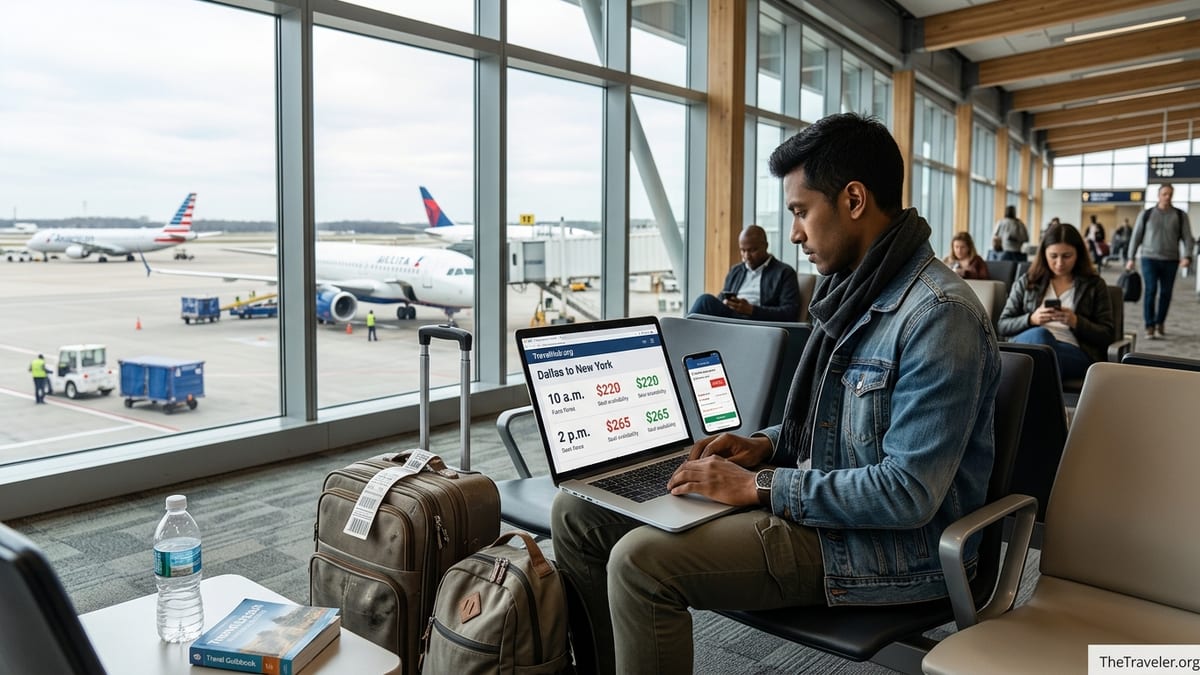
Another example involves metasearch engines that pull in fares from multiple online travel agencies. A traveler in Dallas might see a New York to Paris flight for 640 dollars on a comparison site at 10 a.m. and then see 685 dollars for what looks like the same flight at 2 p.m. When he clicks through, one agency may have sold out of its allocation of lower priced seats, while another still shows the higher fare. To the traveler, it feels like the comparison site raised the price because he returned. In practice, the site is just reflecting the constantly updating feeds it receives from airlines and agencies.
Device based differences can add yet another layer of confusion. In some tests, travel writers searching the same route simultaneously on a laptop and through a mobile app have seen a few dollars of difference, with the app sometimes cheaper due to a temporary mobile promotion. For instance, an airline might quietly offer 10 dollars off domestic round trips booked through its app to encourage downloads. In this case, the price difference is tied to the sales channel rather than personal data, yet a traveler switching from a desktop search to an app might conclude that one device was being penalized.
There are also real instances of targeted offers that feel like personalized pricing but do not necessarily raise the base fare. After you look at a Miami to San Juan itinerary and abandon the cart, you might receive an email a day later with a 20 dollar discount code if you complete the booking within 48 hours. Or you might see a limited time upgrade offer when you check in, such as moving from basic economy to standard economy for 39 dollars instead of the usual 59. These offers are triggered by your behavior and profile, but they are discounts or upsells around the edges of the fare, not proof that the airline raised the underlying price in response to your earlier search.
How to test fares fairly without fooling yourself
For travelers who want to check whether they are seeing a fair price, the way you test matters as much as the number you see. Because airline fares are so volatile, comparisons a few hours apart often tell you more about changing market conditions than about profiling. If you want to experiment at home, run simultaneous searches for the same route, dates, and cabin class on two different devices or browsers within seconds of each other. For example, search for the same Atlanta to Cancun flight at the exact same time on a laptop and a phone, one in incognito and one in a normal window.
When doing this, make sure every variable you control is really the same. That means searching in the same currency, from the same country, and on the same airline site or metasearch engine, not mixing direct airline results with those from online agencies that may have their own markups or promotions. It also helps to compare screenshots taken at the same moment. Travelers sometimes remember a lower price they saw earlier in the day, but by the time they check again hours later, the inventory landscape has changed entirely.
If you do spot a difference of more than a few dollars between two simultaneous searches, think through possible explanations before concluding that personal data is to blame. Are you logged into a loyalty account on one device but not the other. Is one search using a credit card portal or employee travel site that includes special pricing. Are you routing one search through a VPN that makes it appear you are in another country, which can change the type of fares and taxes displayed. Often, what looks like personalized pricing is really the result of hidden settings or different sales channels.
To gain extra confidence, you can also cross check fares with a neutral source that tracks price history over time. While specific tools change, many metasearch engines now show basic graphs of how a given route’s prices have moved over the past weeks and whether today’s fare is lower, typical, or higher than usual. If your New York to Rome ticket is at the high end of the recent range, waiting might save you money regardless of whether cookies are involved. If the price you see sits at the low end of its recent history, trying multiple browsers and clearing your cache is unlikely to uncover a meaningfully cheaper deal.
Protecting your privacy without chasing booking myths
Even if there is no strong evidence that airlines are currently charging higher base fares to individual travelers based on cookies or search history, it is reasonable to care about how much of your travel planning life is being tracked. Flight searches reveal where you live, where you might go, and sometimes sensitive events such as medical trips or family emergencies. The FTC’s interest in personalized pricing is part of a broader concern about how companies collect, share, and monetize that kind of data behind the scenes.
Travelers who want to limit data collection have practical options that do not depend on booking myths. You can refuse optional cookies on airline and metasearch sites where that choice is offered, adjust your browser settings to block third party trackers more aggressively, or use privacy oriented browsers that reduce cross site tracking. Creating a dedicated email address for travel accounts can also help contain marketing messages and make it easier to see when a particular search has triggered a surge of targeted ads.
It can also be sensible to avoid logging into every possible account unless you need the benefits. For instance, if a bank’s travel portal or a retail site offers the same price as the airline but demands extensive personal data, you might prefer to book directly with the carrier. Conversely, if your frequent flyer status regularly earns you upgrades or waived fees, logging in will often be worth any extra data sharing. The key is to make these trade offs consciously rather than based on superstition about incognito windows unlocking secret discounts.
Ultimately, focusing on proven money saving tactics tends to yield better results than chasing unproven tricks. Monitoring fares over several weeks for a planned trip, being flexible with your travel dates or nearby airports, and pouncing when a well regarded deal alert service highlights an unusually low sale will almost always matter more than whether you cleared your cookies that morning. Until regulators or researchers present solid evidence to the contrary, the main forces moving airline prices remain demand, competition, and timing, not the fact that you hit search one time too many.
What travelers should watch for as the investigation unfolds
The FTC’s October 28 inquiry ensures that personalized pricing in air travel will stay in the spotlight over the coming years. The agency’s study will likely take time as airlines and other companies respond to detailed questionnaires and regulators sift through technical documentation on algorithms, data sources, and internal testing. Travelers should not expect an immediate rule change or a list of bad actors. Instead, the first public output may be a staff report explaining how personalized pricing technologies work in practice and highlighting scenarios regulators find most concerning.
One key question is whether airlines are experimenting with small scale pilots that have not yet surfaced in public research. For instance, a carrier could quietly offer slightly different checked baggage fees or seat selection prices to targeted customer segments while keeping base fares uniform. Another is whether third party intermediaries, such as credit card portals or online agencies, are testing their own forms of profiling that sit on top of airline fares. The FTC has signaled in past policy statements that any undisclosed use of personal information to set unique prices could trigger enforcement, but it has not yet laid out airline specific examples.
As findings emerge, consumer advocates will push for clear disclosure rules so that travelers know if and when they are being shown prices tailored to them. That could take the form of simple notices on booking pages explaining that "prices may vary by customer," or more robust rights to opt out of certain forms of profiling. Airlines, for their part, are likely to argue that dynamic pricing based on real time demand helps keep average fares lower by filling planes efficiently, and that any move toward more granular segmentation would primarily be used to offer discounts to price sensitive customers.
For now, the most balanced view is that airline pricing is already complex, data driven, and sometimes opaque, but that there is no definitive public proof that big carriers systematically raise base fares for individual travelers based on personal web browsing histories. The FTC’s work may yet reveal problematic practices, or it may largely confirm what existing research suggests about dynamic pricing. Until then, travelers can protect themselves by staying informed, managing their online privacy in sensible ways, and focusing on the booking strategies that have reliably saved money long before cookies and incognito tabs entered the picture.