

More news on this day
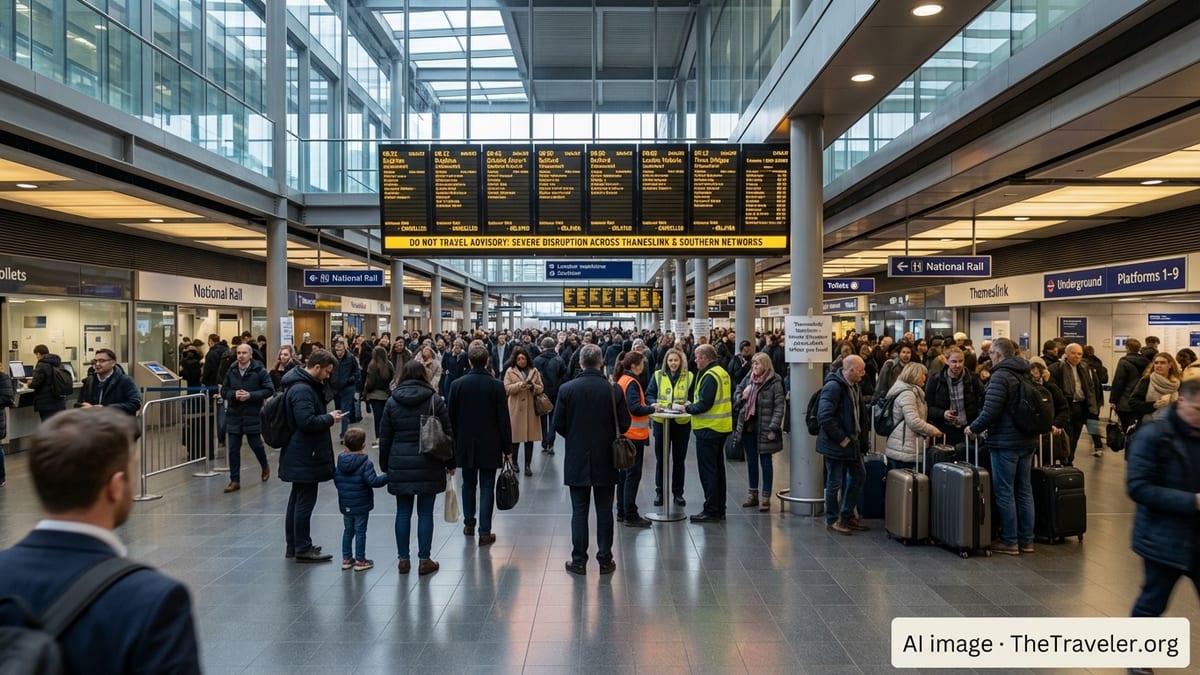
Rail passengers across London and South East England faced a bruising start to Wednesday 4 February 2026, as a cascade of rail incidents brought the Thameslink, Southern and Gatwick Express networks close to a standstill.
A rare “do not travel” warning was issued during the morning peak, leaving commuters, airport‑bound travellers and leisure visitors scrambling for alternative routes and forcing many to abandon their journeys altogether.
More News
- Caribbean Travel to U.S. Upended by New Visa Freezes and Expanded Bans
- Mexico Restores E-Visas for Brazilians, Paving the Way for Borderless Tourism
- Philippine Airlines Joins Regional Carriers Powering Southeast Asia’s Tourism Boom
Multiple Incidents Bring Key London Corridors to a Standstill
The immediate trigger for the crisis was a derailment at Selhurst depot in south east London, where a Southern train came off the tracks inside the maintenance facility. While the train remained upright and no injuries were reported, the incident blocked lines towards Norwood Junction and London Bridge and trapped a significant number of units inside the depot, sharply reducing the number of trains available to operate the morning timetable.
Compounding the disruption, Network Rail reported a fault with the signalling system between Norwood Junction and London Blackfriars, affecting one of the most important north–south corridors on the capital’s rail map. With fewer lines available and trains forced to run at reduced speeds, knock‑on delays spread quickly across the Thameslink network, which normally carries services from Bedford and Luton in the north through central London to destinations across Sussex and Surrey.
National Rail and Govia Thameslink Railway, the franchise that operates Thameslink, Southern and Gatwick Express services, confirmed that a raft of routes had been suspended until further notice. Among the hardest hit were London Bridge to East Grinstead, Brighton to Cambridge, Bedford to Three Bridges and London Bridge to Epsom. Services on branches to Tattenham Corner and Caterham were diverted away from London Bridge, while some Uckfield trains were withdrawn entirely.
The disruption rippled beyond the GTR network. London Overground’s Windrush Line between Highbury & Islington and West Croydon was also severely affected, with no trains serving key south London stations including Penge West, Anerley, Norwood Junction and West Croydon and many services diverted to Crystal Palace or curtailed on the East London Line.
“Do Not Travel” Warning Shocks Commuters and Visitors
Shortly before 8am, as the scale of the disruption became clear, GTR and National Rail issued a blunt message rarely heard outside of extreme weather or major infrastructure failures. Passengers were advised not to travel on Thameslink and large parts of the Southern network “if at all possible,” with the operator warning it could not guarantee that travellers would be able to reach their destinations.
The “do not travel” alert, which applied across key commuter and airport routes, remained in place until around 10am. Even after it was formally lifted, operators cautioned that services would remain heavily disrupted for the rest of the day, with cancellations, diversions and delays of up to an hour expected across much of the network.
For many commuters in Sussex, Surrey, Kent and south London, the warning came too late to avoid a scramble. Passengers reported packed concourses, irritable queues and handwritten notices as staff attempted to guide crowds towards the few services still running. Others chose to turn back home or seek remote‑working arrangements as employers were once again forced to adapt to an unexpected transport shock.
Rail industry commentators noted that while “do not travel” messaging has been used in recent years during severe storms and major infrastructure failures, it remains a rare step for routine weekday operations. The decision underlined how the combination of a depot derailment and a signalling failure at a critical junction can quickly overwhelm the delicate balance of rolling stock and track capacity on a high‑frequency urban network.
Airport Links Hit as Gatwick and Luton Passengers Face Long Delays
The timing of Wednesday’s chaos proved particularly damaging for air travellers. Gatwick Express services, which provide a dedicated non‑stop link between central London and Gatwick Airport, were among those heavily affected. With units trapped at Selhurst and capacity constrained on shared tracks, many Gatwick Express services were cancelled or replaced by slower Southern and Thameslink alternatives.
Thameslink routes to Luton Airport Parkway were also disrupted, with National Rail warning that travellers should allow at least an extra hour to reach both Gatwick and Luton. For passengers with morning departures, especially those on short‑haul European flights, the advice meant either a pre‑dawn journey or a nervous wait in traffic as they diverted to road‑based alternatives such as coaches and taxis.
At Gatwick Airport, staff advised passengers to check with airlines but stressed that flights were continuing to operate. Travellers arriving from overseas, however, found that the usual quick hop into central London had been replaced by lengthy waits for infrequent trains or a switch to road transport. Taxi queues grew and ride‑hailing prices surged in response to the sudden spike in demand.
Hotels around the airports and in central London reported a flurry of last‑minute booking enquiries from would‑be day‑trippers and business travellers opting to stay overnight rather than risk attempting a same‑day return journey by rail.
How the Disruption Reshaped the Morning Commute
Across south London and the commuter belt, passengers were forced into an impromptu game of route‑planning chess. With Thameslink services through London Bridge and Blackfriars badly affected, many travellers were advised to head instead to London Victoria, where Southern services had slightly more resilience, or to use alternative operators where ticket acceptance was in place.
Buses and trams in Croydon, Sutton and surrounding areas carried heavier than usual loads as rail passengers attempted to bypass blocked routes. Some opted for London Underground interchanges where possible, while others took to cycling or walking for the final leg of their journey. Motorways and key radial roads into London, including the M23 and A23, also saw increased congestion as motorists abandoned rail plans and took to their cars.
For visitors and occasional users unfamiliar with the network’s complexity, the sudden loss of direct links proved especially disorienting. Hotel concierges, station staff and information screens were pressed into service as impromptu travel advisors, helping tourists reconfigure itineraries to reach attractions, meetings and onward connections by bus, taxi or alternative rail routes.
By late morning, some services had begun to move again, but the residual impact of out‑of‑position trains and crew continued to distort timetables. Short‑formed services, unexpected platform changes and last‑minute cancellations remained common across Thameslink and Southern, prompting renewed calls from passenger groups for more resilient contingency planning on Britain’s busiest commuter arteries.
Operational Response and Passenger Rights
Network Rail engineers were dispatched to Selhurst depot in the early hours to re‑rail the affected train and inspect track and signalling equipment. At the same time, signalling specialists worked on the fault between Norwood Junction and London Blackfriars, a key stretch that carries intensive flows of Thameslink and Southern services into central London.
GTR said its control teams were working closely with Network Rail to restore services as quickly as possible and apologised for the disruption. The operator highlighted that complex incident management was required whenever a derailment occurs, even in a depot, both to ensure safety and to avoid further damage to infrastructure or rolling stock.
National Rail confirmed that tickets were being accepted on some alternative rail and bus routes at no extra cost, allowing passengers to use other operators or travel via different London terminals where capacity permitted. Industry guidance also reminded travellers that they may be entitled to compensation through Delay Repay schemes, depending on the length of their delay and the ticket held.
Consumer advocates urged affected passengers to keep records of their journeys, including receipts for additional transport costs where applicable, and to photograph departure boards or disruptions for evidence. While compensation typically covers delays to rail services rather than consequential losses such as missed flights or hotel bookings, travel insurance policies may offer broader protection for some travellers caught up in the chaos.
Impact on Tourism and Business Travel in the South East
For the tourism sector, Wednesday’s events served as a reminder of how crucial reliable rail links are to London’s appeal as a city break destination and to the wider visitor economy of the South East. Gatwick is a major gateway for holidaymakers heading both into the capital and towards coastal resorts in Sussex, while Thameslink provides direct connections from Luton Airport to central London, St Pancras and destinations further south.
City tour providers, theatres and attractions reported a small but noticeable uptick in late arrivals and no‑shows for morning time‑slots, particularly among domestic visitors who had planned day trips. Conference venues and business districts in the City of London, Canary Wharf and the West End similarly saw disrupted attendance as delegates battled their way into town.
While many London‑based employers are now accustomed to flexible and hybrid working patterns, the concentration of delays in the morning peak still resulted in significant lost time across office‑based and service industries. For shift‑based workers in sectors such as hospitality, healthcare and retail, rail disruption often has a sharper edge, with late arrivals potentially affecting pay and service levels.
Regional tourism boards and business groups said the incident would feed into ongoing debates about rail infrastructure investment and resilience, particularly on the Brighton Main Line and its associated branches, which serve some of the UK’s most popular seaside destinations as well as key commuter corridors.
What Travellers Should Watch for in the Coming Days
Although the “do not travel” alert was lifted by mid‑morning, operators warned that the timetable across Southern, Thameslink and Gatwick Express would remain fragile through the rest of Wednesday and potentially into the following day. Out‑of‑position trains and crew can take several service cycles to realign, particularly on a complex network that intertwines commuter, airport and longer‑distance routes.
Passengers planning trips over the coming 24 to 48 hours were urged to check live departure boards before travelling and to build in additional contingency time, especially if travelling to or from airports or connecting with long‑distance services. Early‑morning and late‑evening services are often among the last to return to full normality after a major disruption because of their reliance on trains and staff being in the right depots at the right time.
Travel advisers suggested that visitors unfamiliar with the network should pay close attention to operator notices at stations and be prepared to switch to alternative London terminals if recommended. In some cases, travelling to or from Victoria or using Underground and bus connections may be faster than waiting for a direct Thameslink or Gatwick Express service that is heavily disrupted.
While Wednesday’s incidents were unusual in their combined severity, observers noted that isolated signalling failures, equipment faults and trespass incidents are a regular feature of a busy, aging network. For regular travellers and international visitors alike, the episode underlined the value of flexible itineraries, up‑to‑date travel information and, where possible, backup plans.
FAQ
Q1. What exactly caused today’s major disruption on Thameslink, Southern and Gatwick Express?
The disruption was triggered by two main incidents: a train derailment inside Selhurst depot in south east London, which blocked key lines and trapped trains, and a signalling fault between Norwood Junction and London Blackfriars, which reduced available track capacity and forced trains to run at slower speeds.
Q2. Were there any injuries in the Selhurst depot derailment?
According to Network Rail and operator statements, there were no confirmed injuries. The derailed train remained upright inside the depot, but its position blocked lines towards Norwood Junction and London Bridge and prevented other trains from leaving the facility.
Q3. Why was a “do not travel” warning issued and when was it lifted?
The “do not travel” warning was issued in the morning peak because multiple incidents meant operators could not guarantee that passengers would reach their destinations, with many routes suspended or heavily delayed. The alert was issued shortly before 8am and lifted around 10am, although significant disruption continued beyond that time.
Q4. Which routes have been most affected by the disruption?
Among the worst affected routes are London Bridge to East Grinstead, Brighton to Cambridge, Bedford to Three Bridges and London Bridge to Epsom, along with branches to Tattenham Corner and Caterham. Several Thameslink services through London Bridge and Blackfriars have been cancelled or diverted, and parts of the London Overground Windrush Line are also affected.
Q5. How are Gatwick and Luton airport rail links impacted?
Gatwick Express services have seen widespread cancellations and alterations, with many travellers diverted onto slower Southern and Thameslink trains. Thameslink services to and from Luton Airport Parkway are also disrupted. Passengers to both airports are being advised to allow at least an extra hour for their journey and to consider alternative routes if possible.
Q6. Are tickets being accepted on other transport services?
National Rail has confirmed that, where services are severely disrupted, tickets are being accepted on some alternative rail and bus routes at no additional cost. Exact arrangements can vary by time and route, so passengers should check operator information screens and staff announcements before boarding.
Q7. Can affected passengers claim compensation for delays?
Most passengers will be able to seek compensation under the Delay Repay schemes operated by Thameslink, Southern and Gatwick Express if their journey was delayed by the qualifying threshold, often from 15 or 30 minutes upwards. Compensation normally covers the rail delay itself rather than knock‑on costs, though some travel insurance policies may provide wider cover.
Q8. How long is the disruption expected to last?
Initial estimates suggested major disruption through at least the morning and potentially into the afternoon and evening, with some operators warning that the full impact on timetables could last until the end of the day. Even after lines reopen, trains and crew can be out of position, leading to continued cancellations and short‑notice changes.
Q9. What should I do if I have a time‑sensitive journey today?
If you must travel, you should check live departure information before leaving, allow significant extra time and be prepared to use alternative routes or London terminals if staff advise this. For airport trips or critical appointments, consider earlier services than usual, and if disruption is severe, discuss options with your airline, hotel or event organiser.
Q10. Does this incident indicate wider problems with rail reliability in the South East?
While derailments in depots are relatively rare, the incident has highlighted how vulnerable busy corridors can be when multiple faults occur at once. Passenger groups argue that sustained investment in infrastructure, signalling and rolling stock is needed to improve resilience, particularly on lines that carry a mix of commuter, airport and regional traffic across London and the South East.