

Iowa itself does not issue separate entry visas, but international travelers still need to meet United States immigration and border requirements before they can stroll through Des Moines, see the bridges of Madison County, or drive the Great River Road. Because there are no direct overseas flights into Iowa, every foreign visitor will first pass through a port of entry elsewhere in the country, where federal rules on visas, electronic travel authorizations, and inspections apply. Understanding those rules in advance can help you reach the Hawkeye State smoothly and avoid expensive or stressful last-minute problems.
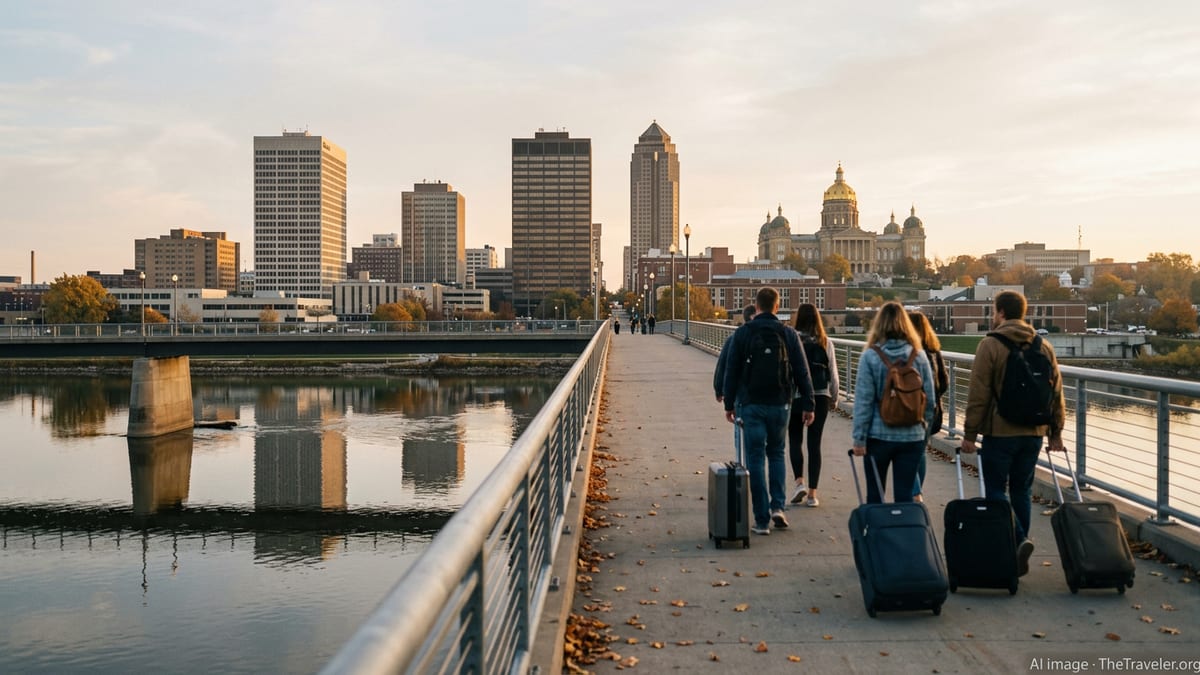
Why There Is No Separate “Iowa Visa”
From an immigration perspective, Iowa is part of the same federal system that governs entry to the entire United States. That means there is no special “Iowa visa” or state-level permit you must obtain in addition to your national U.S. entry clearance. Once you have legally entered the country and passed inspection by Customs and Border Protection officers at the airport, seaport, or land border, you are generally free to travel onward to Iowa and move between states without further immigration checks.
For most international visitors, the real hurdle is the point where they physically enter the United States, not the internal flight that eventually delivers them to Des Moines, Cedar Rapids, or Sioux City. Airlines and border officials will focus entirely on whether you are eligible to enter the country at all, whether you have the right visa or electronic travel authorization, and whether your planned activities match the status you are requesting. Once you have been admitted, flying on to Iowa is essentially a domestic trip.
Because of this federal structure, the documentation you need to visit friends in Iowa City or attend a conference in Ames is exactly the same as the documentation you would need to visit New York or California. The key question is not “What does Iowa require?” but “On what basis am I allowed to enter the United States?” Your options depend on your nationality, residence, purpose of travel, and immigration history.
Travelers who already live in the United States as permanent residents, long-term visa holders, or citizens face a different set of considerations. They do not need a separate travel document to visit Iowa, but they should still be aware of how leaving and reentering the country might affect their underlying status, especially if they have pending immigration applications or have been outside the country for extended periods.
Who Needs a Visa to Visit Iowa as a Tourist
Whether you need a visa to visit Iowa for tourism depends primarily on the passport you hold. Citizens of many countries must obtain a B-2 visitor visa, or a combined B-1/B-2 business and tourism visa, from a U.S. embassy or consulate before traveling. The process involves filling out online forms, paying a nonrefundable application fee, attending an in-person interview in most cases, and demonstrating that you intend to return home after a short stay.
Some travelers are eligible to visit the United States without a traditional visa through the Visa Waiver Program. These visitors instead apply online for travel authorization through the Electronic System for Travel Authorization, more commonly known as ESTA. If approved, they can typically visit for up to 90 days for tourism or business, which is more than enough time for most trips to Iowa. Although ESTA is not formally a visa, airline staff and border officials treat it as the required pre-screening for visa-free travelers.
There are also regional arrangements for certain neighboring countries. For example, many Mexican citizens use a combination border crossing card and visitor visa to enter the United States for short stays, while Canadians often travel without a formal visitor visa, provided their purpose of visit is temporary and they meet inspection requirements. These travelers can certainly visit Iowa, but their eligibility is still subject to the usual federal rules on admissibility and length of stay.
In practice, most foreign nationals who are not eligible for visa-free travel and who want to see Iowa’s state parks, attend festivals, or visit family will apply for the B-2 visitor category. This status strictly limits what you can do in the United States. It generally allows tourism, short-term visits with relatives or friends, certain types of unpaid cultural activities, and medical treatment, but not formal employment or long-term study. Visitors should be prepared to explain their itinerary, funding, and ties to their home country during both the visa interview and the inspection at the port of entry.
Visa Waiver Program, ESTA and Visiting Iowa
The Visa Waiver Program allows eligible citizens of several dozen countries, largely in Europe and parts of the Asia-Pacific region, to visit the United States for up to 90 days without obtaining a traditional visa in advance. Instead, travelers must secure an online travel authorization through ESTA before boarding a plane or ship bound for the country. This pre-screening system checks basic biographical data, travel plans, security information, and answers to eligibility questions.
In recent years, U.S. authorities have gradually tightened ESTA requirements, and fees have increased. Travelers must now budget for the higher charge and should be aware that additional screening questions may be introduced, including more detailed background and social media information. Officials have also emphasized that applications should be submitted only through official government channels and, increasingly, through the government’s mobile app, to avoid confusion with unofficial fee-charging intermediary websites.
If you are traveling to Iowa from a Visa Waiver Program country, the practical steps are straightforward. You apply for ESTA in advance, receive approval, then board your flight to a U.S. gateway city such as Chicago, Minneapolis, or another international hub. After you clear inspection and immigration at that first arrival airport and collect your baggage if necessary, you can transfer to a domestic flight onward to Iowa. From that point on, you move through domestic terminals and are not subject to additional federal immigration checks while traveling within the country.
Even with ESTA approval, final admission at the border is never guaranteed. A Customs and Border Protection officer will confirm your purpose of travel, ask how long you plan to stay, and may review supporting documents such as hotel bookings or return tickets. If your answers raise concerns, you can be refused entry even with a valid ESTA. For that reason, travelers bound for Iowa should carry printed or easily accessible confirmation of their plans and be ready to clearly explain why they are visiting, how they are funding the trip, and when they expect to return home.
B-1/B-2 Visitor Visas and Longer Iowa Stays
For visitors who are not eligible for the Visa Waiver Program, or who plan trips longer than 90 days, a B-1 or B-2 visa, or a combined B-1/B-2, is usually the main route. The B-2 classification covers tourism and social visits, such as going to the Iowa State Fair, driving the Loess Hills National Scenic Byway, or staying with family in Waterloo. The B-1 category is for certain short-term business activities, like attending a trade show in Des Moines, meeting potential partners, or taking part in professional conferences.
The application process typically starts with completing the online nonimmigrant visa form, paying an application fee, scheduling an interview, and preparing documentation to show that you will return home. This might include evidence of employment, family ties, property ownership, or other connections to your country of residence. Waiting times for interviews can be lengthy in some regions, especially ahead of major events or peak travel seasons. Travelers who hope to visit Iowa in a specific month should therefore begin the process many months in advance whenever possible.
Once issued, a B-1/B-2 visa can remain valid for several years, depending on reciprocity agreements between the United States and the traveler’s home country. However, each visit is still subject to the judgment of border officers, who decide how long you may stay on any particular trip. Many visitors are granted an initial period of up to six months, provided their plans genuinely match the short-term nature of the category. Overstaying that period or engaging in work or study without proper authorization can cause serious immigration consequences, including difficulty returning for future visits to Iowa or other states.
In addition to the standard fees, some travelers now face extra financial requirements such as visa bonds, which can run into thousands of dollars for certain nationalities. These measures are intended to discourage overstays but can significantly raise the cost of visiting the United States. Although the details continue to evolve and apply only to specific groups, it is a reminder that rules for B-1/B-2 travel are not static. Anyone planning a future trip to Iowa on a visitor visa should check the most recent guidance from official U.S. government sources before making nonrefundable reservations.
Special Situations: Students, Workers and Visiting Iowa on Another Status
Not everyone who visits Iowa comes primarily as a tourist. The state’s universities, colleges, research institutions, and employers attract international students, scholars, and professionals under a variety of long-term visa categories. Many of these individuals enter the United States on F or J student and exchange visas, H temporary worker visas, or other specialized classifications. Once they have been admitted in that status, they can usually travel within the country and spend time in Iowa without needing an additional visitor visa.
Students who plan to start a degree or exchange program at an Iowa institution receive immigration documents from their school that support the relevant visa application. After securing the visa and paying any associated government fees, they appear for inspection at a U.S. port of entry, where their documents and purpose of travel are reviewed. After admission, they may live and study in Iowa for the duration of their authorized stay, provided they maintain full-time enrollment and comply with visa conditions. Short side trips to nearby states do not normally raise immigration issues, but long absences from the United States can affect their status.
Workers and researchers entering the United States under employment-based categories may likewise spend time in Iowa for business travel, conferences, collaborations, or assignments associated with their role. The key is that their activities must align with the terms of their underlying visa. A software engineer on a temporary work visa can attend a company meeting in Cedar Rapids, but cannot take a completely unrelated job in another industry. Similarly, a visiting professor on a J exchange visa can give lectures at Iowa institutions that are part of their program, but must observe restrictions on outside work.
Holders of these longer-term visas should be especially cautious about international trips during transitions, such as when they are waiting for an extension, a change of status, or a new approval. Departing the United States in the middle of a pending application can sometimes delay or complicate reentry. Before planning leisure travel abroad that includes a return through a U.S. airport and onward journey to Iowa, it is wise for such travelers to verify how a trip would interact with their immigration case and whether new stamping or documentation might be required.
Crossing the Border: What to Expect Before You Reach Iowa
Regardless of whether you travel on a visitor visa, ESTA authorization, or a longer-term status, every journey to Iowa from abroad begins with passing through a U.S. inspection point. Most visitors will encounter Customs and Border Protection at an international airport elsewhere in the country. There, officers will review your passport, visa or ESTA approval, customs declaration, and sometimes your fingerprints and photo. They may ask about your itinerary, who you are visiting, how long you will stay, and how you are paying for the trip.
Being prepared for this brief interview is essential. Travelers should be ready to describe their plans for Iowa in simple terms, such as visiting family, attending a specific event, or driving a particular route. Having a return or onward ticket is very helpful, and officers may ask to see proof of accommodation or invitations. Digital copies are widely accepted, but carrying printouts can be useful if you encounter technical problems. Consistent, calm answers that match the information in your application generally help the process go quickly.
After you clear immigration and customs, you will typically recheck any baggage and proceed to your connecting domestic flight. In many hubs this means exiting the secure area, going through standard security screening again, and then continuing to your departure gate. From that point on, your journey to Iowa resembles any other domestic trip. You will not go through immigration when you land in Des Moines or another Iowa airport, nor will you show your passport again unless an airline requests it as identification.
International travelers sometimes worry that a minor change of plan, such as deciding to spend an extra night in another state before flying to Iowa, might invalidate their entry. In general, this is not a problem, as your legal status covers the United States as a whole. However, you must still depart the country on or before the date indicated on your admission record. If you later decide to shorten or lengthen your time in Iowa, that is usually fine as long as you remain within the permitted stay and respect the limitations of your visa or ESTA authorization.
Health, Insurance and Practical Considerations for Iowa Visitors
Immigration rules are only one part of planning a safe and enjoyable visit to Iowa. Travelers should also consider health, insurance, and logistical issues that can be particularly important in a largely rural state. While the United States does not currently require most travelers to meet specific vaccination standards solely for tourism, airlines and border authorities may enforce health-related entry rules during outbreaks or global health emergencies. It is wise to monitor any official announcements that could affect your trip.
Medical care in the United States can be extremely expensive for visitors without adequate insurance. Iowa has well-regarded hospitals and clinics, but even routine treatment can carry high costs. International travelers are strongly advised to purchase travel health insurance that covers emergency care, hospitalization, and medical evacuation, especially if they plan to drive long distances or engage in outdoor activities such as hiking, boating, or winter sports. Visitors coming on student or exchange visas often face specific insurance requirements set by their school or program, and they should ensure they meet those standards before arrival.
Another practical issue is transportation. Public transit options are limited in many parts of Iowa, and visitors who want to explore beyond major cities will usually rent a car. Driving laws are set at the state level, but your ability to rent and operate a vehicle may also depend on international conventions and the policies of rental companies. Many accept foreign driver’s licenses, sometimes with an accompanying international driving permit, for short visits. Insurance for rental cars is particularly important, as accidents can generate significant liability and repair costs.
Lastly, visitors should remember that U.S. immigration documents do not override federal or state criminal laws. Behaviors that might be legal or tolerated in another country, particularly around alcohol, recreational substances, and firearms, can carry serious penalties in Iowa and the broader United States. An arrest or conviction can also endanger your immigration status and your ability to return in the future. Taking a conservative approach to local laws and customs is usually the safest way to enjoy your time in the Hawkeye State.
The Takeaway
Visiting Iowa as an international traveler involves many of the same steps and decisions as visiting any other part of the United States. There is no special Iowa visa; instead, your eligibility hinges on national rules governing visitor visas, the Visa Waiver Program, and other immigration categories. The most important choices you will make are whether you travel under ESTA, apply for a B-1/B-2 visitor visa, or rely on a different status such as a student or work visa.
Once you understand which category applies to you, careful preparation becomes the key to a smooth journey. That includes applying for authorization well in advance, gathering documents that explain your plans and ties to your home country, and staying informed about any recent policy changes that could affect fees, screening, or entry procedures. Thoughtful planning is especially important as processing times, costs, and security requirements evolve.
After you clear inspection at your U.S. port of entry, the rest of the trip to Iowa should feel much like a domestic flight. You can focus on your itinerary rather than on immigration formalities. With appropriate visas or travel authorizations, robust health and travel insurance, and realistic expectations about logistics and local laws, you can enjoy Iowa’s cities, landscapes, and cultural attractions confident that your entry paperwork is in order.
FAQ
Q1. Do I need a separate visa specifically to visit Iowa?
Iowa does not have its own visa system. You only need to meet federal U.S. entry requirements, such as a visitor visa or ESTA, to travel anywhere in the state.
Q2. Can I visit Iowa with ESTA under the Visa Waiver Program?
Yes, if you are from an eligible country and hold an approved ESTA, you can enter the United States and then travel on to Iowa within your permitted 90-day stay.
Q3. How long can I stay in Iowa on a B-2 visitor visa?
Border officers typically grant up to six months per visit for B-2 tourists, but the exact length is decided at the port of entry and appears on your admission record.
Q4. I already have a U.S. student or work visa. Do I need anything extra to visit Iowa?
Usually no. If you are lawfully in the United States on a valid student or work visa, you may travel within the country, including Iowa, without an additional visitor visa.
Q5. Where will my immigration inspection take place if I am flying to Iowa from overseas?
Your inspection happens at your first U.S. port of entry, often a large international airport in another state. After you are admitted, your connecting flight to Iowa is domestic.
Q6. Do Canadians need a visa to visit Iowa as tourists?
Most Canadian citizens do not need a formal visitor visa for short tourist trips, but they must still convince border officers that their stay is temporary and they will return home.
Q7. What documents should I carry to show my plans in Iowa?
Bring your passport, visa or ESTA approval, return ticket, and copies of hotel bookings, event registrations, or invitations from friends or family to support your stated itinerary.
Q8. Can I work or study in Iowa on a tourist visa or ESTA?
No. Visitor status and Visa Waiver travel are for short-term tourism or limited business only. Paid work and full-time study require different, specifically authorized visas.
Q9. What happens if I overstay my allowed time in the United States while visiting Iowa?
Overstaying can make it difficult or impossible to obtain future visas and may lead to bars on reentering the country. It is important to leave or extend status before your deadline.
Q10. Is travel health insurance required to visit Iowa?
It is not generally mandatory for tourists, but strong medical and travel insurance is highly recommended because health care and emergency services in the United States are expensive.