

Japan has reclaimed its place as one of the world’s most sought after destinations, and visitor numbers are rising fast again. Whether you are dreaming of cherry blossoms in Kyoto, ramen counters in Fukuoka or neon nights in Tokyo, one practical question comes first: do you actually need a visa to get in? The answer depends on your nationality, how long you plan to stay and what you want to do while you are there. This guide walks you through Japan’s current entry rules and visa options so you can plan your 2026 trip with confidence.
Who Can Visit Japan Without a Visa Right Now
For many travelers, visiting Japan for a short holiday is surprisingly simple. Japan has reciprocal visa exemption arrangements with dozens of countries and regions. Citizens of these places can enter as “temporary visitors” without arranging a visa in advance, as long as they meet standard conditions such as holding a valid passport and a return or onward ticket. The typical permitted stay is up to 90 days, although some nationalities receive 15 or 30 days instead of the full three months.
The visa exemption list is reviewed periodically, but as of late 2025 it covers 70 plus countries and regions. These include most of Western and Northern Europe, many Central and Eastern European states, the United States, Canada, Australia, New Zealand, Singapore, South Korea, Hong Kong, Taiwan and several Latin American and Caribbean countries. If you hold a passport from one of these states and you are visiting strictly for tourism, family visits, business meetings or similar short stay purposes, you normally do not need to apply for a visa beforehand.
Even travelers from visa exempt countries should pay attention to small print. Some states have time limits shorter than 90 days, and a few Asian countries have special conditions attached, such as requirements to hold biometric passports or proof of onward travel. Immigration officers also retain discretion to question travelers and, in rare cases, to refuse entry if they are not satisfied you are a genuine short term visitor. Having hotel bookings, a clear itinerary and evidence of funds for your stay makes border checks smoother.
It is also important to remember that visa free status does not mean limitless stays. Time spent in Japan as a temporary visitor does not grant you residency rights, access to social benefits or permission to work for Japanese employers. Nor can it usually be extended beyond the initial period granted on arrival, unless there are exceptional humanitarian reasons.
When You Must Apply for a Visa Before Traveling
If your nationality is not covered by Japan’s visa exemption arrangements, you will need a visa to enter, even for a short tourist visit. This applies to many travelers from South Asia, large parts of Africa, some Middle Eastern countries and parts of Eastern Europe and Central Asia. For these visitors, Japan issues short term stay visas for tourism, visiting relatives or business, generally allowing stays of up to 90 days per visit.
Short stay visas are usually single entry and are processed by Japanese embassies, consulates or designated visa application centers in your country or region of residence. Depending on your passport and local arrangements, you may be required to book an appointment in advance rather than walking in. Recent procedural changes in several countries, including India, show a clear trend toward appointment based systems and away from same day walk in submissions, so it is prudent to check local rules early in your planning.
Even if you hold a visa exempt passport, you will need a visa if your main purpose of travel does not fit the temporary visitor category. Activities such as paid employment with a Japanese firm, long term study, joining family members as a dependent, starting a business, long term research and many types of performance or media work require an appropriate status of residence. These are not issued on arrival. In nearly all such cases, your sponsor in Japan must first obtain a Certificate of Eligibility from immigration authorities, which you then use to apply for a visa at a consulate abroad.
Travelers should also be aware that visa exemption never overrides general entry requirements. A history of serious immigration violations, criminal convictions or previous deportation can lead to refusal of entry. Japan’s authorities have signaled a gradually stricter stance on long term immigration in recent years, tightening some work visa and permanent residency criteria. While these changes mainly affect people planning to live in Japan, they are a reminder that border officers scrutinize travel histories carefully.
Understanding Japan’s Temporary Visitor Status
Most leisure visitors enter Japan under the “temporary visitor” status, whether they arrived visa free or with a short term stay visa. This status is designed for tourism, short business trips, visiting friends or relatives, and similar non remunerated activities. It allows you to stay up to the number of days stamped in your passport or recorded electronically at the border, commonly 90 days for many nationalities.
With temporary visitor status you can book hotels or holiday rentals, ride domestic trains and flights, attend conferences, sign up for short cultural classes, and spend your money freely. You can work remotely for clients or employers based outside Japan, as long as your work is incidental to your visit and your income is not from Japanese sources. However, you are not allowed to take up paid work for a Japanese employer, even on a casual or freelance basis, nor can you enroll in full time courses or internships that require a dedicated student or trainee visa.
Japan does not automatically permit you to extend temporary visitor status beyond the initial period granted at entry. Extensions are exceptional and usually limited to cases such as hospitalisation, serious illness, or unavoidable disruptions like major natural disasters or cancelled onward travel. Overstaying is taken seriously and can result in fines, detention, forced departure and bans on reentering Japan for years. Travelers should track their permitted stay carefully and plan departures with a margin of safety.
Multiple entry visas exist for certain frequent travelers, including businesspeople and cultural or academic figures from visa exempt countries, as well as family members of Japanese nationals. These allow repeated short stays over one or more years, but each visit is still capped at the maximum temporary visitor period. They are applied for in advance and generally require proof of frequent legitimate travel needs, financial stability and in some cases company or institutional sponsorship.
Japan’s Growing eVisa System and Future Electronic Screening
Japan is gradually rolling out an electronic visa system to make short term tourist travel smoother for certain nationalities. Under the Japan eVisa scheme, eligible travelers from a limited group of countries and regions can submit applications online for a single entry short stay visa. This system has been expanded in stages and now covers a mix of countries in Asia, the Americas and other regions that are not visa exempt for Japan but send significant numbers of tourists.
Applicants using the eVisa still go through standard checks, including uploading documents and paying a fee, but they avoid the need for in person submission at an embassy in many cases. Successful applicants receive an electronic visa record, which they present digitally when boarding and on arrival. Japan emphasizes that screenshots or printed copies may not be sufficient at the border; travelers are usually required to display a live visa issuance notice via a secure website or app when requested.
Separately, Japan is preparing a broader electronic travel authorization style system for the late 2020s. Officials have signaled that foreign visitors may in future be required to complete an online pre travel screening and pay a modest fee, even when traveling from visa exempt countries. The goal is to enhance border security and manage high visitor numbers more efficiently. Details such as exact launch dates, eligible nationalities and the relationship with existing systems are still being developed, so travelers planning trips closer to 2028 and beyond should check for updates as their travel dates approach.
For now, most visa exempt visitors still rely on their passport and, in many cases, Japan’s existing Visit Japan Web platform to pre register immigration and customs details rather than a separate paid authorization. The key takeaway is that Japan’s entry regime is moving in a more digital direction, which may simplify processes for many travelers but will also require more online preparation before you fly.
Working Remotely, Digital Nomads and Long Stays
As remote work has surged worldwide, Japan has introduced a dedicated framework aimed at digital nomads and other highly mobile professionals. This digital nomad visa category, implemented under Japan’s Designated Activities status, allows qualifying foreign remote workers to live in the country for an extended but time limited period while working for employers or clients based abroad. The permitted stay under this scheme is up to six months, which is longer than the standard 90 day tourist stay for many nationalities.
Eligibility is intentionally narrow. Applicants generally must be nationals of countries that are both visa exempt for short stays and parties to a tax treaty with Japan. They are required to demonstrate a relatively high level of annual income measured in yen, which is designed to ensure they can support themselves without working for Japanese entities. Comprehensive private health insurance covering their time in Japan is another central requirement. Spouses and dependent children can often accompany the main applicant, provided each family member has appropriate insurance.
Holders of the digital nomad arrangement are still considered short term visitors for many purposes. They do not receive a long term residency card, and they are not on a pathway to permanent residence or most other long stay statuses simply by holding this visa. The rules also limit how often you can use it. Stays are capped at six months per period, and you typically cannot renew immediately from inside Japan; you must leave and, after a period abroad, may apply again if you still meet the criteria. Authorities are cautious about preventing what would effectively become continuous long term residence under a short stay framework.
For most casual remote workers who merely answer emails or attend online meetings during a holiday, the regular temporary visitor status remains sufficient. The digital nomad scheme is more appropriate for those who want to base themselves in Japan for a longer stretch specifically to live and work remotely while exploring the country. Anyone considering this route should be prepared for detailed paperwork on income, insurance and tax residency, and should consider seeking professional advice on cross border tax obligations.
Documents and Border Checks: What Travelers Should Expect
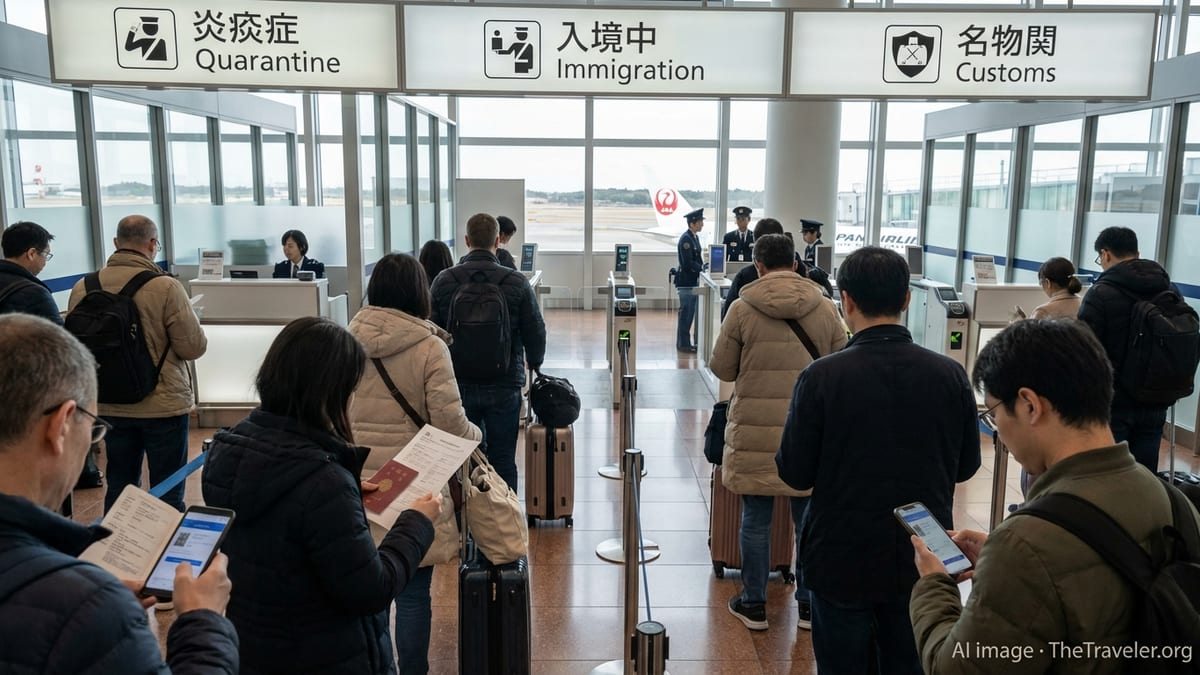
Regardless of whether you travel visa free, on an eVisa, or with a sticker visa, you will pass through the same basic checks at Japan’s border. On arrival, officials verify your passport, biometric data such as fingerprints and a photograph, and your entry status. Increasingly, automated gates or kiosks handle parts of this process, with staff supervising and stepping in when needed. Border queues can vary depending on time of day and season, with peak periods often linked to major holidays and events.
Immigration officers may ask about your itinerary, accommodation and financial means. They can request to see return or onward flight bookings, hotel confirmations or invitations from friends or relatives. While many travelers experience only a few brief questions, it is wise to be prepared with printed or easily accessible digital copies of key documents. Having everything organized often shortens the interaction and leaves a better impression.
Japan also enforces customs and quarantine regulations strictly. Certain foods, plants and animal products are restricted or prohibited, and quantities of alcohol, tobacco and cash beyond set thresholds must be declared. Health related restrictions are currently lighter than during the pandemic period, but officials retain the authority to inspect and question travelers if there are concerns about communicable diseases or other health risks. Complying promptly and politely with all instructions is the simplest way to avoid delays.
Travelers with special circumstances, such as dual nationals, holders of refugee travel documents, or people with previous immigration issues, may face additional questions or processing times. In such cases, arriving with extra documentation, allowing generous connection times for onward flights and seeking advice from a Japanese embassy in advance are all prudent measures.
The Takeaway
Japan’s entry rules can appear complex at first glance, but most short term visitors find the process straightforward once they know which category they fall into. If you hold a passport from one of the many visa exempt countries, a valid passport, a ticket home and proof you can fund your trip are usually enough for a classic 90 day holiday. If you are from a country that is not visa exempt, or if you intend to study, work or stay long term, you will need to navigate Japan’s visa system and, in many cases, coordinate closely with sponsors or employers inside Japan.
Digitalization is reshaping Japan’s border controls. The growing eVisa system, the use of online pre arrival platforms and the planned future electronic travel authorization all point toward more virtual paperwork and fewer in person consular visits. At the same time, Japan is tightening some long stay and residency routes, signaling that while tourists and short stay visitors are warmly welcomed, long term residence is subject to careful scrutiny.
For travelers, the most important step is to check official guidance that applies to your nationality and travel purpose as you plan your trip, and again shortly before departure in case rules have changed. With that preparation in place, you can focus on the real purpose of your journey: enjoying Japan’s cities, countryside and culture, confident that you understand the entry rules that apply to you.
FAQ
Q1. Do I need a visa to visit Japan as a tourist?
In many cases, no. Citizens of dozens of countries and regions can visit Japan visa free for short stays as temporary visitors, provided they have valid passports, onward travel and funds.
Q2. How long can I stay in Japan without a visa?
For most visa exempt nationalities, the permitted stay is up to 90 days per visit, though some countries receive shorter periods such as 15 or 30 days.
Q3. What if my country is not on Japan’s visa exemption list?
Then you must apply for a short term stay visa before traveling. This is usually done through a Japanese embassy, consulate or authorized visa center in your country of residence.
Q4. Can I work while visiting Japan on a tourist or temporary visitor status?
You cannot take paid employment with Japanese employers on temporary visitor status. Limited remote work for foreign employers may be tolerated, but anything more should use an appropriate work or digital nomad framework.
Q5. What is Japan’s digital nomad visa and who can use it?
Japan’s digital nomad arrangement is a six month Designated Activities status for qualifying remote workers from selected countries who earn a relatively high income and hold private health insurance.
Q6. Does Japan offer an online eVisa for tourists?
Yes for some nationalities. Japan’s eVisa system allows eligible travelers from certain non exempt countries to apply online for a single entry short stay visa instead of visiting a consulate.
Q7. Can I extend my stay beyond the 90 days given at entry?
Extensions of temporary visitor status are rare and usually only granted for exceptional reasons such as serious illness or major travel disruptions. Overstaying can lead to penalties.
Q8. Do children need visas or are they covered by their parents’ status?
Children are assessed individually. Whether they need a visa depends on their own nationality and status, not solely on their parents’ passports, so families should check requirements for each member.
Q9. How far in advance should I apply for a Japan visa if I need one?
It is prudent to start at least several weeks before travel. Processing times vary by country and season, and some locations now require advance appointments for submissions.
Q10. Will Japan introduce new pre travel fees or electronic authorizations in the future?
Japan is preparing an electronic travel authorization style system with a small fee planned for later in the decade, so travelers in future years should check for updated requirements.