

Set in the ochre heart of Tanzania, Dodoma is a capital city that feels more like a large, low-slung provincial town than a bustling African metropolis. Long overshadowed by coastal Dar es Salaam and the safari hubs of Arusha and Moshi, Dodoma is finally coming into its own as ministries, diplomatic missions and new infrastructure cement its role as the political center of the country.
For travelers, that shift brings better connections, new hotels and restaurants, and a chance to see a very different side of Tanzania: quieter, more workaday, and firmly rooted in the semi-arid landscapes and cultures of the central plateau.
Understanding Dodoma Today
Dodoma was designated Tanzania’s national capital in the 1970s, but the move from Dar es Salaam unfolded slowly over decades. Only in the last ten to fifteen years has the relocation accelerated in earnest, with the national parliament, the president’s official residence and most ministries now based in and around the city. That shift has triggered a construction boom, rapid population growth and the development of an entirely new administrative zone east of the historic center, often referred to locally as Government City or Magufuli City. For visitors arriving after reading older guidebooks, Dodoma can feel unexpectedly expansive and modern in parts, yet still distinctly laid back.
The city itself lies at an elevation of roughly 1,100 meters on a broad interior plateau, about 480 kilometers inland from the Indian Ocean. This geography defines both its climate and character. Days are warm to hot, nights can be pleasantly cool, and the surrounding countryside is given over to agriculture and cattle-keeping. Dodoma functions as a major market town for crops such as maize, sorghum, millet and, notably, sunflowers, which are pressed into cooking oil in small and large mills around the region. The agricultural hinterland, rather than tourism, remains the economic backbone of the area, which is one reason the city retains an unhurried, provincial feel despite its capital status.
Culturally, Dodoma is a crossroads. The indigenous Gogo people form a strong presence, but decades as an administrative center have drawn Tanzanians from every corner of the country. You will hear Swahili spoken everywhere, with English widely used in government, schools and larger businesses. Churches, mosques, a Hindu temple and a Sikh gurdwara share the skyline, while the parliament’s modern complex, large traffic roundabouts and new government buildings lend certain districts a planned, almost austere quality. This mix of rural roots and national symbolism is central to understanding the city’s appeal for curious travelers.
First Impressions and City Layout
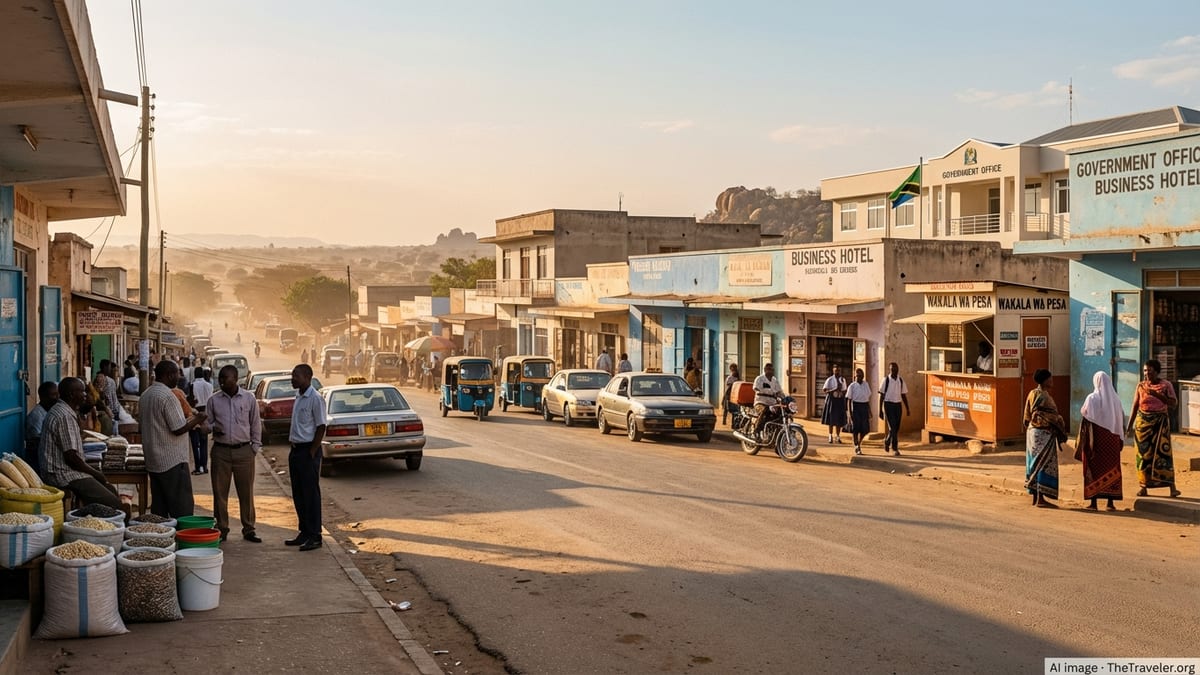
Most visitors’ first impression of Dodoma is its horizontality. Unlike Dar es Salaam’s growing high-rise clusters, Dodoma spreads out in one- and two-story buildings punctuated by a few larger hotel blocks and public structures. Approaching by road or rail, you pass small farms, rocky outcrops and scattered villages before the city slowly coalesces into denser neighborhoods, fuel stations and commercial strips. The sky feels enormous, tinged with dust in the dry season, and the light at sunset can be particularly striking as it catches the red earth.
The traditional city center sits around a compact commercial core of shops, markets, banks, pharmacies and offices. Streets here are relatively easy to navigate, though traffic circles can be confusing initially. This is where you will find many of the older guesthouses, mid-range hotels, and long-established eateries serving Swahili staples, grilled meats and snacks. To the north, the modest airport lies just beyond the built-up area, while to the west and south, residential districts and light industry spread outward along key roads.
To the east, however, Dodoma feels almost like a different city altogether. Here, the Government City development has carved out a new district of broad avenues, roundabouts and large, contemporary buildings housing ministries, agencies and, increasingly, diplomatic missions. Construction continues in phases, with new structures and landscaping projects altering the skyline year by year. Travelers interested in contemporary African urban planning and architecture will find this area revealing, especially in contrast with the older core and surrounding villages that predate Dodoma’s capital status by many decades.
Getting There and Getting Around
Dodoma is well connected to the rest of Tanzania by road, rail and domestic air services. The city’s small airport, located just north of the center, handles regular flights with national and regional airlines linking Dodoma to Dar es Salaam, Arusha and other key hubs, though schedules can vary by season. Aircraft are typically smaller turboprops, and services may be reduced on weekends or holidays, so it is wise to check and reconfirm flight times, especially if you are connecting onward to international departures.
By road, Dodoma sits at the junction of several major routes. Paved highways connect it east to Morogoro and Dar es Salaam, north to Kondoa, Babati and Arusha, west toward Singida and Tabora, and south toward Iringa and beyond. Long-distance buses from Dar es Salaam and Arusha run daily, with journey times commonly ranging from six to ten hours depending on distance, road conditions and traffic. Booking with reputable bus companies, traveling during daylight hours, and keeping valuables secure but accessible are all sensible precautions. The overland journey can be rewarding, offering wide views of the central plateau, rural markets and village life.
Rail remains another option for travelers with time and a taste for slower journeys. Dodoma sits on Tanzania’s historic Central Line, which has seen periods of rehabilitation and variable service quality over recent years. When passenger services are running reliably, trains can be an atmospheric, if sometimes delayed, way to arrive, particularly from Dar es Salaam. Inquire locally or through up-to-date travel agents before committing to rail, as schedules and service levels can change with little notice.
Within Dodoma, getting around is relatively straightforward. Taxis cluster near major hotels, the bus stand and key intersections; most are unmetered, so agree on a fare before setting off. Motorcycle taxis and three-wheeled bajaj are common for short hops, but helmets are not always provided, which raises safety considerations. Shared minibuses known as daladala connect neighborhoods and outlying areas at low cost, though comfort levels are basic and routes can be confusing for first-time visitors. For many travelers, a mix of walking in the central areas and using taxis to cover longer distances or reach the Government City enclaves offers the best balance of convenience and safety.
Climate and the Best Time to Visit
Dodoma’s inland plateau setting gives it a semi-arid climate with distinct wet and dry seasons. Temperatures are generally warm year-round, but the elevation moderates extremes compared with hotter lowland regions. Days commonly feel hot in the sun, especially in the build-up to the rains, while evenings can cool down enough that a light jacket is useful, particularly from June to August. Humidity is often lower than on the coast, which many visitors find more comfortable.
The primary rainy season typically runs from about November through April, with the heaviest downpours often occurring between December and March. During this time, short, intense showers can transform dusty streets into muddy stretches and temporarily disrupt travel on smaller rural roads. Urban infrastructure has improved, but localized flooding and potholes are not unknown. On the other hand, the countryside turns green, fields thrive and the air feels fresher after a storm.
The long dry season, usually from May to October, is considered the most comfortable time to visit. Skies are often clear, humidity is relatively low, and daytime temperatures are warm without being oppressive for most people. Dust can become a factor on unpaved roads, and the landscape takes on a golden-brown palette as grasses dry out, but overall conditions favor city exploration and overland travel. Because Dodoma does not yet experience the same volume of seasonal tourist swings as safari destinations, hotel availability tends to be steady throughout the year, though conferences and government events can cause occasional spikes in demand.
What to See and Do in and Around Dodoma
Dodoma is not a city of headline-grabbing attractions but of quieter rewards. Visitors drawn here will find low-key cultural landmarks, political symbolism and glimpses of everyday Tanzanian life at the center of power. One of the most significant sites is the national parliament complex, where the country’s legislature meets. While access is restricted during sessions and security protocols apply, seeing the buildings and their landscaped setting helps contextualize Dodoma’s role as the nerve center of modern Tanzania.
Several churches and mosques stand out as local landmarks, reflecting the city’s religious diversity. The Roman Catholic cathedral and prominent Anglican and Lutheran churches, alongside large mosques, create a multi-faith skyline. Attending a Sunday service or simply passing by on Fridays offers insight into how faith is woven into daily routines. Respectful dress, discretion with photography and sensitivity to worship are essential. Interspersed among these are smaller cultural centers, schools and community halls that speak to Dodoma’s role as a regional educational hub.
For a feel of everyday commerce, the city’s markets are essential stops. Central markets and roadside stalls sell fresh produce, grains, spices, clothing, household goods and the ubiquitous plastic buckets and basins of East African trading life. This is where you will see Dodoma’s agricultural character up close: heaps of sunflowers, sacks of grain, bundles of firewood and seasonal fruits. Modest craft stalls may sell textiles, hand-carved wooden items and baskets, though for large-scale souvenir shopping, other Tanzanian cities still offer more choice.
Beyond the urban core, the surrounding region lends itself to low-key excursions. Rocky hills and kopjes outside the city offer viewpoints over the plains and farmland. Some visitors arrange day trips to nearby vineyards and wineries, as the Dodoma area has become known for wine production alongside its traditional crops. Others head toward rural villages to experience Gogo culture, traditional music and dance, and homestead life, typically on guided visits arranged through local tour operators or community organizations. As always, choose operators with a reputation for fair community engagement and ethical practices.
Food, Drink and Local Flavors
Eating in Dodoma centers on Tanzanian staples, with a growing sprinkling of more contemporary cafes and hotel restaurants serving international dishes. In the city center, you will easily find canteens and casual eateries offering rice, beans, grilled chicken, beef stews and the ubiquitous ugali, a stiff maize porridge that forms the base of many meals. These spots are where civil servants, students and small business owners sit shoulder to shoulder over hearty plates and cups of spiced chai.
In the evenings, streetside grills appear on pavements and at small open-air joints, sizzling with mishkaki (marinated meat skewers), nyama choma (grilled meat) and sometimes goat offal or liver for the adventurous. Chipsi mayai, a comforting omelet cooked with French fries folded inside, remains a popular, inexpensive snack or quick meal, often served with a side of kachumbari, a fresh tomato and onion salad. Vegetarian travelers can usually find beans, vegetables and rice, though it may take some extra explanation to ensure dishes are prepared without meat stock.
As the capital has expanded, mid-range and upscale restaurants, often attached to hotels or standalone on main avenues, have broadened the culinary landscape. Here you may encounter buffet lunches catering to conferences, menus featuring grilled fish trucked in from lakes or the coast, pizzas and pastas, or simple continental fare. Coffee culture is still modest compared with some regional capitals, but newer cafes do offer espresso-based drinks, pastries and free Wi-Fi that make them useful bases for travelers catching up on messages or planning routes.
When it comes to drinks, Dodoma’s agricultural identity is reflected in locally produced wines from nearby vineyards, which appear on many restaurant menus. Beer from national brands is widely available, alongside soft drinks and bottled water. Public alcohol consumption is generally accepted in licensed venues, but discretion and respect for local norms are important. Tap water is not considered safe to drink for visitors; stick to bottled or treated water and be cautious with ice in basic establishments.
Practicalities, Safety and Etiquette
Practical preparation goes a long way in Dodoma, as in the rest of Tanzania. Most travelers will require a visa, which for many nationalities can be obtained online in advance or on arrival at selected entry points. If you are entering the country by air through Dar es Salaam, Kilimanjaro or Zanzibar and then traveling onward to Dodoma, check the current visa rules and health requirements well before your trip, as these can change over time. A valid passport with sufficient blank pages and remaining validity is essential.
Health considerations include routine travel vaccinations and regionally recommended immunizations against diseases such as hepatitis A and typhoid. Dodoma’s inland elevation reduces but does not entirely eliminate malaria risk, so consult a travel health specialist about preventive measures and carry reliable mosquito repellent, especially in the rainy season and around dusk. Sun protection is vital; the highland sun can be deceptively strong, and dehydrating heat is a bigger concern than humidity. Basic medical services and pharmacies are available in the city, but complex care may require transfer to larger centers.
Safety in Dodoma is broadly in line with other medium-sized East African cities. Petty crime, such as pickpocketing and opportunistic bag snatches, can occur, particularly in crowded markets and around bus stands. Carry only what you need, keep valuables out of sight and stay alert without becoming anxious. Walking during daylight in central areas is common, but at night it is wise to use taxis or reputable ride services where available, especially if you are unfamiliar with the neighborhoods. Political demonstrations and protests periodically occur in Tanzania’s major cities; if you become aware of planned rallies or heightened security measures, avoid gathering points and follow the guidance of local authorities and your embassy’s travel advisories.
Respectful behavior opens doors. Tanzanians generally value courtesy and modesty. Casual clothing is fine, but extremely revealing dress may attract unwanted attention, particularly away from international hotels. Learning a few words of Swahili, such as the greetings jambo or habari, and offering a handshake or polite nod goes a long way. Always ask permission before photographing people, government buildings, military sites or infrastructure, as sensitivities can be high around security-related subjects in the political capital.
Where Dodoma Fits in a Wider Tanzania Itinerary
For many travelers, Dodoma will not be the primary reason to visit Tanzania, a country better known internationally for wildlife-rich parks, the beaches of Zanzibar and the snowy summit of Kilimanjaro. Yet including the capital in your itinerary can deepen your understanding of how the country functions and what everyday life looks like away from the tourist circuit. Dodoma forms a natural stop on overland routes that cross the country, whether you are heading from Dar es Salaam toward the northern safari circuit, journeying between the coast and the great lakes, or exploring the less-visited central and southern highlands.
The city also offers a different rhythm after the intensity of safari days or the bustle of coastal ports. Here, mornings see civil servants commuting to new office complexes, students filling lecture halls and traders setting up market stalls, while evenings can be surprisingly quiet once government offices close. Spending a couple of days in Dodoma lets you witness this side of Tanzania and engage with local residents whose livelihoods are far removed from tourism. Conversations with taxi drivers, shopkeepers and civil servants over tea can be as illuminating as any monument.
Logistically, Dodoma can serve as a useful hub if you are stringing together visits to central parks, rural communities and agricultural projects, or if you are interested in contemporary African politics and governance. It is also a stepping stone for slower, more exploratory overland trips that trace rail lines, secondary roads and small towns rather than rushing between well-known highlights. If your schedule allows, think of Dodoma not as an obligatory administrative stop, but as a window onto a Tanzania that most short-stay visitors never see.
The Takeaway
Dodoma defies many expectations of a national capital. Instead of sweeping waterfronts or forests of glass towers, you find a low-rise city of roundabouts, ministries, markets and neighborhoods tied closely to the rhythms of the surrounding countryside. It is a place where sunflower fields and parliamentary debates are part of the same story, and where ambitious new government districts sit a short drive from villages that still follow age-old agricultural cycles.
For travelers willing to look beyond Tanzania’s classic draws, Dodoma offers context and contrast. It explains how a country that hosts some of Africa’s greatest wildlife spectacles and beach escapes is governed and how its people live away from the tourism spotlight. Walking its streets, visiting its markets, sharing meals in modest eateries and observing the daily commute of the civil servants who now call the city home, you encounter a quieter yet essential layer of Tanzanian life. That, more than any single landmark, is what to expect from the country’s capital: an invitation to see Tanzania from the inside out.
FAQ
Q1. Is Dodoma worth visiting for tourists, or should I focus on other Tanzanian cities?
Dodoma is not a conventional tourist hotspot, but it is worthwhile if you are interested in contemporary African politics, everyday urban life and the contrast between coastal and inland Tanzania. Many visitors combine a short stay here with safaris, beach time or mountain trekking elsewhere, using Dodoma to gain a deeper sense of how the country functions beyond its headline attractions.
Q2. How many days should I spend in Dodoma?
For most travelers, one to three days is sufficient. That gives you time to explore the city center, see key government areas from the outside, visit markets, try local food and, if you wish, arrange a short excursion to nearby countryside or vineyards. Longer stays tend to suit business travelers, researchers or those with specific projects in the region.
Q3. Is Dodoma safe for solo travelers?
Dodoma is generally considered reasonably safe by regional standards, including for solo travelers, provided you take normal urban precautions. Avoid walking alone late at night in unfamiliar areas, keep valuables out of sight, and stay aware of your surroundings, especially in crowded places like bus stands and markets. Check current travel advisories, as political protests or security operations in major cities can affect conditions.
Q4. How do I get from Dodoma to popular safari parks?
The most common route is to connect through Arusha or other northern hubs, either by domestic flight or long-distance bus, then join organized safaris to parks such as Serengeti, Tarangire or Ngorongoro Conservation Area. From Dodoma, paved roads head north toward Kondoa and Babati, linking eventually to the northern circuit. Travel agencies in Dar es Salaam, Arusha or online typically arrange safari packages that incorporate overland legs via Dodoma if needed.
Q5. What kind of accommodation can I expect in Dodoma?
Accommodation ranges from basic guesthouses and budget hotels to mid-range and a handful of higher-standard properties, particularly those catering to government visitors, conference delegates and NGO staff. Rooms usually offer private bathrooms, mosquito nets and fans or air conditioning at the upper end. Facilities such as reliable hot water, strong Wi-Fi and international-style breakfasts are more likely in newer business hotels and conference venues than in older lodgings.
Q6. What is the best way to get around the city?
In central Dodoma, many areas can be explored on foot during daylight. For longer distances or trips to the Government City district and outlying neighborhoods, taxis are the most convenient option. Agree on fares before starting your journey, as most taxis do not use meters. Bajaj and motorcycle taxis are widely available for short hops but come with higher safety risks, especially if helmets are not provided.
Q7. Are there any cultural customs I should be aware of?
Politeness and modesty are valued. Greet people when entering shops or offices, dress conservatively in everyday settings and ask permission before photographing individuals or sensitive sites. Learning a few basic Swahili phrases is appreciated, and taking time for simple pleasantries before launching into requests often yields better responses. In religious spaces, follow posted guidelines and observe how local worshippers behave.
Q8. Can I use credit cards in Dodoma, or should I carry cash?
Cash remains important, especially for markets, small shops, budget guesthouses and local eateries. Larger hotels, some supermarkets and higher-end restaurants increasingly accept major credit cards, but network connectivity and card machine reliability can be inconsistent. It is wise to carry a mix of cash in Tanzanian shillings and at least one internationally recognized card, using ATMs at reputable banks to withdraw funds as needed.
Q9. What should I pack for a trip to Dodoma?
Lightweight, breathable clothing suited to warm days, a light jacket or sweater for cooler evenings, comfortable walking shoes, a sun hat, sunglasses and high-SPF sunscreen are all useful. Add a reusable water bottle, insect repellent, basic first-aid items and any prescription medications. If you plan to visit government offices or attend formal meetings, include at least one smart-casual outfit that covers shoulders and knees.
Q10. Is English widely spoken in Dodoma?
Swahili is the dominant language, but English is commonly used in government, business and among educated residents. In hotels, better restaurants, major shops and official institutions you can generally communicate in English without difficulty. In markets and small neighborhood establishments, basic Swahili phrases and a willingness to gesture and smile will help bridge any language gaps.