

More news on this day
Escalating conflict across the Middle East is triggering widespread flight delays, diversions and cancellations, leaving many holidaymakers asking whether their travel insurance will step in when journeys unravel.
Get the latest news straight to your inbox!
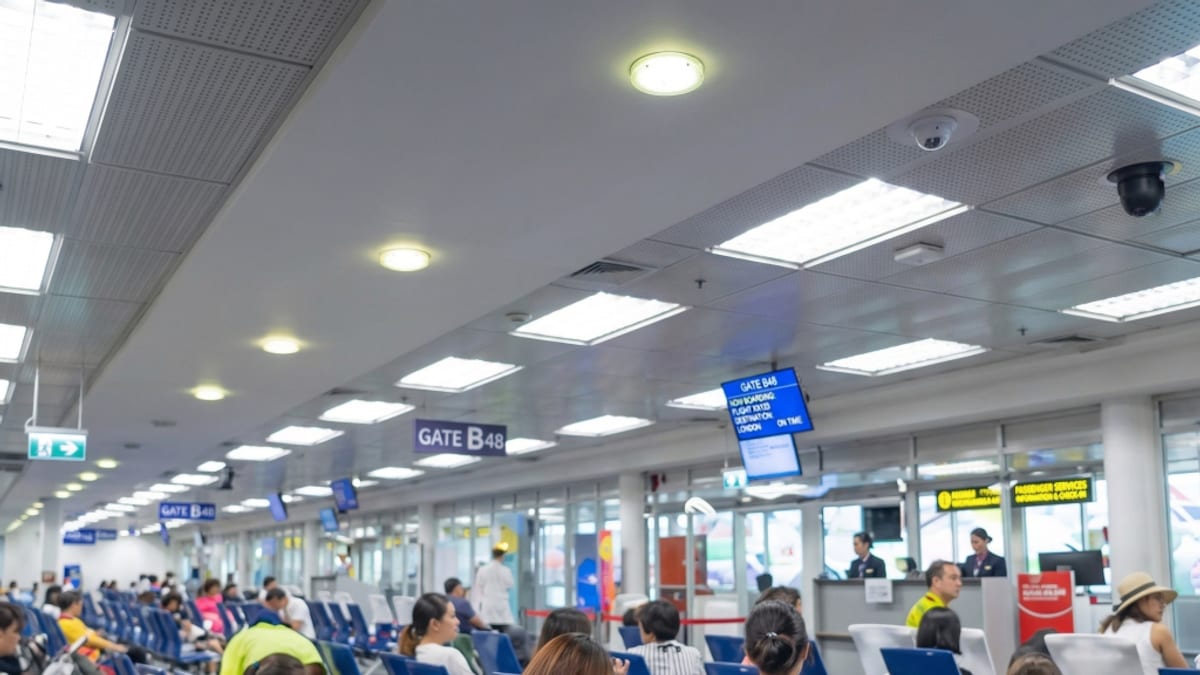
Middle East Disruption Creates a New Wave of Flight Delays
Key aviation corridors across the Middle East have been repeatedly disrupted in recent weeks as regional conflict intensifies. Airspace closures and restrictions affecting hubs such as the Gulf states are forcing airlines to cancel services or reroute long haul flights between Europe, Africa and Asia, in some cases adding several hours of extra flying time and knock-on delays across global networks.
Publicly available aviation and security briefings describe a pattern of rolling airspace notices, longer routings around conflict zones, and the temporary suspension of routes into cities considered at higher risk. This has left many passengers stranded in transit, missing onward connections or arriving at their final destination many hours or even days behind schedule.
Insurance and risk industry publications note that the situation is being compared by some commentators to the early phases of the Covid-19 crisis, with thousands of travelers seeking clarity on what costs can be recovered. Unlike a one-off weather event or isolated airline fault, the current disruption is tied to fast-moving geopolitical developments, which are treated very differently under standard travel insurance contracts.
What Trip Delay Insurance Usually Covers
Under normal circumstances, many mainstream travel policies include trip delay or travel disruption benefits. These are designed to reimburse reasonable additional expenses when a flight is significantly delayed for reasons outside the traveler’s control, such as mechanical issues, crew shortages or severe weather. Cover often extends to meals, local transport, and hotel stays when an overnight is required, subject to a minimum delay threshold and daily or total limits.
Consumer guidance from large travel insurers indicates that to qualify for a trip delay claim, the delay typically must meet a stated number of hours, commonly between 3 and 12, and the traveler must provide documentation from the airline confirming the cause and length of the disruption. Receipts for hotels and meals are usually required, and any compensation or vouchers issued by the airline may be deducted from what the insurer will pay.
Some policies also offer separate missed connection benefits when a late inbound flight causes the traveler to miss a prepaid onward leg on the same itinerary. In these situations, insurers may reimburse change fees, rebooking costs or alternative transport to reach the next destination, again within defined limits. Crucially, however, these provisions almost always exclude events that fall under war or political risk categories, which is where the present Middle East crisis complicates claims.
War and Political Risk Exclusions Limit Middle East Coverage
Across multiple markets, policy wordings reviewed in public advisories and comparison guides show broad exclusions for losses arising directly or indirectly from war, invasion, insurrection, civil unrest or similar hostilities. Many policies also exclude government-ordered airspace closures or travel bans under force majeure clauses. As a result, when a delay is clearly linked to conflict in the Middle East, standard trip delay or missed connection benefits may not respond.
Recent travel advisories published by large international insurers in response to the latest Middle East escalation highlight this gap. Several providers explicitly state that travel interruption costs linked to airspace closures and military activity in the region fall outside normal cover because they are captured by general war exclusions. In effect, even if a traveler spends additional nights in a transit city after flights are canceled, the underlying cause may make the loss uninsurable under a standard leisure policy.
Insurance industry analysis also notes that buying a policy after a conflict is widely reported will not usually restore protection. Once an event is considered a known risk, future losses flowing from that event are often excluded as expected or foreseeable circumstances. This means travelers booking new holidays that route through affected Middle Eastern hubs should not assume that newly purchased policies will cover disruption stemming from the same ongoing crisis.
Specialist political risk or war cover is sometimes available to corporate travelers and high-risk itineraries, but these are typically separate products, priced and underwritten outside the mass-market travel insurance segment. For most holidaymakers, the practical implication is that the current wave of Middle East disruption sits largely beyond the scope of conventional policies.
How Airline Rights and Local Laws Interact With Insurance
Even where insurance is limited, passengers still have potential rights against airlines under consumer and aviation regulations. In the European Union and the United Kingdom, Regulation 261 and its UK equivalent set out obligations on airlines to provide care in the event of long delays or cancellations, including meals, refreshment, and accommodation when an overnight stay is required. Monetary compensation can also be payable for long delays that are within the airline’s control, such as technical or staffing problems.
However, legal and consumer guidance on these regimes makes clear that extraordinary circumstances such as airspace closures for security or political reasons generally exempt airlines from paying fixed financial compensation, even though they may still need to provide care and assistance. In other jurisdictions, including the United States, there is no equivalent blanket compensation rule, but carriers may still provide hotel and meal vouchers as a matter of policy when disruptions are not caused by security directives or severe weather.
Travel insurance sits alongside, rather than replaces, these airline obligations. Many policies require travelers to seek refunds, rebooking or statutory compensation from airlines first, and will only step in for residual, documented losses that are not otherwise recoverable. This interaction is particularly important during the Middle East crisis, where airline decisions are strongly influenced by safety assessments and regulatory notices, and where what constitutes an extraordinary circumstance is central to both legal rights and insurance coverage.
Steps Travelers Can Take to Protect Their Holiday Plans
Travel and insurance specialists advise that the most effective protection in the current environment begins before booking. Prospective travelers are encouraged to examine routing options to avoid nonessential connections through conflict-affected hubs, bearing in mind that a cheaper ticket via a Middle Eastern stopover may carry higher disruption risk than a more direct service, even outside the region.
When considering insurance, travelers can look for policies that clearly spell out trip delay and missed connection benefits, paying attention to minimum delay thresholds, per-day limits and overall caps. Optional upgrades such as cancel for any reason benefits may offer broader flexibility around abandoning or changing a trip in response to rising tensions, although these add-ons are more expensive and still subject to their own conditions and deadlines.
For those already booked, industry guidance emphasizes carefully documenting any disruption. This includes keeping boarding passes and booking confirmations, asking airlines for written confirmation of delay reasons where possible, and retaining receipts for meals, accommodation and local transport. Even if conflict-related exclusions apply to some costs, there may be elements of a claim that remain eligible, particularly where routine operational problems compound a wider regional disruption.
Finally, observers note that travelers should regularly monitor government travel advisories and insurer travel alerts in the run-up to departure. If official guidance shifts to advise against nonessential travel to particular countries or through certain hubs, many operators and insurers adjust their policies on refunds and rebooking. Understanding those changes early can give passengers more options to reroute or reschedule holidays before they are caught up in the most severe delays.