

More news on this day
From Ankara’s historic station to the snowbound plateau of Kars, Turkey’s Dogu Ekspresi is once again turning a once-routine rail line into one of Anatolia’s most coveted slow travel experiences.
Get the latest news straight to your inbox!
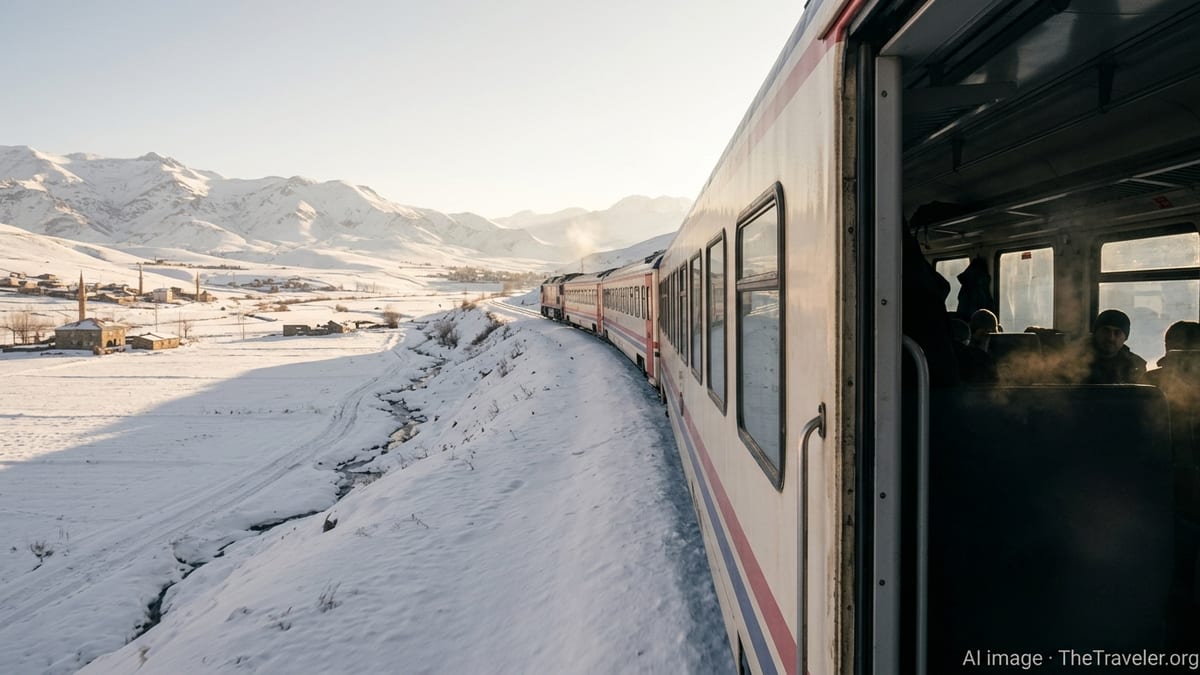
A Classic Anatolian Line Turned Global Travel Phenomenon
The Dogu Ekspresi, or Eastern Express, runs more than 1,300 kilometers between Ankara and Kars, crossing the heart of central and eastern Anatolia. Once a largely practical service linking provincial capitals, it has become one of the country’s most talked-about rail journeys, highlighted in international travel features and widely shared across social media for its long, contemplative passage through mountains, valleys and traditional towns.
TCDD Tasimacilik, Turkey’s state rail operator, runs two distinct versions of the route. The classic Eastern Express provides daily overnight intercity service with seated and limited sleeper accommodation, appealing to budget-conscious travelers and locals moving between major cities. Parallel to this, the Turistik Dogu Ekspresi offers a slower, seasonally operated, experience-focused itinerary that has helped shape the train’s global reputation as a bucket-list winter journey.
Publicly available information shows that the line passes key hubs including Kirikkale, Kayseri, Sivas, Erzincan and Erzurum before reaching the high plateau around Kars. Along the way, the train traces river valleys and skirts deep canyons, especially east of Sivas, giving travelers wide-window views of Anatolia’s stark topography that are difficult to access by road during the coldest months.
Winter Season Puts Touristic Dogu Ekspresi in the Spotlight
While the classic Eastern Express operates year-round, the touristic version has become synonymous with Turkey’s winter tourism push in eastern Anatolia. Recent schedules and rail bulletins indicate that the Turistik Dogu Ekspresi is programmed primarily between late December and early March, aligning with peak snow conditions and demand for seasonal travel experiences.
For the 2024–2025 season, documents shared by TCDD and tourism bodies outlined around 60 round-trip departures, split evenly between the Ankara to Kars and Kars to Ankara directions. The formula has carried over into the current 2025–2026 winter, with Turkish media coverage reporting that the new season began in late 2025 and is set to continue until early March 2026, keeping a steady flow of visitors moving into the region during historically quiet months.
The touristic train differs from the regular service in both timing and concept. Departures are scheduled earlier in the day from Ankara so that some of the most dramatic sections of the route can be experienced in daylight. Onboard, the consist is largely made up of sleeper cabins and a dining car, reflecting an emphasis on comfort and unhurried viewing rather than simple overnight transport between cities.
Slow Travel With Scenic Stops in Erzincan, Erzurum and Sivas
One of the defining features of the Turistik Dogu Ekspresi is the inclusion of extended sightseeing stops, turning the journey into a rolling itinerary rather than a straight-through ride. Recent operating plans cited in Turkish rail announcements note daylight pauses in Erzincan and Erzurum in the Ankara to Kars direction, and in Iliç, Divrigi and Sivas on the return westbound leg.
These scheduled breaks, running from roughly two and a half to four hours depending on the station, are designed so passengers can leave the train, walk into town centers and join locally organized excursions. In Erzincan and Erzurum, travelers typically gravitate toward historic mosques, bazaars and viewpoints over surrounding valleys. The return stops introduce lesser-known destinations such as the UNESCO-listed Great Mosque and Hospital complex in Divrigi and the Seljuk monuments around Sivas.
Reports indicate that the entire journey on the touristic train, including stops, takes roughly 32 to 33 hours. This longer schedule has made the service attractive to domestic and international visitors seeking a multi-day experience built around train travel, photography and regional cuisine. Travel forums and complaint platforms also show that high demand can make sleeper cabins sell out rapidly, leading to calls for more departures and clearer information on booking windows.
Eastern Turkey Reaps Tourism Benefits From the Rails
The rise of the Dogu Ekspresi as a social media favorite has brought new attention to eastern cities that traditionally sat outside mainstream tourist circuits. Kars, at the line’s eastern terminus, now promotes itself as a winter base for trips to the medieval ruins of Ani, sledding and ice festivals on frozen Lake Cildir, and culinary experiences featuring regional cheeses and goose dishes.
Local tourism bulletins and national travel coverage point to the train as a catalyst for small-scale hospitality investments along the route. Guesthouses, boutique hotels and tour operators in places like Erzurum, Erzincan and Kars have responded to growing winter arrivals by packaging rail tickets with guided excursions, transfers and meals. The effect has been to extend the tourism season in regions that once relied heavily on a short summer window.
At the same time, growing popularity has sparked debate within Turkey about pricing and access. Consumer forums highlight rising fares for the touristic train’s private sleeper cabins, with some travelers arguing that the service is drifting beyond the reach of students and budget travelers who first helped popularize the route. Others counter that the classic Eastern Express, which remains significantly cheaper and more utilitarian, continues to provide an affordable way to experience the same landscapes, albeit without the curated stops.
Planning the Journey: Access, Booking and Expectations
For international visitors, Ankara serves as the primary gateway to the Dogu Ekspresi. High-speed rail and frequent domestic flights connect the capital with Istanbul and other major cities, allowing travelers to link modern transport with the slower pace of the eastern line. Recent discussions in rail-focused communities emphasize that tickets for the touristic train, especially private cabins, often sell out within minutes of release, which typically happens several weeks to a few months before departure dates.
Public information platforms note that the classic Eastern Express can be a more flexible alternative, with more frequent departures and lower prices, though winter demand has also risen. On this version, there are fewer or no long sightseeing stops and a higher proportion of seated accommodation, but the core experience of waking up to snow-covered valleys outside the window remains intact.
Travel accounts shared online underline that conditions on board reflect the realities of a long-distance train in harsh winter weather. Temperatures can fluctuate between cars, and facilities, while generally functional, can show the strain of heavy seasonal use. Travelers are encouraged by experienced riders to arrive prepared for basic, occasionally crowded conditions, particularly on the classic train, and to treat any inconveniences as part of the experience of crossing Anatolia by rail rather than by plane or motorway.
With the 2025–2026 season underway, Dogu Ekspresi continues to anchor Turkey’s broader effort to promote rail-based tourism, joining newer themed services on other routes. For those willing to trade speed for immersion, the line offers a rare combination of accessibility and remoteness, carrying passengers from the busy platforms of Ankara into the quiet, snowbound landscapes at the edge of the Caucasus.