

More news on this day
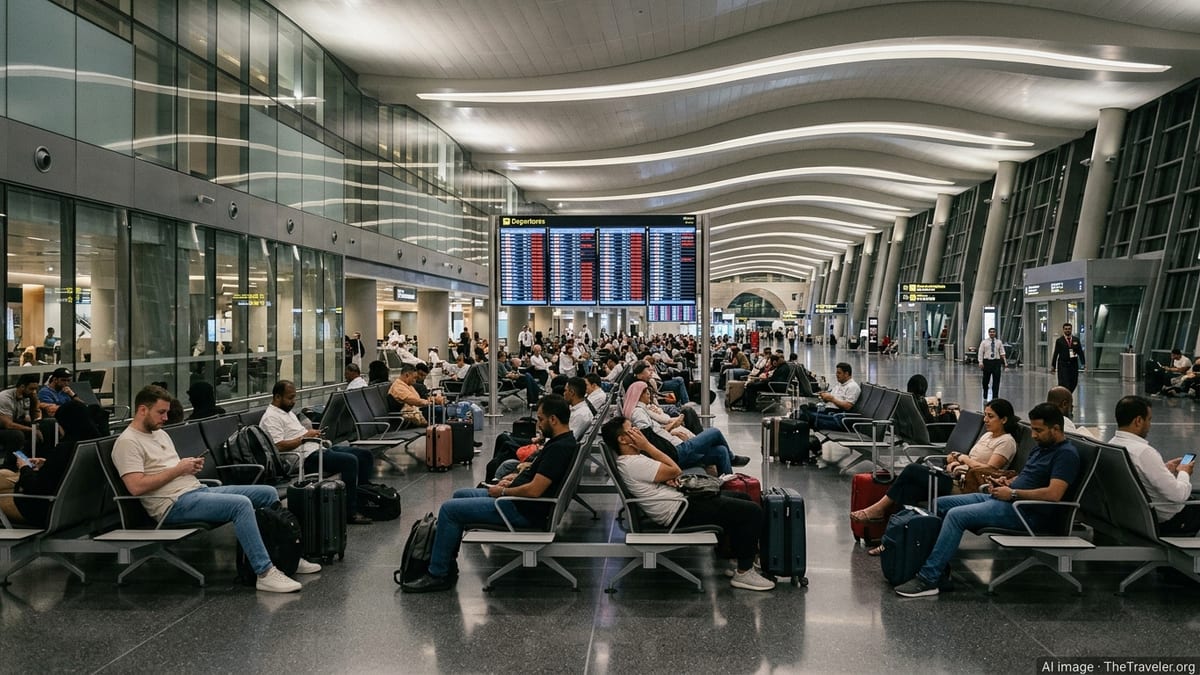
Hundreds of travelers remain stranded at Hamad International Airport in Doha after a fresh wave of disruptions led to delays for at least 25 flights and the cancellation of six more, unsettling services on major routes across Europe, Asia, Africa and other global destinations.
Get the latest news straight to your inbox!
Delays and Cancellations Snarl One of the World’s Busiest Hubs
Hamad International Airport, a key transit hub in the Gulf, has been grappling with rolling schedule changes as airlines adjust to airspace restrictions and operational constraints linked to the wider regional security situation. Publicly available flight data and traveler reports indicate that, over a single operating window, 25 flights departing or arriving in Doha were delayed while six were cancelled outright, leaving passengers facing extended stays in terminals and sudden changes to onward journeys.
The affected flights span a network that normally connects Doha to major cities across Europe, Asia and Africa, including key long haul and regional routes. Disruption at Doha’s main gateway has a magnified impact because a large share of passengers travel on multi leg itineraries that rely on precise connection timings. Even limited cancellations quickly cascade through the system, creating missed connections and necessitating wholesale itinerary changes.
Travelers posting on public forums describe overnight waits in airport seating areas, repeated rebookings and uncertainty over when regular schedules will resume. Some report being offered accommodation or meal vouchers, while others say they have chosen to stay inside the terminal in hopes of catching the next available departure.
Qatar Airways and Partner Airlines Forced to Reroute
Qatar Airways, the dominant carrier at Hamad International Airport, has been at the center of the disruption, alongside partner and codeshare airlines that use Doha as a connecting hub. Publicly available information and airline advisories show that services by carriers including Qatar Airways, Gulf Air and Malaysia Airlines have faced rerouting, extended flight times and, in some cases, outright cancellations as they navigate a patchwork of regional airspace constraints.
Some long haul flights that would normally route through Doha have been diverted to alternative hubs or operated via different intermediate stops, complicating crew and aircraft rotations. Other services have been converted into limited relief or repatriation flights with tightly controlled passenger lists, prioritizing those who have already been stuck in transit for several days.
The complexity has been particularly evident on itineraries involving multiple carriers. Passengers connecting between Europe, Asia and Africa through Doha on joint or codeshare tickets have reported difficulty obtaining consistent information on revised timings, refund policies and alternative routing options, as each airline updates its systems at different speeds.
Global Ripple Effects Across Europe, Asia and Africa
Doha’s role as a super connector has meant that the impact of a relatively contained number of delays and cancellations has spread far beyond Qatar’s borders. Travel industry analysis and recent coverage of the regional situation indicate that flights linking Doha to major European capitals, key South and Southeast Asian cities and hubs in North and East Africa have all seen schedule changes in recent weeks.
For European travelers, Doha is a popular connecting point to destinations in South Asia, Australia and parts of Africa. When departures from Qatar are delayed or cancelled, passengers in cities such as London, Paris, Frankfurt or Madrid can find themselves stranded at their origin airports or arriving in Doha too late to make onward legs. Similar patterns have been reported on routes from Kuala Lumpur and other Asian gateways, where missed connections to African and Middle Eastern cities have forced last minute overnight stays.
Aviation analysts note that the current disruptions come on top of existing pressures on global air corridors, including previous rerouting around conflict zones and congested European airspace. As airlines add extra distance to avoid sensitive areas, marginal delays can quickly push crews beyond regulated duty limits, turning what would have been minor schedule adjustments into full cancellations.
Passengers Face Long Waits, Uncertain Timetables and Limited Options
Passengers traveling through Doha describe a patchwork of experiences, influenced by the timing of their flights, their destination and the policies of the airlines involved. Public posts on traveler forums suggest that some stranded customers have been rebooked several times as tentative departure slots were pushed back or cancelled again, while others were offered seats on ad hoc relief flights operating under special authorizations.
For many, communication and clarity have emerged as the main challenges. With call centers overwhelmed and airport service desks handling large queues, travelers have increasingly turned to airline apps and online booking tools in an effort to track last minute changes. Some reports indicate that automatic rebooking has helped move passengers onto new services once limited corridors reopened, but the volume of disrupted itineraries continues to generate backlogs.
Options for rerouting away from Doha remain constrained. Neighboring hubs in the Gulf and wider region are also contending with higher demand and altered flight paths, limiting the availability of seats for those seeking alternative routes home. In several cases, travelers have reported purchasing separate one way tickets on other carriers simply to secure a path out of the region, in some instances at significant additional cost.
Unclear Timeline for Normal Operations as Airlines Monitor Conditions
While aviation authorities have gradually reopened certain corridors under restricted conditions and some carriers have begun operating limited relief and evacuation style services, a return to fully normal commercial schedules at Hamad International Airport has yet to be confirmed. Airline advisories and industry commentary emphasize that safety and regional airspace restrictions continue to guide planning decisions, with schedules being adjusted in short cycles rather than over full seasons.
Travel experts note that even once broader airspace access stabilizes, it may take time for airlines to reposition aircraft and crew, clear existing passenger backlogs and restore finely tuned hub banks that underpin global connectivity. Passengers with upcoming bookings involving Doha are being encouraged, through public guidance and published travel alerts, to check flight status frequently, ensure contact details are up to date in airline records and consider building longer connection times into any newly planned itineraries.
For now, the situation at Hamad International Airport illustrates how quickly disruptions at a single major hub can reverberate across continents. With flights still subject to short notice changes and capacity constrained on many routes, hundreds of passengers remain in transit limbo while carriers and aviation authorities work to stabilize one of the world’s most important crossroads for international air travel.