

More news on this day
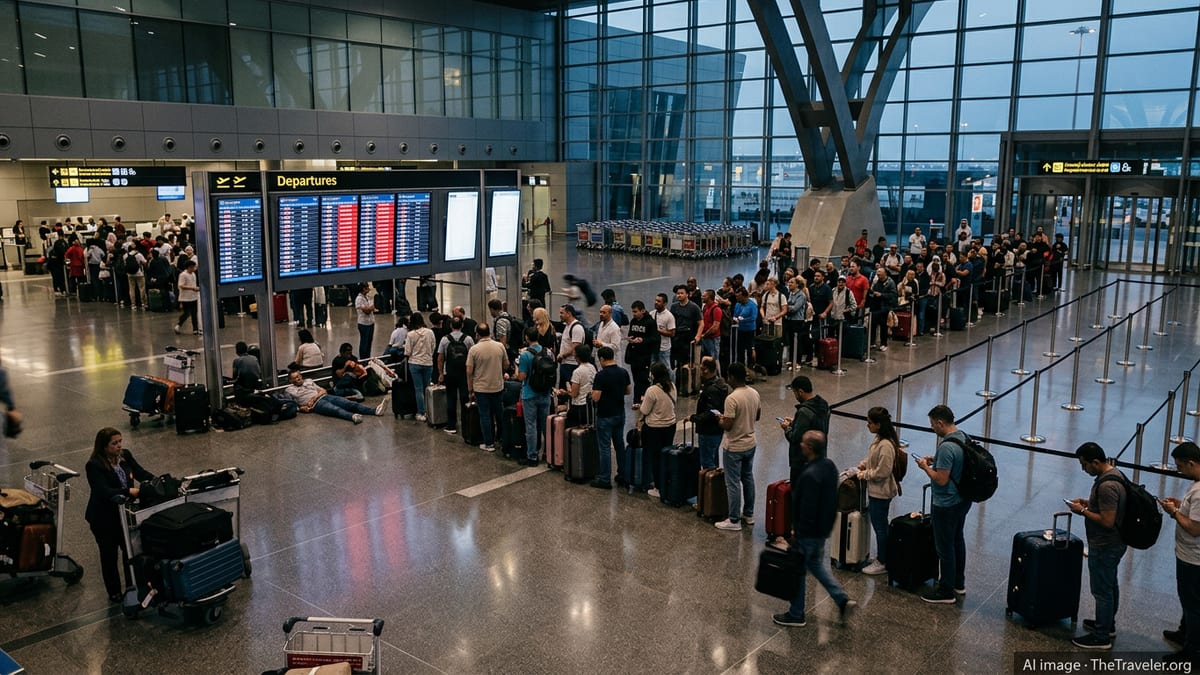
Flight disruption in Qatar has intensified as passengers passing through Doha report at least 269 cancellations affecting Qatar Airways, Gulf Air, Royal Jordanian, Malaysia Airlines and several other carriers, amid continuing regional airspace closures linked to the escalating Middle East security crisis.
Get the latest news straight to your inbox!
Regional Conflict Keeps Airspace Shut and Schedules in Flux
Publicly available information shows that the current wave of cancellations is rooted in the wider Middle East conflict that has closed or severely restricted airspace over Qatar, Iran, Iraq, Jordan and several neighboring states since late February 2026. These restrictions have forced airlines to suspend services to and from Doha or operate limited relief corridors, sharply reducing Hamad International Airport’s role as a major connecting hub.
Coverage from aviation trackers and travel industry outlets indicates that Qatar Airways halted most regular passenger operations at its Doha hub when Qatari airspace was first closed, with only a small number of special operations and diversions continuing. Other regional and long haul airlines that typically serve Doha, including Gulf Air, Royal Jordanian and Malaysia Airlines, have either cancelled scheduled flights outright or extended temporary suspensions on routes into the Qatari capital.
Recent travel advisories note that while there is no formal long term closure of Hamad International Airport itself, commercial activity remains heavily curtailed. Flights that do appear on departure boards are subject to rapid changes, with aircraft rerouted mid journey, diverted to alternative airports or cut from schedules at short notice as security assessments evolve.
Scope of Disruption: 269 Cancellations and Rising
A compilation of airline notices, airport information feeds and flight tracking data suggests that at least 269 individual flights linked to Doha and its main transfer markets have been cancelled since the latest round of airspace closures took effect. This tally includes services operated by Qatar Airways, Gulf Air, Royal Jordanian, Malaysia Airlines and several partner or codeshare carriers that normally move transit traffic through Hamad International Airport.
The figure reflects a rolling count over recent days rather than a single 24 hour window, highlighting a sustained rather than momentary shock to the network. Analysts tracking the disruption point out that the true number of affected services, including heavily delayed flights and aircraft repositioning sectors, is likely higher, as some cancellations are recorded within internal airline systems before appearing on public channels.
Reports indicate that Qatar Airways, as the dominant operator in Doha, accounts for the majority of the disrupted flights, particularly on trunk routes linking the Gulf with Europe, South Asia and Southeast Asia. Regional carriers such as Gulf Air and Royal Jordanian have recorded multiple cancellations on services that either transit Qatari airspace or connect into the broader conflict zone, while Malaysia Airlines has extended a full suspension of flights to and from Doha beyond earlier target dates.
Passengers Stranded in Transit and Struggling for Alternatives
Accounts from passengers and travel forums describe scenes of uncertainty across the terminal at Hamad International Airport, with travelers in transit facing missed connections, overnight stays and repeated rebookings as the crisis unfolds. Many report arriving in Doha only to discover their onward sector cancelled or postponed without a clear indication of when normal operations might resume.
Publicly available guidance points to a patchwork of responses, with some travelers offered hotel accommodation and meal vouchers, while others report long waits at service desks and limited access to call centers. The complexity of the situation is amplified for passengers on multi segment itineraries involving several airlines, in which responsibility for rebooking and care can be unclear when cancellations are triggered by security related airspace measures.
With major overflight corridors closed, rerouting options are constrained and often involve lengthy detours through alternative hubs that still have capacity. Travel commentators note that seats on non affected routes are selling out quickly, and that business and leisure travelers are in many cases purchasing entirely new tickets on other carriers while seeking refunds or credits from their original airlines.
Operational and Commercial Repercussions for Airlines
Aviation analysts observe that the continued grounding of significant portions of Middle East capacity is placing growing operational and financial strain on affected airlines. For Qatar Airways, which relies on its Doha hub for the vast majority of its network connectivity, the dislocation represents a rare and severe interruption to a model built around high frequency connections between Europe, Asia, Africa and the Americas.
Carriers such as Gulf Air and Royal Jordanian, which use Doha or neighboring hubs as key waypoints, are contending with aircraft and crew stranded out of position, as well as disrupted maintenance and rotation plans. Malaysia Airlines, which had been rebuilding its long haul presence into the Gulf, has had to suspend flights into Doha and nearby markets, with publicly available statements pointing to ongoing airspace closures as the main driver.
Industry commentary suggests that airlines are attempting to mitigate the impact through temporary schedule cuts, consolidation of remaining flights, and the use of larger aircraft on alternative routings where safe paths exist. However, the fluid security environment and the interlinked nature of regional airspace mean that even contingency plans are subject to rapid revision, complicating both revenue management and customer communication.
What Travelers Through Doha Need to Know Now
Travel information services advise that passengers with itineraries touching Doha in the coming days should treat schedules as provisional and monitor their bookings frequently. Airline channels, mobile applications and airport information boards are updating throughout the day as new restrictions are communicated and operational assessments change.
Public guidance from travel agencies and consumer advocates emphasizes the importance of confirming whether a flight is listed as cancelled, delayed or still operating before heading to the airport, as many services are being removed from the schedule inside a 24 hour window. Travelers are also being urged to check the latest rebooking and refund policies, which in many cases have been temporarily relaxed for tickets issued before the onset of the crisis.
For those already in Doha, reports indicate that options include waiting for rebooked seats on limited relief flights, arranging surface accommodation while monitoring for updates, or seeking entirely new routings on unaffected carriers via alternative hubs. Given the scale of the disruption and the continuing uncertainty over regional airspace, travel industry observers caution that the wave of cancellations affecting at least 269 flights could persist or intensify if security conditions do not improve in the short term.