

More news on this day
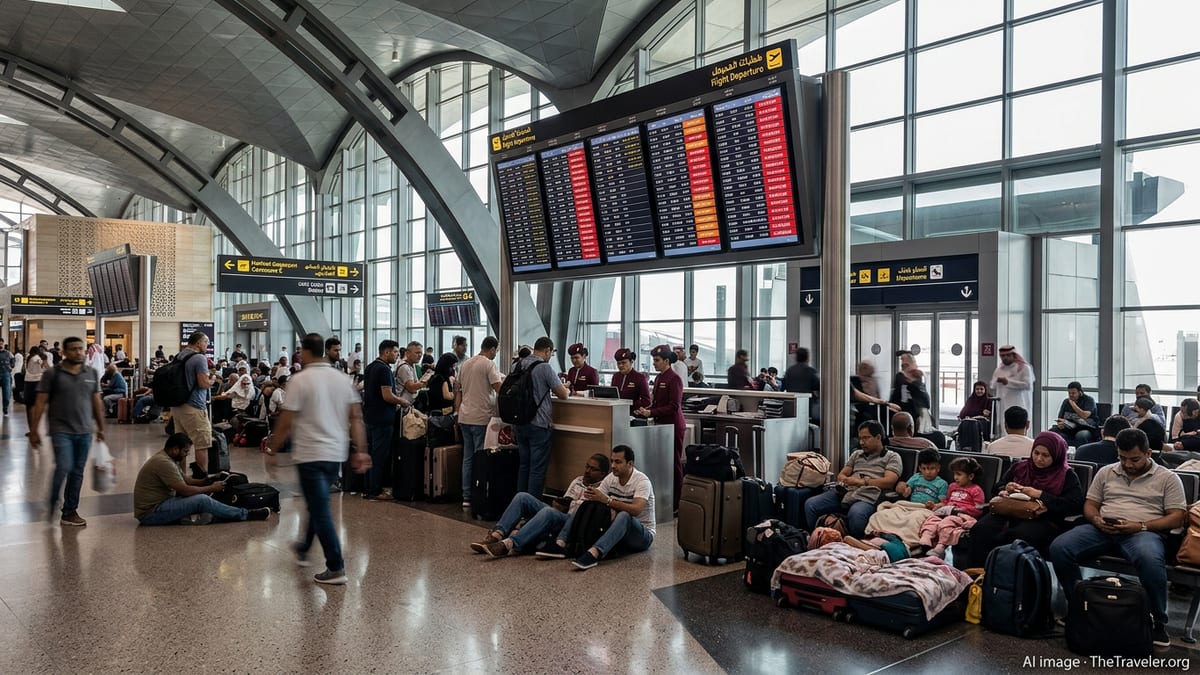
Thousands of travelers were left stranded on Friday as Hamad International Airport in Doha remained largely shut to commercial traffic, with hundreds of flights canceled or severely delayed amid an ongoing closure of Qatari airspace linked to the widening conflict between the United States, Israel and Iran.
Mass Cancellations Hit Hamad International
Hamad International, one of the world’s busiest transfer hubs, operated only a fraction of its usual schedule today, with aviation data showing more than 500 flights to and from Doha canceled or heavily disrupted over a 24 hour period. The airport has dropped more than 90 percent of its planned services since regional airspace restrictions were imposed on February 28, and the backlog of grounded passengers continues to grow.
Qatar’s Civil Aviation Authority has kept national airspace closed to most civilian traffic following strikes and counterstrikes involving Iran, Israel and US forces that have choked air corridors across the Gulf. While some neighboring countries have begun cautiously reopening selected routes, Qatar’s hub remains effectively frozen, forcing airlines to either cancel flights outright or improvise complex workarounds via alternative airports.
Airport authorities in Doha reiterated today that passengers should not travel to Hamad International unless they hold a confirmed booking on a flight that is explicitly operating. The guidance aims to prevent further crowding in terminals, where many travelers have already endured days of uncertainty, sleeping on benches and relying on meal vouchers as they await word of rescue flights.
Qatar Airways Stays Grounded While Rescue Flights Ramp Up
Qatar Airways confirmed that its regular operations to, from and through Doha remain suspended, with the airline unable to move dozens of wide body aircraft parked idle on the tarmac. Instead, it has begun operating a limited number of relief services using jets that were outside Qatari airspace when the closure came into effect, launching them from cities in Saudi Arabia and Oman to connect stranded passengers to Europe and Asia.
These ad hoc flights, routed through airports such as Muscat and Riyadh, are targeting key long haul destinations including London Heathrow, Berlin, Madrid, Rome, Amsterdam and Frankfurt. However, capacity is a fraction of normal schedules, and the airline is prioritizing travelers who have already been stuck for several days or who face urgent personal or medical circumstances.
Qatar Airways has urged customers not to proceed to Hamad International and instead to monitor their booking status through the carrier’s digital channels or contact centers. Passengers who began their journey in Doha and have been moved to designated hotels are being rebooked from alternate gateways when seats become available, or offered refunds and date changes with waived fees.
Ripple Effects from Doha to Jeddah, London and Paris
The shutdown of Doha’s primary hub has sent shockwaves through flight schedules far beyond Qatar’s borders. Emirates, Flydubai and other Gulf carriers have all reported significant cancellations and diversions on routes touching Doha or crossing the affected airspace, disrupting connections in cities such as Jeddah, London and Paris that depend heavily on Middle Eastern transit traffic.
In Europe, travelers heading to or from London Heathrow, Paris Charles de Gaulle and other major airports have faced last minute reroutings via alternative hubs in Turkey and southern Europe as airlines attempt to skirt the closed region. Some passengers originally booked on nonstop or one stop itineraries have found themselves on multi stop journeys stretching well beyond 24 hours, while others have seen their trips canceled altogether.
In Saudi Arabia, airports in Jeddah and Riyadh have become temporary pressure valves as carriers reposition aircraft and funnel passengers through air corridors that remain open. Yet those facilities are also grappling with crowding and congestion as relief flights for Qatar Airways and other operators vie for scarce slots, putting additional strain on ground handling and immigration services.
Emirates, Flydubai and Other Carriers Adjust Strategy
Emirates and its sister airline Flydubai have begun reinstating a reduced schedule after several days of full suspension, but both continue to divert around closed airspace and warn customers of short notice changes. The scaled back operations are focused on high demand trunk routes connecting Dubai with Europe and Asia, leaving many secondary destinations without service or with only sporadic relief flights.
Flydubai has similarly restarted a limited roster of departures, emphasizing that only passengers with confirmed, operating connections will be accepted for transit. Low cost and regional carriers across the Gulf, including those serving South Asia and the Levant, are juggling aircraft rotations to maintain vital links for migrant workers and family visitors, even as they cancel large portions of their timetables.
Beyond the Gulf, global airlines such as British Airways and Virgin Atlantic have also trimmed services to the region or rerouted flights to avoid conflict zones, compounding the strain on already disrupted networks. Industry analysts say that while some hubs like Dubai and Abu Dhabi are inching toward partial normality, the continued closure of Qatar’s skies keeps a critical piece of the long haul puzzle firmly out of place.
Stranded Passengers Seek Clarity and Compensation
For travelers caught in the middle of the upheaval, the most pressing questions revolve around when they will move and who will cover unexpected costs. With hotel rooms, meals and ground transport piling up, many passengers are turning to airline help desks, travel agents and consular hotlines to navigate a patchwork of rebooking policies and compensation rules that vary by carrier and origin.
Qatar Airways, Emirates and other major airlines have introduced broad change fee waivers and refund options for affected tickets, encouraging customers whose trips are not urgent to postpone or reroute their journeys once regional skies are more stable. Nonetheless, social media posts and traveler forums are full of accounts of long waits on phone lines, inconsistent information and limited availability on alternative flights over the coming week.
Travel advisers are urging passengers with near term plans involving Doha or other Gulf hubs to check their flight status repeatedly in the days before departure, and to consider building in longer connection times or flexible fares. Until Qatari airspace reopens to routine traffic and Hamad International can safely restore its busy “banked” waves of arrivals and departures, the shockwaves of today’s mass cancellations are likely to reverberate well beyond the Middle East’s skies.