

More news on this day
Doha is grappling with one of its worst aviation disruptions in years as a sweeping shutdown of Qatari and surrounding Gulf airspace forces Qatar Airways and multiple international carriers to cancel more than 280 flights, crippling routes to major hubs including London, Sydney, Bangkok, Dubai, Melbourne, Mumbai, Singapore and Frankfurt.
Get the latest news straight to your inbox!
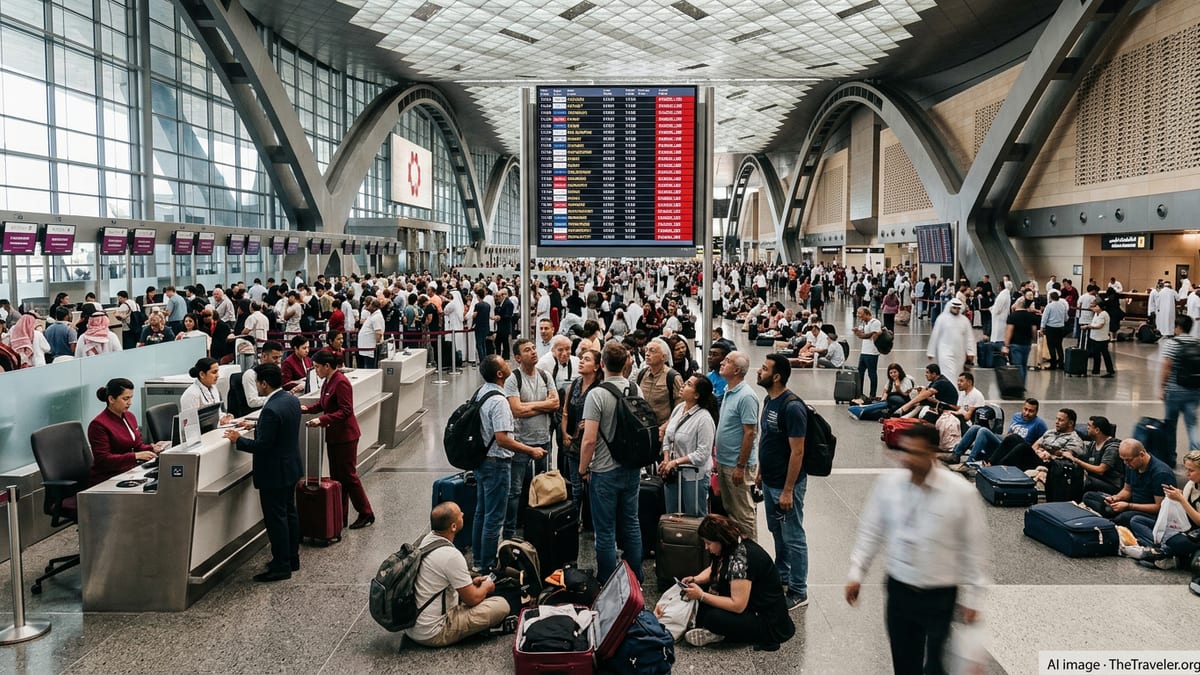
Regional Airspace Closure Triggers Global Disruption
The cancellations follow the closure and severe restriction of airspace over parts of the Gulf in the wake of the escalating conflict involving Iran, which has led aviation regulators to sharply curtail overflight permissions across the region. Qatar Airways, whose global network is heavily dependent on Doha’s role as a transfer hub, has been forced to slash its schedule to a skeleton list of relief and repatriation services, while foreign airlines have pulled or rerouted services that previously funneled through Hamad International Airport.
Doha’s usually busy runways have seen a dramatic drop in traffic since late February, when the airspace restrictions first took effect. Qatar’s Civil Aviation Authority has confirmed only a limited set of contingency corridors are available, and at substantially reduced capacity, leaving airlines with little option but to cancel or consolidate services and prioritize stranded passengers with urgent travel needs.
Initially framed as a short-term safety measure, the disruption has now stretched into its second week, affecting not just Qatar Airways but also regional competitors such as Gulf Air and Saudia, as well as long-haul players including Malaysia Airlines and IndiGo that use Doha and neighboring hubs as key connection points. Together, the carriers have axed or diverted hundreds of flights, with more cancellations expected if tensions and airspace restrictions persist.
Qatar Airways Runs Limited Relief Schedule From Doha
Qatar Airways has gradually shifted from a near-total halt in commercial operations to a carefully controlled relief schedule. The airline is currently operating a small number of daily flights to and from Doha to major cities including London Heathrow, Frankfurt, Madrid, Rome, Bangkok and Melbourne, alongside regional and South Asian destinations such as Mumbai, Delhi, Colombo and Islamabad. Services are being announced in rolling updates covering just a few days at a time, highlighting the uncertainty that still surrounds the operating environment.
According to the latest schedules released for March 10 to March 13, the carrier is focusing on high-demand corridors that allow it to move the largest number of stranded passengers with the fewest aircraft movements. Flights to London, Frankfurt and Madrid in Europe, along with key Asian gateways such as Bangkok, Kuala Lumpur and Jakarta, have featured prominently in the limited operation, while routes to New York, Sao Paulo and Johannesburg have been added to support long-haul repatriation needs.
Despite these efforts, overall capacity remains a fraction of normal levels, and Qatar Airways has warned that departure times, aircraft types and even destinations remain subject to last-minute change. Passengers with bookings between late February and at least March 22 have been offered fee-free rebooking, vouchers or refunds, but many report difficulty securing new seats due to the severe squeeze on available flights and the fact that other airlines are simultaneously cutting services across the Gulf.
Ripple Effect Hits Gulf Airlines and Key Transit Hubs
The chaos is not limited to Qatar’s flag carrier. Gulf Air, based in Bahrain, has issued a series of travel alerts confirming widespread cancellations on flights that would normally traverse Gulf airspace, including sectors serving Doha and Dubai. Passengers with tickets for travel into and out of the region in March have been offered flexible rebooking options into April and May, but reduced frequencies mean that seats are scarce on popular routes.
Saudi Arabia’s Saudia has also trimmed services as it adjusts flight paths to avoid restricted zones and copes with congestion on remaining corridors. While some services to and from Dubai and other regional destinations have resumed on a limited basis, industry observers note that the airline is juggling delayed, rerouted and consolidated flights as it works around the evolving airspace map. This has added further strain for travelers relying on Riyadh or Jeddah as alternative transit points when Doha is no longer available as a hub.
Elsewhere, carriers such as Malaysia Airlines and IndiGo, which feed passengers into Gulf hubs or rely on Middle Eastern overflight rights for services between Asia and Europe, have been forced to cancel or detour flights, increasing journey times and blowing out crew and fuel costs. Industry estimates suggest that, at the peak of the disruption, thousands of flights across the wider Gulf region were scrapped each day, contributing to the more than 280 cancellations now recorded in Doha alone and leaving hundreds of thousands of travelers facing last-minute itinerary changes.
Travelers Stranded Worldwide as Long-Haul Routes Unravel
The disruption has had an outsized impact on long-haul travelers connecting between Europe, Asia and Australasia, many of whom rely on Doha as a one-stop gateway to destinations such as Sydney, Melbourne, Singapore and Bangkok. With Qatar Airways forced to curtail most of its Australia and Southeast Asia services and other Gulf carriers facing similar constraints, passengers have been scrambling for alternatives via Istanbul, European hubs or Southeast Asian gateways.
Reports from passengers describe missed hotel stays, urgent rebookings and uncertainty over compensation as they try to navigate rapidly changing schedules. Some travelers due to fly from Singapore, Kuala Lumpur or Colombo to Europe via Doha say their Qatar Airways flights for mid-March were cancelled proactively, sometimes days before departure, leaving them to negotiate reroutes on partner airlines or opt for full refunds and rebuild their itineraries from scratch.
The knock-on effects are being felt at major airports worldwide. London Heathrow, Frankfurt and Paris Charles de Gaulle have seen a spike in last-minute demand as passengers seek non-Gulf alternatives to reach Asia and Australia, while Asian hubs such as Singapore, Hong Kong and Tokyo are absorbing travelers abandoning itineraries via Doha or Dubai. Airlines are warning that premium cabins in particular are under pressure, as disrupted passengers holding business and first class tickets vie for limited seats on non-Gulf routings.
Airlines Race to Rebook, But Uncertainty Remains
Airlines operating through Doha and the wider Gulf are under growing pressure to manage customer expectations while coping with fluid operational constraints. Qatar Airways has issued extended guidelines allowing affected passengers to change dates, reroute through alternative hubs or claim refunds, with special provisions for those originally scheduled to travel between late February and mid-March. However, travelers report long call-center wait times and inconsistent information from agents as policies are updated in real time.
Gulf Air, Saudia, IndiGo and other carriers have rolled out similar flexibility measures, offering one-time free changes and, in some cases, waiving fare differences when rerouting around the Gulf. Yet these gestures are tempered by the reality that suitable alternative flights may not exist for days, particularly for complex long-haul journeys linking secondary European cities with destinations in Australia, New Zealand or Southeast Asia.
With no clear timeline for a full reopening of the affected airspace, aviation analysts caution that schedule volatility is likely to persist. They note that even once restrictions ease, airlines will need time to reposition aircraft and crews, rebuild schedules and clear the backlog of stranded passengers. Until then, travelers planning to transit through Doha or other Gulf hubs in the coming weeks are being urged to monitor airline communications closely, allow extra time for connections or consider booking itineraries that avoid the region altogether if their plans are highly time-sensitive.