

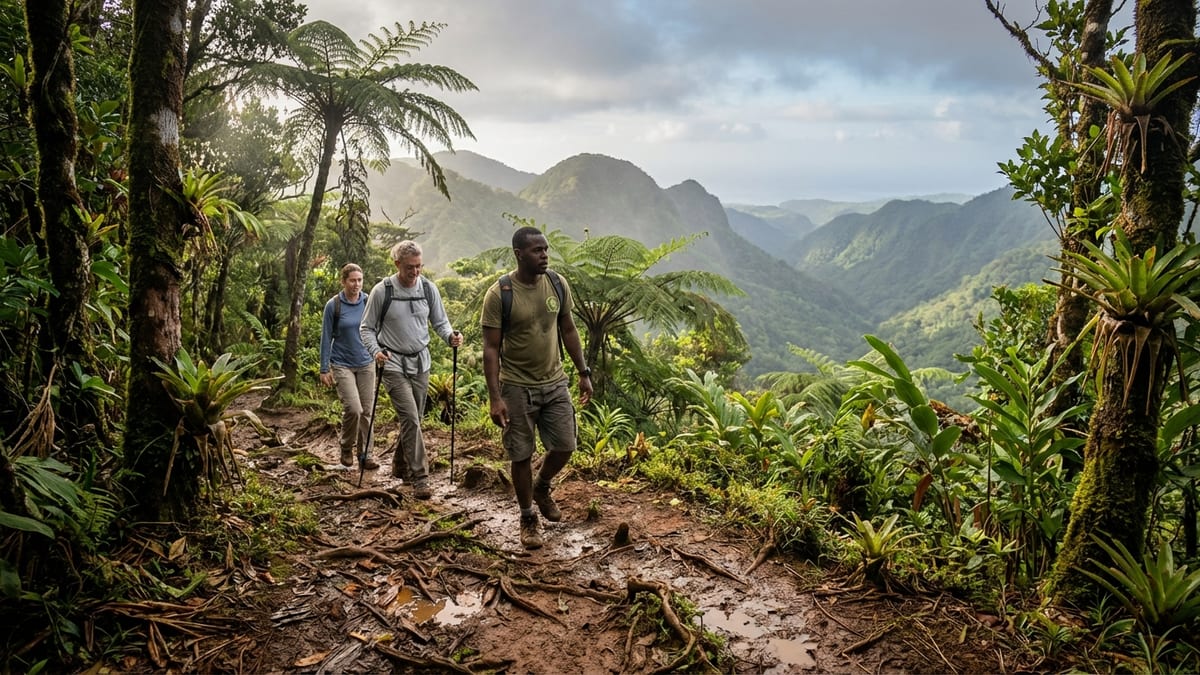
Dominica often flies under the radar compared with its Caribbean neighbors, but for travelers who care more about wild landscapes than white-sand loungers, that obscurity is part of the appeal.
Nicknamed the Nature Island, this volcanic gem between Guadeloupe and Martinique is all rainforests, rivers, hot springs, waterfalls and cloud-draped peaks, with a fraction of the crowds found elsewhere in the region. For nature lovers, it offers a rare chance to immerse yourself in intact ecosystems, meet conservation-minded communities and experience some of the Caribbean’s most dramatic scenery both on land and at sea.
Hike Dominica’s Signature Trails and Volcano-Carved Interior
Dominica’s rugged spine of volcanoes and its dense rainforest interior make hiking one of the most rewarding things to do on the island. Trails range from gentle walks to serious backcountry adventures that demand fitness, preparation and respect for the terrain. Whether you choose a short waterfall hike or a multi-day trek, you will encounter pristine rivers, ferns and orchids, birdsong and sweeping views across ridges and valleys.
Boiling Lake and the Valley of Desolation
Boiling Lake is one of Dominica’s signature hikes and a bucket-list experience for serious nature travelers. Located within Morne Trois Pitons National Park, this flooded fumarole is often described as the second largest of its kind in the world, a cauldron of gray-blue water that seethes and steams from intense geothermal activity. Reaching it involves a demanding trek through montane rainforest and over muddy ridges, with the final approach leading through a stark, sulfur-scented landscape known as the Valley of Desolation.
The hike typically takes six to eight hours round trip, depending on conditions and your pace, and should not be underestimated. The route involves steep ascents and descents, slippery roots and rock scrambles, along with river crossings that can become dangerous after heavy rain. For safety and navigation, especially if you are not an experienced hiker in tropical environments, going with a licensed local guide is strongly recommended. Come prepared with sturdy footwear, rain protection, plenty of water, high-energy snacks and an early start.
Emerald Pool Nature Trail
For a gentler introduction to Dominica’s rainforest, the Emerald Pool trail offers a short, well-maintained walk to one of the island’s most photogenic spots. This emerald-colored basin is fed by a thin veil of waterfall and framed by lush vegetation and moss-covered rocks. Located within the Morne Trois Pitons National Park World Heritage Site, the loop trail is relatively easy and suitable for most visitors, including families.
Even though the hike is short, it delivers a strong sense of immersion in the forest, with tree ferns, bromeliads and the sound of birds and tree frogs all around. You can take a refreshing swim in the cool pool below the falls, though the rocks can be slick and the water surprisingly chilly compared with the tropical air. Arriving early in the morning or later in the afternoon can provide a quieter experience, especially when cruise ships are in port.
Victoria Falls and the White River
On the island’s rugged east side, the hike to Victoria Falls near Delices appeals to travelers who want something wilder than the standard postcard stops. Fed by the mineral-rich White River that originates near Boiling Lake, the waterfall plunges into a milky, pale-blue pool surrounded by cliffs and thick jungle. The color of the water comes from dissolved minerals, giving the scene an otherworldly look that contrasts starkly with the deep greens of the forest.
The trail typically takes around an hour each way but involves multiple river crossings and uneven, sometimes slippery terrain. Water levels can change quickly after rain, so local advice on conditions is important. Hiking sandals with good grip or light boots that can get wet, plus trekking poles for balance, make the experience much more comfortable. The payoff is a setting that feels remote and untamed even by Dominica standards.
Follow the Waitukubuli National Trail Across the Island
For hikers who want a deeper immersion in Dominica’s landscapes and local life, the Waitukubuli National Trail is one of the Caribbean’s most ambitious outdoor experiences. Spanning roughly 184 kilometers from the southern village of Scott’s Head to Cabrits National Park in the north, the trail is divided into 14 segments. These sections range from coastal rambles through fishing communities to demanding mountain crossings through primary rainforest.
Choosing Segments to Match Your Experience
Not every traveler has the time or fitness for the entire Waitukubuli trail, but many segments work well as stand-alone day hikes. Easier sections tend to follow existing paths and farm tracks, giving you a taste of rural Dominica and its agricultural landscapes, while more challenging segments push deep into the island’s interior and national parks. Some link to other popular attractions, making them good options for combining hiking with waterfall visits or birdwatching.
Because trail conditions and infrastructure can change due to heavy rainfall, landslides or vegetation growth, it is important to get up-to-date information from local authorities, guesthouses or guiding services before you go. Some segments are well cleared and signposted, while others require strong navigation skills, resilience in rough terrain and a willingness to get muddy and wet. In remote areas, phone coverage is sparse, so planning, daylight management and letting someone know your route are basic safety musts.
Morne Diablotin and the Northern Forests
Morne Diablotin, Dominica’s highest peak, looms over the island’s north and shelters some of its most important remaining montane rainforest. Various trail segments in this region, including routes that pass through or near Morne Diablotin National Park and the Syndicate area, offer superb opportunities to experience old-growth forest, deep valleys and cascading rivers. Elevation makes this part of Dominica cooler and often misty, with cloud forest vegetation and epiphyte-draped branches that feel far removed from the coastal heat.
These northern trails are especially appealing for birders and nature photographers, and they reward patience more than speed. It is wise to carry layers and rain gear even on apparently clear mornings, as conditions can shift quickly at altitude. Footing can be slippery and roots ubiquitous, so sturdy footwear and a slower, deliberate pace help keep the focus on the scenery rather than on staying upright.
Trail Etiquette and Environmental Responsibility
As in any fragile ecosystem, how you behave on the trail matters. Dominica’s forests are home to endemic plants, nesting birds and sensitive soils that can be damaged by shortcuts or litter. Stay on marked paths where they exist, pack out all trash and avoid picking flowers, carving trees or disturbing wildlife. If you are hiking with a guide, follow their advice on how close to approach animals or where to swim and bathe.
Many Waitukubuli segments cross private or community lands, passing farms, homesteads and small villages. Greet residents respectfully, ask permission before photographing people or their property and support local economies by hiring guides or buying snacks and produce along the way. Your spending power helps sustain communities that, in turn, maintain access to these landscapes and advocate for their protection.
Chase Waterfalls, Gorges and River Adventures
With hundreds of rivers and countless cascades, Dominica is a natural paradise for waterfall hunters and freshwater adventures. Many of the island’s most memorable experiences involve getting into the water, whether you are swimming at the base of a cascade, floating through a narrow gorge or following a riverbed through thick rainforest. While some sites are easily accessible, others demand guides who know hidden entrances, water levels and safe routes.
Trafalgar Falls and Nearby Hot Springs
One of Dominica’s most iconic sights, Trafalgar Falls consists of twin cascades known locally as the Mother and Father. Located a short drive from the capital Roseau, they are reached via a relatively gentle trail through lush vegetation to a viewing platform. From there, the two falls thunder down a volcanic cliff face into boulder-strewn pools, with mist and rainbows often hanging in the air.
Visitors who are sure-footed and comfortable scrambling over rocks can venture closer to the base of the falls, accompanied by guides if conditions warrant. The area also features pockets of natural hot springs that bubble up near the river, creating warm soak spots amid the rocks. Because flash floods can follow heavy rain upstream, it is important to heed safety advice from rangers or guides, particularly if the river is running strong or the weather looks unsettled.
Titou Gorge
Titou Gorge, whose name loosely translates as “little hole,” is one of Dominica’s most atmospheric freshwater experiences. Formed by cooling lava that split and left a narrow chasm, the gorge features towering rock walls, clear, cool water and a hidden waterfall at its end. Visitors typically don life jackets and swim into the gorge from a small pool, following the winding canyon as sunlight filters down in shafts between the overhanging cliffs.
While the swim itself is relatively short, the water can feel bracingly cold and the current variable, so life jackets and sometimes guides are recommended or required, especially for less confident swimmers or children. The gorge is an excellent add-on to other activities in the Laudat area, such as hiking to Boiling Lake or exploring nearby hot springs. Arrive early or later in the day for a quieter, more immersive experience.
Other Notable Waterfalls and River Experiences
Beyond the headline attractions, Dominica’s interior hides many other falls and river trails that appeal to nature lovers keen to explore further. Hikes to sites such as Middleham Falls or the cascading sequences along less-visited rivers reward those prepared for steeper trail sections and occasional scrambling. Some routes involve walking directly in the riverbed, wading through shallows and navigating boulders, which is part of the adventure.
Because river levels respond quickly to rainfall, local knowledge is crucial. Guides can help you choose routes suited to your fitness and swimming ability, point out natural plunge pools and safer jump spots and share stories about the cultural significance of particular sites. In all cases, use footwear that can get wet yet protect your feet, carry a dry bag for your valuables and never underestimate the force of moving water.
Soak in Hot Springs and Volcanic Wellness Spots
Dominica’s geothermal activity is not confined to Boiling Lake. The island is dotted with hot springs, mineral baths and warm pools that bubble up wherever volcanic heat meets groundwater. For nature lovers, these spots provide a relaxing counterpoint to strenuous hikes and river adventures, often surrounded by rainforest or tucked into valleys far from any resort strip.
Wotten Waven Hot Springs
The village of Wotten Waven, in the Roseau Valley, is famous for its cluster of rustic hot spring establishments. Here, mineral-rich waters emerge from the ground at varying temperatures and are channeled into stone or concrete pools overlooking the valley and forested slopes. Facilities range from very simple, with basic changing areas, to more developed spots offering private soaking pools, small bars or massage services.
Soaking in these pools after a day of hiking can ease sore muscles and offer a deeper connection with Dominica’s volcanic underpinnings. The water often carries a faint sulfur scent, a reminder of the geothermal forces at work beneath your feet. As with all small villages, being respectful of local customs, minimizing noise and leaving facilities tidy helps ensure that community-led tourism remains sustainable.
Coastal Hot Spots and Beachside Springs
Geothermal activity in Dominica also surfaces along parts of the coastline. In some bays, warm freshwater seeps into the sea near shore, creating patches of pleasantly heated water where you can float and watch the waves. These sites are less formal than the valley hot springs, and part of their charm is their integration into everyday coastal life, often alongside fishing boats and small community beaches.
Conditions on the coast can be more variable, influenced by tides and weather patterns, so local guidance is particularly valuable. Ask residents about the best time to visit, appropriate behavior and any safety considerations. As always near the ocean, be aware of currents and do not enter the water if the sea is rough or authorities have issued any advisories.
Explore Dominica’s Underwater World and Marine Reserves
Dominica’s rugged volcanic profile continues beneath the water, creating steep drop-offs, pinnacles and reef systems that are ideal for snorkeling and scuba diving. The island has established marine reserves along parts of its west coast, helping protect coral, sponges and fish populations. For nature lovers, time spent in the water is as essential as time spent on the trail.
Champagne Reef
Champagne Reef is perhaps Dominica’s most famous snorkeling site, renowned for the constant stream of warm bubbles rising from volcanic vents on the seabed. These bubbles shimmer around you as you float, creating an immersive experience that gives the site its evocative name. The reef itself supports hard and soft corals, sponges and a variety of tropical fish, with good visibility in calm conditions.
Snorkel tours and local operators typically provide gear and guidance, making this a good option for beginners as well as more experienced snorkelers. While the bubbly effect can be enjoyed close to shore, those comfortable swimming a bit farther may be rewarded with encounters with seahorses, barracuda or schooling reef fish along the drop-off. Respect the marine environment by never standing on coral, avoiding contact with marine life and using reef-safe sunscreen.
Soufriere Scotts Head Marine Reserve
At the island’s southwestern tip, the Soufriere Scotts Head Marine Reserve encompasses a submerged volcanic crater and steep underwater walls that descend rapidly into deep blue water. This area is prized among divers for its dramatic topography, swim-throughs and the possibility of bigger pelagic species cruising along the drop-offs. For snorkelers, sheltered sections near shore still offer colorful reef scenes and abundant fish life.
Because of the reserve’s ecological and geological importance, local regulations govern fishing, moorings and tourism activities. Working with licensed dive shops and guides ensures compliance with these rules and helps support conservation. For nature travelers, knowing that their underwater explorations contribute to the protection of Dominica’s marine ecosystems is part of the experience.
Diving for Advanced Nature Enthusiasts
Certified scuba divers will find that Dominica’s underwater landscapes reward repeat visits. Vertical walls festooned with sponges and corals, pinnacles rising from deep water and volcanic vents and fissures all contribute to a sense of exploration. Macro life, from shrimp and nudibranchs to seahorses and cryptic reef fish, offers endless photographic opportunities, while seasonal migrations may bring in larger visitors offshore.
Dive operations on the island emphasize small groups and personalized attention, which suits nature lovers interested in learning more about reef ecology and sustainable practices. Conditions vary by site and season, so operators will choose locations suited to diver experience, currents and visibility. As always in fragile marine environments, good buoyancy control and a no-touch policy are key to minimizing impact.
Spot Whales, Dolphins and Birdlife in the Wild
Dominica’s natural richness extends beyond its forests and reefs to include remarkable marine mammals and birdlife. Its deep offshore waters help sustain resident populations of sperm whales, while its forests shelter endemic parrots and other Caribbean species. For wildlife-focused travelers, responsibly run whale watching and birding excursions are among the island’s highlights.
Whale and Dolphin Watching
Dominica is known across the region as one of the best places in the Caribbean to observe whales in the wild. Sperm whales, which can be present year-round, are the main attraction, and dedicated whale watching tours have a high success rate, especially during the peak months between roughly November and April. Other species, including various dolphins and sometimes humpback whales, may also appear, especially in the cooler months.
Tours typically last a few hours and are run by licensed operators who understand both safety and viewing regulations designed to protect the animals. Vessels use hydrophones to listen for whale clicks, then maneuver to give guests a chance to see blows, tail flukes and sometimes social behavior at the surface, without harassing or crowding the animals. Ethical whale watching emphasizes keeping a respectful distance, limiting the number of boats near a group and avoiding sudden changes in speed or direction.
For guests, preparation includes sun protection, drinking water, sea sickness precautions if you are prone and a camera with a strap or secure case. Sea conditions can vary, so tours may be postponed or rerouted in rough weather. Choosing operators with a strong safety and conservation record helps ensure that these remarkable encounters remain sustainable.
Birdwatching and Endemic Parrots
Dominica’s forests are an important refuge for Caribbean birdlife, including two endemic parrot species that serve as symbols of the island’s conservation efforts. Trail systems in areas such as Morne Diablotin National Park and the Syndicate forest offer some of the best opportunities to look for these parrots, along with a variety of other resident and migratory birds. Early morning excursions with knowledgeable guides greatly increase the chances of sightings.
Dense canopy means that patient listening is as important as scanning the sky. Birding guides can recognize calls and point out movement in the treetops that might otherwise go unnoticed. Binoculars, a lightweight rain jacket, insect protection and quiet clothing all enhance the experience. Visitors are encouraged to keep noise levels low, avoid playback of bird calls in sensitive areas and stay on established paths to minimize disturbance.
Meet Local Communities and Support Conservation-Focused Tourism
While nature is Dominica’s headline attraction, the island’s communities and their relationship with the land and sea are integral to what makes it special. Many nature experiences are rooted in community enterprises, from guiding services and homestays to small agro-ecological projects and cultural tours. For travelers who care about leaving a positive footprint, engaging with these initiatives can be as meaningful as any hike or snorkel session.
Community-Based Guides and Homestays
Throughout the island, especially near trailheads and in rural villages, local guides offer services that blend navigation, natural history interpretation and cultural insight. Hiring these guides not only improves safety on challenging routes, but also directs income to families and communities that steward the landscapes you have come to enjoy. Some areas also offer homestays or small guesthouses where you can experience rural Dominica more directly.
Staying in or near villages opens opportunities to learn about traditional agriculture, herbal practices, local cuisine and the ways in which residents are adapting to challenges such as hurricane impacts and climate change. Simple actions, such as buying fruit from roadside stands, eating at small eateries and tipping guides fairly, contribute to local resilience and keep nature-based tourism grounded in community benefit.
Cultural Events and Nature-Friendly Festivals
Dominica’s calendar includes festivals that showcase music, food and heritage, sometimes intertwined with environmental themes and eco-conscious programming. While large national events may draw visitors primarily for their cultural appeal, many nature travelers plan trips to allow for both outdoor adventures and at least one major festival or local celebration. The combination of hiking, snorkeling and evenings of live music and Creole cuisine offers a more rounded understanding of the island.
Attending these events responsibly involves the same principles that apply in natural areas: respect for local norms, modest dress in villages, awareness of noise and litter, and support for vendors offering locally produced goods. The more that visitors value both Dominica’s natural and cultural assets, the stronger the case for protecting them.
The Takeaway
For nature lovers, Dominica offers an unusually concentrated blend of experiences within a relatively compact island. You can spend one day conquering a challenging volcanic trail, the next floating through a narrow gorge or soaking in a hillside hot spring, and another listening for parrots at dawn before heading out to sea in search of whales. What unites these experiences is an underlying sense of wildness that has become rare in much of the Caribbean.
Travel here rewards curiosity, patience and a willingness to trade some conventional comforts for deeper immersion in natural systems. Trails can be muddy, rivers unexpectedly high and services outside of main towns simple, but those who embrace these realities are often the travelers who leave most inspired. By approaching Dominica with respect for its landscapes, wildlife and communities, nature lovers can help ensure that the Nature Island remains true to its name for generations to come.
FAQ
Q1. When is the best time of year to visit Dominica for nature activities?
For hiking, waterfalls and general outdoor activities, the drier months from roughly late December to April usually offer more stable weather and clearer trails. However, Dominica is a year-round destination, with lush vegetation and flowing rivers even in the wetter months; just be prepared for heavier showers and potential trail closures after major storms.
Q2. Do I need a guide for hikes like Boiling Lake and the Waitukubuli National Trail?
For demanding hikes such as Boiling Lake and some interior segments of the Waitukubuli National Trail, a licensed local guide is strongly recommended for safety, route-finding and real-time assessment of weather and river conditions. Easier, well-marked trails may be manageable independently for experienced hikers, but updated local advice is always wise.
Q3. How difficult is the hiking in Dominica overall?
Dominica’s terrain is steep and rugged, so even moderate-length hikes can feel strenuous. Expect significant elevation changes, muddy paths, roots and rocks, and frequent stream crossings on many routes. There are some shorter, relatively easy walks to sites like Emerald Pool and certain viewpoints, but travelers should come prepared for physically demanding conditions if they plan to tackle the island’s top treks.
Q4. Can I see whales in Dominica year-round?
Resident sperm whales can be present off Dominica’s west coast throughout the year, giving the island an unusually consistent whale watching season compared with many destinations. Sightings are typically most reliable during the main season from around November to April, when weather and sea conditions are often favorable and additional migratory species may be present.
Q5. Is snorkeling in Dominica suitable for beginners?
Yes, many of Dominica’s popular snorkeling spots, such as Champagne Reef and sheltered areas within marine reserves, are accessible to beginners, especially when visited with guided tours. Calm conditions, flotation aids and clear instructions from operators make it possible for novices to enjoy the underwater landscapes safely, provided they are comfortable in the water and follow guidance.
Q6. What kind of footwear and gear should I bring for nature activities?
For hiking, sturdy shoes or light boots with good grip are essential, and many travelers appreciate quick-drying hiking sandals or water shoes for river walks. A lightweight rain jacket, small backpack, reusable water bottle, sun protection, insect repellent and a dry bag for electronics are useful across most activities. Trekking poles can be very helpful on muddy, steep trails.
Q7. Are there any safety concerns with rivers, waterfalls and hot springs?
Yes. Rivers can rise quickly after heavy rain, creating strong currents and making crossings dangerous, so local weather and guidance should always be checked before venturing into riverbeds or deep gorges. At waterfalls, slippery rocks and sudden changes in water flow require caution, and in hot spring areas, staying within designated pools avoids scalding temperatures or unstable ground.
Q8. How can I minimize my environmental impact while exploring Dominica?
Stick to established trails, pack out all trash, use refillable water bottles and reef-safe sunscreen, and avoid touching or standing on coral or disturbing wildlife. Supporting local guides and community-run businesses encourages conservation-minded tourism, while following regulations in parks and marine reserves helps protect Dominica’s ecosystems.
Q9. Is Dominica suitable for families with children who love nature?
Families with nature-loving children can find plenty to enjoy, including short forest walks, accessible waterfalls, calm snorkeling spots and relaxed hot springs. However, some of the island’s signature hikes and river adventures are too demanding or risky for young children, so itineraries should be planned carefully, choosing age-appropriate activities and always prioritizing safety.
Q10. Do I need a car to reach Dominica’s main nature sites?
Having a rental car provides flexibility for visiting trailheads, hot springs and coastal sites on your own schedule, but it is not essential. Many visitors rely on guided tours that include transport, taxis arranged through accommodations or a mix of local buses and short taxi rides. For more remote or complex itineraries, working with local operators or guides to coordinate transport can simplify logistics.