

More news on this day
Hundreds of travelers across the Dominican Republic faced long lines, unexpected overnight stays, and scrambled itineraries on Sunday as at least 48 flights were canceled and many more delayed at the country’s main international gateways, with JetBlue, Delta, United, Spirit, and American Airlines all reporting schedule disruptions affecting Santo Domingo, Santiago, and Punta Cana.
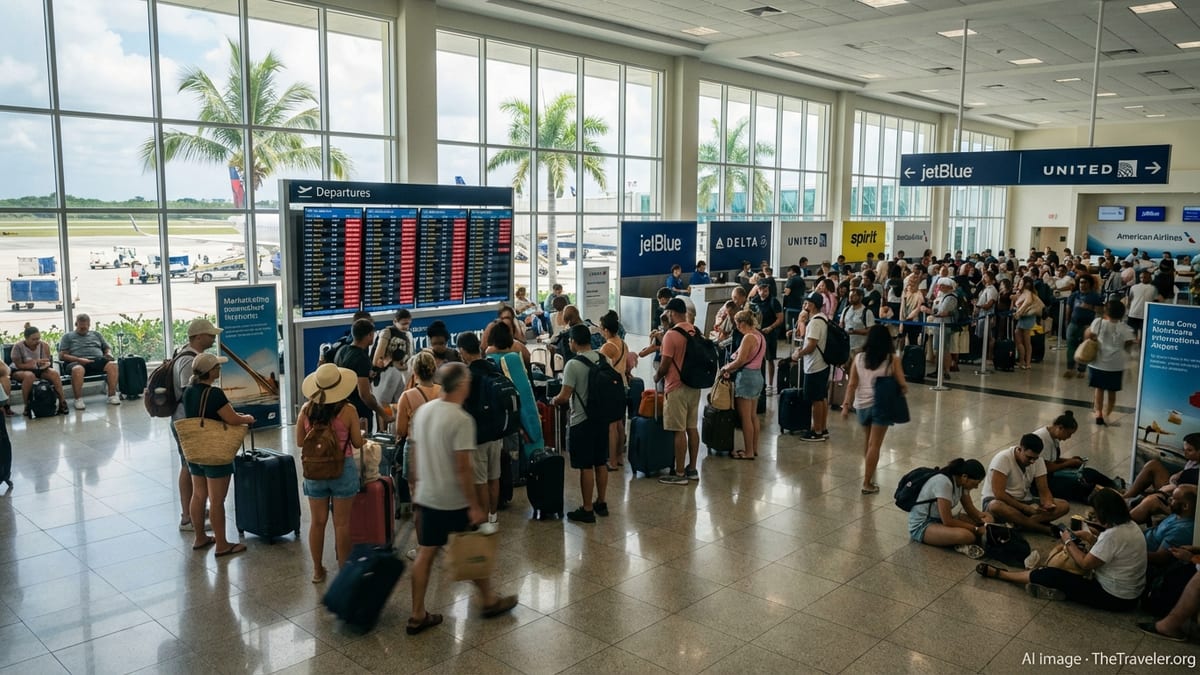
Airports in Santo Domingo, Santiago, and Punta Cana Feel the Strain
At Las Américas International Airport outside Santo Domingo, passengers arriving for early departures found departure boards increasingly dominated by red cancellation and delay notices, particularly on routes to major U.S. hubs such as New York, Boston, Miami, Orlando, and Atlanta. By midafternoon, airport staff said they were working to rebook hundreds of stranded travelers, with lines for airline service desks stretching into the public concourse.
In Santiago, Cibao International Airport saw a smaller but still significant share of the disruption, with several early morning and late evening flights to New York and other East Coast cities canceled or pushed back. JetBlue, which operates a dense schedule linking Santiago and Santo Domingo to New York, reported multiple schedule adjustments as crews and aircraft fell out of position.
Further east at Punta Cana International Airport, normally a swift gateway for vacationers heading straight to resort shuttles, the mood shifted as flight status screens began to show a growing list of delays on services to cities including Boston, Newark, and Washington. Some flights operated, but many departed more than an hour behind schedule as arriving aircraft turned late and crews bumped up against duty-time limits.
Airport officials across all three cities urged travelers to arrive early, stay in contact with their airlines through mobile apps or call centers, and prepare for extended waits while operations stabilized. Ground staff reported heightened tension in the terminals as passengers tried to understand whether their trips could proceed or would need to be postponed.
Major U.S. Carriers Grapple With Cancellations and Rolling Delays
The disruptions hit the U.S. carriers that dominate Dominican Republic routes particularly hard. JetBlue, which carries a large share of traffic between New York and cities such as Santo Domingo, Santiago, and Punta Cana, reported a mix of outright cancellations and cascading delays on services to and from the country. Some flights operated hours late, while others were scrubbed entirely, leaving travelers in limbo and scrambling for limited seats on later departures.
Delta Air Lines, United Airlines, Spirit Airlines, and American Airlines also reported cancellations and substantial delays affecting the Dominican Republic. In several cases, aircraft that were due to operate outbound flights from U.S. hubs never reached Caribbean destinations on time, forcing knock-on disruption throughout the day. The tight schedule patterns of leisure-heavy weekend operations meant there was little slack in the system to absorb delays.
Several airlines issued operational alerts and encouraged customers traveling on affected routes to rebook through mobile apps and websites rather than queuing at airport counters. Some carriers extended same-day change options or waivers on fare differences for travelers whose flights were canceled, although policies varied by airline and route.
Industry analysts noted that while 48 cancellations in a single day may sound modest in global terms, the concentration of those cancellations in a handful of Dominican airports amplified the impact, particularly for travelers with limited flexibility on hotel bookings and ground transportation at resort destinations.
Passengers Confront Long Lines, Limited Options, and Extra Costs
For passengers on the ground, the operational jargon of cancellations and schedule adjustments translated into a day of uncertainty and mounting expenses. In Santo Domingo, families bound for New York and New Jersey reported arriving at the airport before dawn only to learn at check-in that their flights had been canceled or pushed to late-night departures. Some were told they would not be able to secure seats until the next day because of limited availability.
At Punta Cana, resort transfer buses deposited groups of sunburned vacationers at the terminal only to find their return flights significantly delayed. With hotels already checked out and all-inclusive bracelets turned in, many travelers congregated around gate areas and food courts, turning terminal seating zones into makeshift waiting lounges for hours at a time. Parents tried to keep children occupied with mobile devices while monitoring flight status updates that shifted by the minute.
Travelers in Santiago described similar challenges, with some deciding to pay out of pocket for same-day tickets on competing airlines when told that rebooking options were limited or that they would need to accept routings through multiple connecting cities. For those on tight budgets, the unexpected costs of extra meals, ground transport between airports, or last-minute hotel stays quickly mounted.
Consumer advocates warned that many passengers might not fully understand their rights during irregular operations, particularly on international routes where rules differ by country, ticket type, and whether a disruption is classified as weather-related or within the airline’s control. They advised travelers to carefully review fare rules, retain receipts for additional expenses, and document conversations with airline staff.
Operational Pressures and Regional Context Behind the Disruptions
Aviation specialists pointed to a combination of factors that can quickly destabilize flight schedules in popular Caribbean markets such as the Dominican Republic. The country’s busiest routes are heavily concentrated around weekends and holiday periods, with aircraft schedules built tightly around peak demand to and from North American cities. Any disruption to incoming flights has a near-immediate effect on departures.
Recent strains on U.S. airline operations, including congested hub airports, crew shortages on certain fleets, and weather-driven disruptions that ripple outward from major hubs, often show up quickly in leisure-heavy markets. When flights to the Dominican Republic depart U.S. cities late or are canceled altogether, the aircraft and crews expected to operate return flights from Santo Domingo, Santiago, and Punta Cana are suddenly unavailable.
Over the past several weeks, large U.S. airports such as Fort Lauderdale, Atlanta, Boston, and New York area hubs have each experienced days with hundreds of delays and dozens of cancellations, as carriers grappled with a mix of weather, airspace constraints, and broader operational challenges. Airline trackers and aviation data firms have documented elevated delay rates at major U.S. hubs this winter, underscoring how quickly issues in one part of the network can cascade into Caribbean routes.
Dominican airports rely heavily on those same U.S. hubs for inbound and outbound connectivity, meaning that even a relatively small disturbance at one or two large airports can produce outsized impacts on resort-bound and diaspora travelers shuttling between the United States and the island.
Economic Impacts on Tourism, Resorts, and Local Businesses
The wave of cancellations and delays arrived at a sensitive time for the Dominican Republic’s tourism sector, which has been working to maintain strong visitor numbers through the peak winter season. Punta Cana’s resort corridor, in particular, depends on reliable weekend air links for guests arriving from the United States and Canada for short stays that leave little room for travel disruptions.
Tour operators and resort managers reported a spike in calls and messages from guests concerned about their departure or arrival plans. Some resorts arranged late checkout for affected travelers, while others helped coordinate alternative airport transfers when rebooked flights shifted passengers from Punta Cana to Santo Domingo or Santiago, or vice versa, to secure an earlier departure.
Local businesses such as taxi companies, airport shuttle services, and independent tour operators also felt the shock. While extended delays brought additional demand for food, drinks, and last-minute excursions for those stuck an extra day, uncertainty about when flights would depart made it difficult to plan and allocate staff. For small operators, a single day of cancellations could mean the loss of multiple confirmed bookings.
Government tourism officials monitored the situation closely, emphasizing in public statements that airlines were working to restore normal operations and encouraging visitors to stay in contact with their carriers. They also highlighted the resilience of the country’s tourism infrastructure, noting that most hotels and resorts were accustomed to handling short-notice extensions and rebookings when flights are disrupted.
How Airlines Are Responding and What Travelers Can Expect Next
By Sunday evening, several airlines serving the Dominican Republic signaled that they expected operations to gradually stabilize over the next 24 to 48 hours, barring any new weather systems or unforeseen airspace constraints affecting major U.S. hubs. Additional aircraft were being repositioned where possible, and some carriers were adjusting schedules early in the week to rebuild buffers and catch up on maintenance that had been deferred during the disruption.
JetBlue, Delta, United, Spirit, and American each encouraged travelers to make use of digital tools such as mobile apps, text alerts, and email notifications, which typically provide the most up to date gate assignments and departure times. Airline representatives also reiterated that only passengers with confirmed same day departures should head to the airport, in an effort to ease terminal crowding and reduce lines at check in and security.
In some cases, airlines made short term schedule changes such as combining lightly booked flights, upgauging aircraft to larger models on key routes, or temporarily adding late night departures to clear backlogs of stranded passengers. These tactical adjustments, while helpful, remained constrained by crew availability and government mandated duty time limits.
Aviation planners cautioned that even as the immediate wave of cancellations subsides, some travelers could continue to see minor schedule changes, swapped aircraft types, or altered connection times in the days ahead. They advised passengers with tight onward connections or important time sensitive plans to build extra flexibility into their itineraries.
Practical Advice for Travelers Caught in the Disruptions
For those still trying to reach or leave the Dominican Republic amid the disruptions, travel experts recommended a combination of preparation, flexibility, and persistence. They advised travelers to confirm their flight status directly with the airline before leaving for the airport and to sign up for multiple forms of alerts, including text messages and app notifications, which often update faster than departure boards.
Passengers whose flights are canceled were urged to immediately explore rebooking options through official apps or websites while also joining the queue at airport service desks. Because inventory on alternative departures can disappear quickly, experts suggested accepting a workable itinerary as soon as it appears, even if it involves a different airport or an inconvenient connection, rather than waiting for a theoretically better option that may not materialize.
Travelers already checked into resorts or hotels were encouraged to stay in close contact with front desk staff, who may be able to extend stays at discounted rates or help arrange ground transportation if a rebooked itinerary requires travel to a different airport. Keeping receipts for any extra expenses, such as overnight accommodations, meals, or local transport, is essential in case an airline later offers compensation or reimbursement.
Finally, frequent flyers noted that maintaining patience and courtesy with overworked airport and airline employees can sometimes make a tangible difference in rebooking outcomes. While staff at counters and boarding gates have limited control over cancellations, they often have some discretion when assigning the last available seats or making small but meaningful exceptions for travelers facing pressing personal emergencies.