

More news on this day
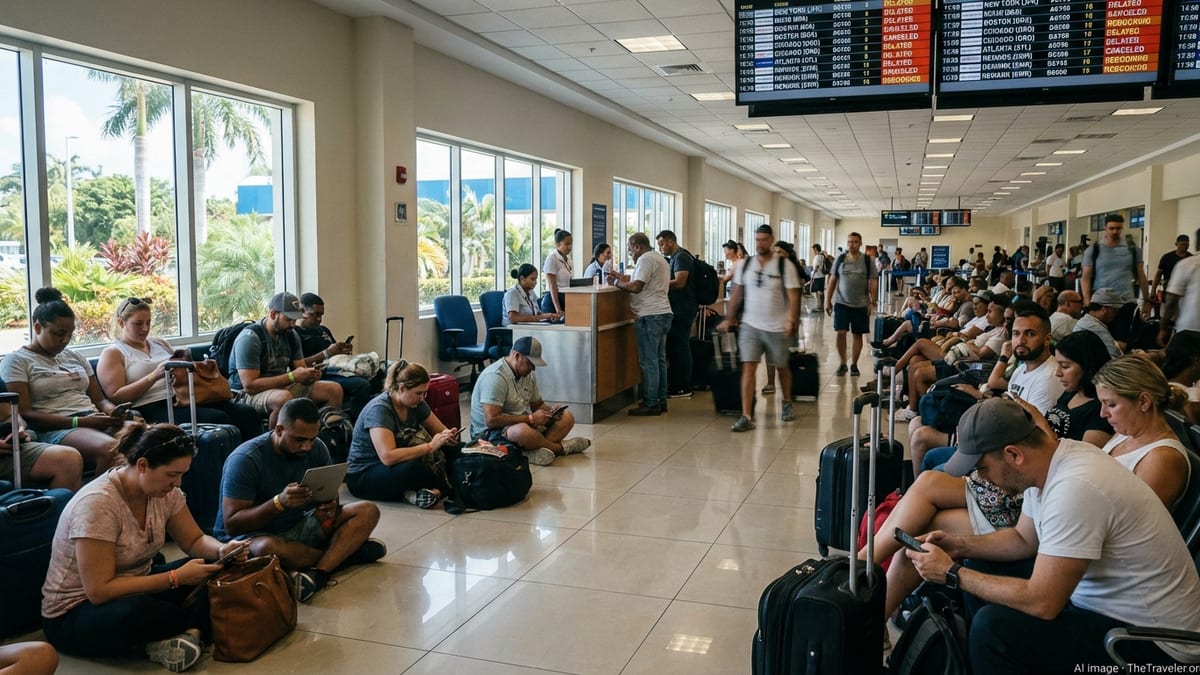
Travelers across the Dominican Republic faced mounting frustration on Sunday as a fresh wave of cancellations and delays hit major U.S. carriers serving Santo Domingo, Santiago, and Punta Cana, with at least 48 flights reportedly canceled and many more running hours behind schedule.
Network Strains Ripple Into the Dominican Republic
The latest disruption to air travel in the Dominican Republic comes amid broader operational strains across the Caribbean and North American networks of major U.S. airlines. Data from aviation tracking services and airport operations on Sunday pointed to a spike in irregular operations affecting flights into and out of Santo Domingo’s Las Américas International Airport, Santiago’s Cibao International Airport, and Punta Cana International Airport.
Although the precise causes varied by carrier and route, the result for passengers was the same: long lines at check in, crowded departure halls, and repeated gate announcements about schedule changes. Flights operated by JetBlue, Delta Air Lines, United Airlines, Spirit Airlines, and American Airlines were among those canceled or heavily delayed, with knock-on effects on connecting traffic across the United States and beyond.
Airline operations staff described the situation as a cascading disruption, where weather, congestion, and aircraft rotation issues in U.S. hubs quickly translated into problems on high-demand leisure routes to the Dominican Republic. Punta Cana and Santo Domingo, in particular, sit at the heart of many carriers’ Caribbean schedules, making them especially vulnerable when irregular operations spread through the network.
For many travelers heading home at the end of winter getaways or starting long-planned vacations, the timing could hardly be worse. February is a peak month for sun-seeking visitors from North America, and even a relatively small number of cancellations can leave available seats scarce for rebooking.
JetBlue, Delta, United, Spirit, and American Face Scrutiny
JetBlue and Spirit, two of the largest players in the Dominican Republic leisure market, appeared to be among the most visibly affected carriers, according to airport departure boards and passenger reports. JetBlue, which maintains a significant footprint in Santo Domingo, Santiago, and Punta Cana, saw multiple services from East Coast gateways arrive late or be canceled outright as earlier delays compounded throughout the day.
Spirit, heavily reliant on its Florida hubs, was hit by disruptions linked to congestion and schedule interruptions at Fort Lauderdale–Hollywood International Airport, a key connecting point for low cost routes into Punta Cana. Schedule data on Sunday showed dozens of delays and several cancellations on Spirit’s network, with Caribbean destinations among those experiencing knock-on effects as aircraft and crews were repositioned.
Legacy carriers were not spared. American Airlines, Delta Air Lines, and United Airlines all reported schedule interruptions tied to congestion at major U.S. hubs including Atlanta, Boston, Newark, and New York. When departures from those hubs push back by several hours, evening flights to the Dominican Republic often arrive late into the night or are scrubbed entirely, leaving passengers searching for scarce seats on subsequent days.
The heavy concentration of Dominican Republic flights in weekend schedules further amplified the problem. Airlines tend to pack leisure routes into Fridays, Saturdays, and Sundays, so any disruption on those days can quickly strain spare capacity. With aircraft utilization already high, carriers have limited flexibility to add recovery flights or swap in spare planes at short notice.
Major Airports in Santo Domingo, Santiago, and Punta Cana Under Pressure
Inside the terminals, the operational challenges were on full display. At Las Américas International Airport outside Santo Domingo, travelers queued at airline counters seeking rebooking options and hotel vouchers, while airport staff attempted to manage crowding and keep passengers updated over the public address system. Long wait times for customer service were a recurring complaint as more flights were rolled into the irregular operations window.
In Santiago, at Cibao International Airport, where many flights are operated by U.S. carriers serving the Dominican diaspora in New York and other northeastern cities, cancellations created particular headaches for family visits and workers traveling on tight schedules. With fewer daily frequencies compared to Punta Cana or Santo Domingo, a single canceled flight can mean a delay of 24 hours or more, particularly when planes are already booked near capacity.
Punta Cana International Airport, the country’s busiest tourist gateway, also felt the strain. Screens in its departure halls showed clusters of delayed departures to major U.S. cities, and announcements of cancellations throughout the day sent passengers back to airline desks in search of alternatives. Resort transfer operators reported late-night runs for unexpected extra nights as guests returned to hotels when flights failed to depart as planned.
Despite the disruption, airport operators in all three cities worked to keep core services running smoothly, from security screening to customs and immigration processing. Still, the volume of stranded passengers meant busier concourses, longer lines at food outlets, and difficulty finding seating in gate areas as travelers waited out extended delays.
Passengers Stranded, Vacations Extended and Plans Upended
For many visitors, the wave of cancellations and delays meant involuntary extra nights in the Dominican Republic, often at their own expense until airlines confirmed eligibility for accommodation support. Families traveling with children and elderly passengers were especially affected, navigating crowded terminals late into the evening while new itineraries were arranged.
Others who were at the start of their trips saw long planned vacations shortened or rerouted. Travelers connecting through U.S. hubs to reach the Dominican Republic reported missed connections and last minute changes that swapped nonstop flights for multi stop routings. Some opted to abandon their trips entirely when rebooked arrival times pushed well into the following day.
Social media posts from passengers painted a picture of confusion and limited communication, with some reporting gate changes announced late, and others saying they learned of cancellations only upon reaching the airport. At busy check in areas in Punta Cana and Santo Domingo, tempers occasionally flared as lines grew and staff struggled to respond to individual cases while handling a steady stream of new disruptions.
Yet not all reactions were negative. A number of travelers praised frontline airline and airport employees for remaining calm under pressure, handing out water, helping families rebook, and advocating for hotel accommodations where policies allowed. Many passengers acknowledged that the staff they dealt with face the same uncertainty, working through long shifts as schedules shifted repeatedly throughout the day.
Operational and Weather Factors Behind the Disruptions
Industry analysts point to a combination of factors that can quickly trigger widespread disruption on busy Caribbean routes. Seasonal weather systems across the eastern United States and the Atlantic can cause initial delays or diversions, while congested airspace and heavily utilized fleets leave airlines with little margin for recovery. When one or two major hubs encounter weather or staffing constraints, the effects can quickly reach Caribbean destinations such as Santo Domingo, Santiago, and Punta Cana.
This weekend’s pattern fit a now familiar trend in which ripple effects of storms, air traffic management initiatives, and crew scheduling constraints converge on popular leisure markets. Once early morning departures from U.S. hubs are pushed back, turn times for aircraft tighten, creating a chain reaction that shows up as late running or canceled evening departures to the Caribbean.
Carriers serving the Dominican Republic also rely heavily on narrow body aircraft fleets that run intense daily rotations. When a single aircraft falls behind because of maintenance checks or a late inbound segment, subsequent flights on that plane’s schedule are at risk. If a crew then reaches its maximum legal duty hours before reaching the Dominican Republic, the airline may be forced to cancel the flight entirely.
While Sunday’s disruption did not stem from a single dramatic trigger, it highlighted how fragile the system can be when multiple stressors hit at once. For travelers, the distinction between weather, staffing, and air traffic constraints matters less than the practical consequences: missed events, added costs, and extended time away from home.
Airlines Respond With Waivers and Rebooking Options
In response to the wave of cancellations and delays, major U.S. airlines serving the Dominican Republic moved to soften the blow for affected passengers. Carriers including JetBlue, Delta, United, Spirit, and American activated or expanded travel waivers for select Caribbean and U.S. routes, allowing customers to change their travel dates within a limited window without paying standard change fees.
Such waivers typically permit rebooking onto alternate flights to the same destination within a specified period, often a few days before or after the original travel date, provided seats are available in the same cabin. Some airlines also offered the option to reroute through different hubs when original connections were no longer viable. However, full refunds were generally limited to flights that were canceled outright or subject to significant schedule changes.
Gate agents and call center staff spent much of the day processing new itineraries, prioritizing passengers with missed connections and those traveling with young children or urgent commitments. Given the high load factors on Dominican Republic routes in February, many customers faced limited options, with airlines sometimes booking travelers on flights several days later or suggesting nearby airports in neighboring countries or islands as alternatives.
Travel experts noted that while waivers provide some flexibility, they do not always cover out of pocket expenses such as extra hotel nights, meals, or ground transportation. Passengers were advised to keep receipts and document the disruption in case they chose to pursue compensation or reimbursement under airline policies or local consumer protection rules.
What Travelers Can Do if Their Dominican Republic Flight Is Affected
For travelers with upcoming trips to or from Santo Domingo, Santiago, or Punta Cana, the events of the weekend offer practical lessons on how to navigate potential disruptions. Aviation and consumer advocates recommend monitoring flight status closely in the 24 hours before departure, using both airline apps and airport information systems to detect early signs of schedule changes.
When delays stretch into several hours, experts advise contacting airlines through multiple channels at once, including mobile apps, websites, and customer service phone lines, rather than relying solely on airport counters that can quickly become overwhelmed. In some cases, social media direct messages to airline support teams can yield faster responses, particularly for simple rebookings onto the next available flight.
Travelers are also encouraged to review the terms of their tickets and any travel insurance policies they may hold. Some credit cards and standalone travel insurance plans offer coverage for trip interruption, which can help offset the cost of extra hotel nights or meals when flights are canceled or significantly delayed. Knowing in advance what documentation is required can save time at crowded airports.
Finally, experts stress the value of building flexibility into itineraries, especially during busy travel periods. Allowing extra time before critical events, avoiding the last flight of the day where possible, and considering non stop options over complex connections can all reduce the risk of being stranded. While no strategy can fully eliminate the chance of disruption, a more cautious approach may help travelers weather unexpected cancellations and delays with less stress.
Tourism Sector Braces for Ongoing Volatility
The weekend’s wave of flight disruptions underscores the broader vulnerability of the Dominican Republic’s tourism dependent economy to shocks in the air travel system. Hotels, resorts, tour operators, and transport providers in Santo Domingo, Santiago, and Punta Cana depend heavily on reliable air links with the United States, where most international visitors originate.
Local tourism officials and industry leaders have repeatedly called for stronger coordination between airlines, airports, and destination stakeholders to ensure that communication to travelers remains clear and timely during periods of disruption. When passengers receive inconsistent or incomplete information, frustration can spill over into negative perceptions of the destination itself, even when the underlying causes lie outside local control.
Despite the immediate challenges, tourism businesses across the Dominican Republic emphasized their commitment to assisting affected guests, from offering late checkouts to helping rebook transfers and excursions. Many resorts have developed contingency plans for extended stays, recognizing that irregular operations in the wider aviation system are becoming a recurring feature of high season travel.
As airlines work to stabilize their schedules in the days ahead, travelers, tourism operators, and aviation authorities alike will be watching closely to see whether Sunday’s turbulence proves to be a short lived setback or an early sign of a more unsettled pattern for flights across the Caribbean this season.