

More news on this day
Tourism in the Dominican Republic is entering a new high-growth phase, with record international arrivals in 2024 and 2025 coinciding with renewed travel safety guidance aimed at keeping the Caribbean destination attractive and secure for visitors.
Get the latest news straight to your inbox!
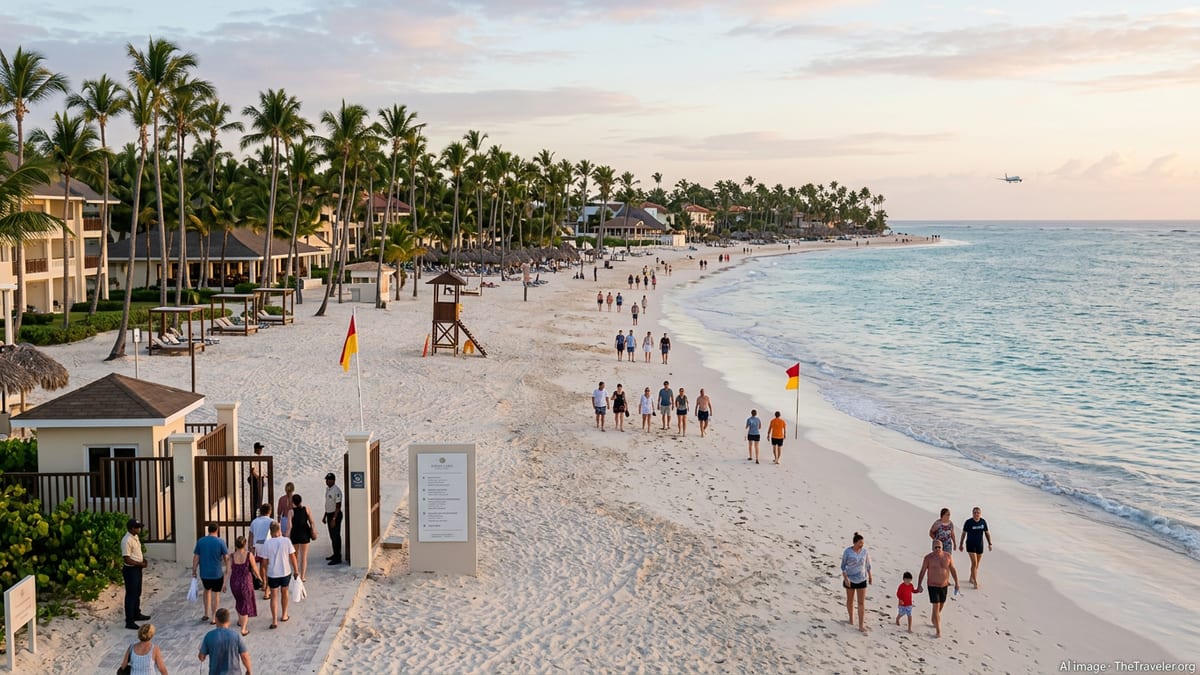
Record-Breaking Visitor Numbers Redefine the Market
Recent tourism data shows the Dominican Republic consolidating its place among Latin America’s leading destinations, with international arrivals repeatedly surpassing pre-pandemic benchmarks. Publicly available figures from the Ministry of Tourism and regional industry outlets indicate that the country welcomed more than 11 million visitors in 2024, followed by a new high of roughly 11.6 million in 2025, making back-to-back record years for the sector.
Reports highlight that growth has been broad-based rather than driven by a single month or market. The first half of 2025 alone brought more than 6.1 million visitors, supported by strong air traffic and the highest six-month cruise passenger total in the country’s history. By late 2025, cumulative arrivals had already outpaced the previous year, cementing the Dominican Republic’s status as one of the most consistently expanding tourism markets in the Caribbean.
Industry analyses describe the sector as entering a phase of “institutional maturity,” with stable demand, repeat visitation, and diversified source markets. While the United States and Canada remain dominant, tourism boards and private operators are also targeting Europe and South America, helping the country withstand fluctuations in any one origin market.
This surge has translated into high hotel occupancy rates across the main resort corridors and urban centers. From all-inclusive beachfront properties to business hotels in Santo Domingo and emerging cultural hubs, occupancy levels above 80 percent have been frequently reported, with peak holiday periods triggering capacity constraints at key airports.
Punta Cana Leads a Tourism Infrastructure Expansion
The resort region of Punta Cana on the eastern coast continues to act as the primary gateway for international tourism growth. Official airport statistics and industry commentary point to Punta Cana International Airport handling well over half of all air arrivals, with new records set in late 2025 as the facility processed its highest monthly passenger totals to date.
The influx of travelers has accelerated investment in hotels, residential projects, and supporting infrastructure. Market reports highlight billions of dollars in new tourism-related commitments announced at regional trade events in 2025, including plans for thousands of additional rooms across Punta Cana, nearby Bavaro, and other emerging coastal destinations. Developers are also emphasizing upgraded water parks, golf courses, marinas, and convention facilities to support both leisure and business travel.
Beyond Punta Cana, government strategies are promoting diversification into regions such as Puerto Plata, Samana, Miches, and Santiago de los Caballeros. New road links, airport improvements, and urban rehabilitation projects are intended to distribute tourism benefits more evenly, reduce pressure on saturated resort corridors, and encourage visitors to explore lesser-known cultural and natural attractions.
Sector observers note that this infrastructure push is tightly linked to the country’s broader economic strategy. Tourism is a key driver of foreign exchange earnings, construction activity, and employment, and the latest data suggests that record visitor inflows in 2024 and 2025 contributed meaningfully to overall GDP growth and investor confidence.
Updated Travel Advisories Spotlight Crime and Resort Safety
The tourism boom has unfolded alongside evolving international travel advisories that urge visitors to remain vigilant about crime. The United States currently maintains a Level 2 travel advisory for the Dominican Republic, indicating that travelers should exercise increased caution due to concerns such as opportunistic crime, robberies, and isolated violent incidents in some urban and nightlife areas.
Recent advisory updates and consular information emphasize that incidents can occur both inside and outside major resort zones, although large all-inclusive complexes commonly provide layered security, controlled access, and on-site staff trained in emergency response. Publicly available guidance encourages travelers to use registered transportation providers, avoid displaying high-value items, and stay attentive when using ATMs, particularly at night or in less crowded locations.
International organizations and foreign ministries also flag road safety as an ongoing concern. Reports frequently describe heavy traffic, variable road conditions, and limited street lighting in rural stretches. Visitors are urged to exercise caution when driving, consider private transfers arranged through reputable operators, and verify that any excursion providers meet safety standards for vehicles and equipment.
At the same time, tourism officials and private sector partners have been promoting safety messaging in marketing campaigns and at trade fairs. Public statements and published materials highlight investments in surveillance systems, hotel security upgrades, and closer cooperation between tourism stakeholders and local law enforcement in high-traffic zones.
Authorities Issue Practical Guidance for Visitors
As visitor numbers grow, new and updated guidance from both local institutions and foreign governments has placed a stronger focus on practical, on-the-ground safety measures. Publicly available information encourages travelers to book with licensed accommodations and tour operators, verify reservations directly with properties, and use official taxis or ride services designated by airports and hotels.
Travelers are also advised to pay close attention to food and beverage safety, particularly when consuming alcohol in unfamiliar venues. Several international advisories recommend watching drinks at all times, avoiding excessive consumption, and seeking help immediately if feeling unwell under suspicious circumstances. Guidance further suggests keeping copies of identification documents, knowing the location of the nearest medical facility, and carrying local emergency contact numbers.
Beach and water safety form another pillar of current recommendations. Seasonal currents, variable wave conditions, and occasional rough seas can pose risks even at popular swimming areas. Government and private lifeguard services are present at some major beaches, but guidance still encourages observing flag warnings, avoiding isolated stretches after dark, and confirming that water sports providers adhere to safety protocols and equipment checks.
Health-related advice centers on sun protection, hydration in the tropical climate, and routine precautions against mosquito-borne illnesses. International health agencies and national tourism portals both underscore the importance of travel insurance that covers medical care and emergency evacuation, given variations in access to advanced treatment outside major cities.
Balancing Growth With Sustainability and Community Impact
Behind the record-breaking statistics, analysts and local commentators are increasingly focused on how the Dominican Republic can balance rapid tourism growth with sustainability and community well-being. Environmental organizations and development agencies have raised questions about coastal erosion, waste management, and water use in fast-growing resort areas, particularly along the eastern and northern coasts.
In response, policy documents and industry reports outline steps toward more sustainable practices, including stricter environmental impact assessments for new projects, incentives for renewable energy use in hotels, and programs to protect mangroves and coral reefs near major tourist corridors. Several large resorts now promote initiatives such as reduced single-use plastics, community beach cleanups, and partnerships with marine conservation groups.
Community impact is another emerging theme. As employment in hotels, restaurants, transport, and entertainment expands, local authorities and business associations are placing greater emphasis on training, formalization of jobs, and opportunities for small and medium-sized enterprises that supply the tourism value chain. Artisan markets, community-based excursions, and gastronomic projects showcasing Dominican products are being positioned as ways to spread tourism revenue beyond gated resort enclaves.
With visitor arrivals at historic highs and new guidance shaping how travelers experience the destination, the Dominican Republic is working to position itself as both an accessible, sun-focused getaway and a market that takes safety, sustainability, and local participation increasingly seriously. How these parallel efforts evolve over the next few seasons is expected to determine whether the current boom translates into long-term, resilient growth for the Caribbean nation.