

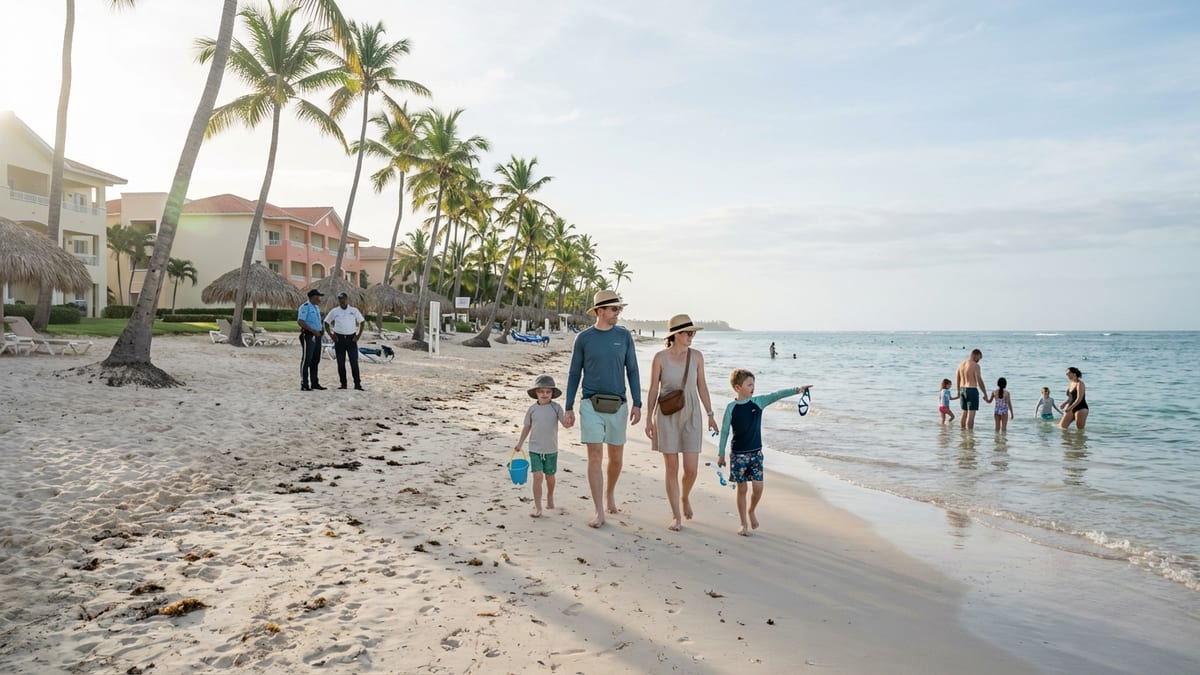
The Dominican Republic has long been a favorite for North American and European families looking for sun, sand, and non-stop resort entertainment. With direct flights from many major cities, a strong all-inclusive resort scene and calm, swimmable beaches, it is a natural choice for a first Caribbean trip with kids.
At the same time, recent updates to travel advisories have raised fair questions about safety, especially for parents responsible for young travelers. Understanding which areas are safest, which resorts cater best to families, and how to prepare smartly can help you enjoy the country’s culture and coastline with confidence.
Safety Snapshot: What Families Need to Know in 2026
As of early 2026, the United States and Canada both advise travelers to exercise increased caution in the Dominican Republic due to crime. The U.S. State Department maintains a Level 2 advisory, noting that violent crime, including armed robbery, homicide and sexual assault, remains a concern across the country, though it is less common in resort zones than in some urban neighborhoods. This is not a call to cancel family vacations but a reminder to plan thoughtfully, stick to well-known tourist hubs and keep standard big-city precautions in mind.
Tourist areas such as Punta Cana, Cap Cana, La Romana, Bayahibe and much of the Puerto Plata region are generally considered safer than parts of Santo Domingo or interior cities. These coastal zones benefit from a visible tourism police presence, private resort security, and infrastructure that is oriented around international visitors. Families usually spend most of their time inside resorts or on organized excursions, which further reduces risk compared with independent travel in busy downtown districts.
Outside the resort gates, the greatest threats to visitors tend to be opportunistic theft, traffic accidents, and scams rather than targeted violent crime. Petty theft can occur if you leave your bag unattended at the beach bar or set your phone on a cafe table in town, just as it can in many popular destinations. Common sense practices like keeping valuables to a minimum, using hotel safes, and avoiding poorly lit streets at night go a long way. Organized crime and gang disputes, while real issues within the country, rarely involve tourists directly when they remain in established tourist zones and vetted tour operations.
Parents should also be aware of non-crime risks. Hurricane season runs from June through November, and late-season storms in 2025 served as a reminder that tropical weather can disrupt travel and strain local infrastructure. Booking flexible airfares, choosing reputable resorts with strong contingency plans and purchasing travel insurance that covers weather-related cancellations can help protect a family vacation from unforeseen events. Health-wise, the Dominican Republic sees occasional cases of mosquito-borne illnesses like dengue or chikungunya, so packing repellent and choosing accommodations that manage standing water and provide good screens or air conditioning is sensible.
Safest Areas for Families: From Punta Cana to Puerto Plata
Punta Cana and the adjoining Bávaro strip remain the epicenter of family tourism in the Dominican Republic. This palm-fringed coast on the eastern tip of the island is lined with large, gated all-inclusive resorts and purpose-built tourist infrastructure. The area benefits from a dedicated tourist police presence and good connectivity via Punta Cana International Airport, which is accustomed to processing large numbers of families arriving on package holidays. Within Punta Cana, family travelers often gravitate to sections like Arena Gorda, Cabeza de Toro and Cap Cana, where beaches are wide and waves are usually gentle.
Cap Cana, just south of the main Bavaro strip, is especially appealing to risk-averse families. This gated enclave of luxury resorts, marinas and golf courses has a reputation for being one of the most controlled and well-maintained tourism areas in the country. Resorts in Cap Cana tend to be newer, with modern safety features, strong security protocols and well-developed kids clubs. For families who prioritize a sense of seclusion and order over a bustling local scene, Cap Cana can feel reassuringly contained.
On the southern coast, La Romana and nearby Bayahibe offer a quieter alternative to Punta Cana. This region is home to upscale resort complexes and access to offshore islands with calm turquoise water ideal for family snorkeling trips. Crime here has historically centered on theft rather than violence, and visitors are generally advised to avoid deserted beaches or poorly lit areas at night, particularly outside resort grounds. Staying within established resort compounds or traveling with licensed guides helps keep these risks manageable.
On the north coast, Puerto Plata has been experiencing a steady revival, boosted by modern cruise terminals and renewed investment in family-friendly resorts and excursions. The city itself is more urban than Punta Cana, but many visiting families base themselves in adjacent beach neighborhoods like Playa Dorada and Costa Dorada, where resorts and gated communities offer an added layer of security. Puerto Plata’s blend of beaches, historic sites and mountain scenery makes it a strong choice for parents who want more than just poolside lounging but still prefer the structure of an all-inclusive hub as a home base.
Understanding Current Travel Advisories and How to Interpret Them
Travel advisories can sound alarming when read in isolation, especially for parents planning a first international trip with children. It helps to understand that a Level 2 advisory, which currently applies to the Dominican Republic, is shared by many popular destinations and calls for increased caution rather than avoidance. Authorities highlight worst-case scenarios so that travelers can plan defensively, not because such events are likely to affect every visitor. Millions of tourists, including large numbers of families, continue to visit the country every year without incident.
When reading advisory language about violent crime, it is useful to distinguish between generalized national statistics and the experience of tourists in established resort corridors. Crime rates can be significantly higher in certain urban neighborhoods, border regions or nightlife zones that most family travelers will never see. That does not mean risks are nonexistent in resort areas but that they tend to be more controlled and predictable. Families who remain aware of their surroundings, stay on resort property at night and choose vetted operators for excursions tend to report feeling safe throughout their stay.
Parents should also pay attention to sections of advisories that address road safety and transportation. Driving standards and road conditions in the Dominican Republic often differ from what North American or European families are used to. Traffic can be chaotic, signage inconsistent and night driving particularly hazardous. For these reasons, many families opt to use resort-arranged transfers, private drivers recommended by their hotel or reputable tour companies for day trips instead of renting a car. This approach significantly reduces exposure to one of the most common sources of serious incidents affecting visitors.
Finally, the health and emergency services portion of advisories deserves a close read. Medical care quality varies widely between major cities and smaller towns. In tourism hubs, however, families have access to private clinics and hospitals that are experienced in treating international patients. Before travel, it is wise to obtain travel insurance that covers medical evacuation, pack any prescription medications in carry-on bags with copies of prescriptions, and note the location of the nearest clinic or hospital to your resort. These steps provide peace of mind even if you never need to use them.
Best Family-Friendly Resort Zones and What Sets Them Apart
For families, the choice of resort often does more to shape the experience than the broader country context. Punta Cana’s resort zone is designed with all-inclusive convenience at its core, which means children’s pools, splash pads, kids clubs, and entertainment schedules are standard features rather than special extras. Many properties offer family suites with separate sleeping areas, bunk beds, and mini-fridges, allowing parents and kids to enjoy privacy without booking multiple rooms. On sprawling campuses, golf carts or small trains often shuttle guests between beach, pool, and dining areas, which can be a thrill for younger children.
Cap Cana, though smaller, excels in upscale family offerings. Newly built properties there typically feature modern water-play zones, supervised kids clubs, and teen lounges with gaming consoles and sports courts. Dining is often more refined, with multiple a la carte restaurants catering to varied palates, including picky eaters. For multi-generational trips, Cap Cana’s combination of quiet beaches, golf, marinas and spa facilities works well for grandparents, parents and children alike, while security-controlled gates and private guards provide an added sense of insulation from the outside world.
La Romana and Bayahibe resonate with families who want easy access to nature. Resorts here frequently organize day trips to offshore islands with shallow reefs, sailing excursions and snorkeling tours suitable for school-age children. Many properties place a strong emphasis on eco-friendly practices and cultural activities, from Dominican cooking demonstrations to merengue dance lessons on the beach. For parents keen on mixing downtime with soft adventure, this region can be especially rewarding, provided they are comfortable with slightly longer transfers from arrival airports.
Puerto Plata’s resort complexes tend to be slightly smaller and more affordable than Punta Cana’s mega-resorts, which can be a plus for families on a tighter budget who still want an all-inclusive setup. Beachfront resorts in Playa Dorada, for example, are often within walking or short driving distance of attractions like cable-car rides up Mount Isabel de Torres or visits to Fortaleza San Felipe, a historic fort overlooking the bay. This easy access to off-resort experiences allows families to introduce older kids to the country’s history and daily life without lengthy or high-risk travel.
Choosing the Right Resort: Practical Criteria for Parents
When comparing resorts in the Dominican Republic, families should look beyond headline star ratings and focus on specific features that impact safety and comfort. A well-run kids club with screened staff, secure check-in and check-out procedures and age-appropriate programming can make a huge difference in how relaxed parents feel. Ask about staff-to-child ratios, emergency protocols and whether children are ever taken outside club facilities without parents. Properties that clearly outline these policies often have stronger overall safety cultures.
Room configuration is another critical factor. After a day of sun and stimulation, children and parents benefit from separate sleeping spaces and blackout curtains that support different bedtimes. Family suites or interconnected rooms help avoid the common pitfall of putting children to bed early and then sitting silently in the dark. Some Dominican resorts specifically market family club sections that cluster kid-friendly rooms near splash pools and playgrounds, which can reduce the time and distance young legs need to cover each day.
Parents concerned about health and hygiene should inquire about on-site medical services and basic safety infrastructure. Many midrange and upscale resorts maintain a 24-hour nurse station and have established partnerships with nearby clinics for more serious issues. Lifeguards at major pools and beaches, clear signage for water depth, and readily accessible life jackets for non-swimmers are important signals that a property takes water safety seriously. It is worth checking whether the hotel’s pools are fenced or easily accessible from ground-floor rooms if you have toddlers prone to wandering.
Food and beverage operations also merit close attention when traveling with children. Large all-inclusive resorts typically manage food safety well, but parents of children with allergies, intolerances or medical diets should contact the property in advance. Many family-focused resorts can arrange meetings with the executive chef, clearly label buffet stations, or prepare special meals on request. Choosing properties accustomed to hosting North American and European families increases the odds that these systems are already in place and that staff understand the seriousness of allergen management.
On-the-Ground Safety Tips for a Low-Stress Family Stay
Once you arrive in the Dominican Republic, a few habits can help keep your trip smooth. Treat the resort as your main base of operations, particularly after dark, and reserve independent exploring for broad daylight. If you wish to visit a nearby town, ask your hotel to arrange a licensed taxi or private driver and avoid carrying more cash than you actually need. Keeping passports, jewelry, spare credit cards and most electronics in the in-room safe minimizes the impact of any potential theft. In public areas, carry cross-body bags that close securely and resist setting phones or cameras on tables where they can be grabbed.
Water and beach safety are equally important, especially given the temptation of warm Caribbean seas. Even when the ocean looks calm, always check local flag systems or ask lifeguards about conditions such as rip currents or jellyfish. Younger children should wear well-fitted life vests near deep water and remain within arm’s reach of an adult when in the surf. At resort pools, choose loungers that give you a direct line of sight to where your children are swimming or playing, and set clear rules about not entering the water without telling an adult first.
Sun exposure in the Dominican Republic can be intense, particularly around midday. High-factor reef-safe sunscreen, wide-brimmed hats, rash-guard swim shirts and regular breaks in the shade are essential. Dehydration can sneak up on active children who spend hours in pools or on the beach, so encourage frequent sips of water or electrolyte drinks. If a child feels suddenly tired, nauseous or develops a headache, treat it as a sign to cool down indoors and rehydrate rather than pushing through scheduled activities.
Parents of teens should also think about digital and social safety. Resort Wi-Fi and social apps can make it easy for older kids to connect with strangers, including outside the resort environment. Talk in advance about location sharing, meeting new people and staying within resort grounds unless accompanied by family or a trusted group. Emphasize that if something or someone feels off, they should return to a crowded area or seek out resort staff immediately. These conversations are just as important in Punta Cana as they would be on a city break closer to home.
Experiences Beyond the Resort: Exploring Safely With Kids
One of the rewards of traveling to the Dominican Republic with children is the chance to experience more than just poolside relaxation. With the right planning, families can enjoy eco-adventures, cultural visits and wildlife encounters that feel memorable rather than risky. Organized excursions booked through your resort or reputable tour operators are usually the best way to do this. These companies typically handle transportation, provide licensed guides and know which routes and stops are advisable given current conditions.
Popular family excursions from Punta Cana include catamaran sailing trips to offshore sandbars, zipline parks set amid lush greenery and visits to animal sanctuaries where children can learn about local species under supervision. From La Romana and Bayahibe, boat trips to nearby islands with calm, shallow waters are particularly suitable for younger swimmers and first-time snorkelers. Around Puerto Plata, cable-car rides to the top of Mount Isabel de Torres and short tours of its historic fort and colorful old town make engaging day outings for school-age kids.
When planning off-resort adventures, prioritize experiences that avoid very late returns, long nighttime drives or stops in congested urban districts. Check what is included in the excursion price to avoid situations where you need to find your own way back in unfamiliar surroundings. Bring only essential valuables, keep a copy of your passports in a separate place from the originals and share your plans with someone back at the resort, such as the concierge desk. Good operators will brief you on local etiquette, tipping norms and safety expectations before departure.
Families interested in more immersive cultural experiences, such as visiting local markets or villages, should work with guides recommended by the hotel who are accustomed to hosting children. These professionals understand how to balance authenticity with safety and can steer you away from areas better avoided. Build in plenty of downtime before and after such outings so that children and adults alike can process the experience and return to the relaxed pace that most people seek from a beach vacation.
The Takeaway
For families willing to prepare thoughtfully, the Dominican Republic in 2026 remains a compelling destination, blending picture-perfect beaches with a deep bench of kid-focused resorts. Current travel advisories underscore the importance of taking safety seriously, but they do not negate the reality that millions of visitors arrive and depart each year with positive stories and happy children in tow. The key is not to ignore risk but to manage it, just as you would in any large city or unfamiliar environment at home.
Choosing well-established resort zones such as Punta Cana, Cap Cana, La Romana and Puerto Plata, and opting for properties built with families in mind, can create a reassuring structure around your trip. Inside that structure, children are free to enjoy water slides, kids clubs, beach games and cultural activities while adults relax nearby. Smart habits, from securing valuables and confirming transportation arrangements to staying sun-safe and hydrated, become background routines rather than sources of stress.
Ultimately, family travel is about expanding horizons in a way that feels secure and enjoyable for everyone. The Dominican Republic offers the warmth of Caribbean hospitality, a rich cultural backdrop and a resort ecosystem tailored to multi-generational groups. By aligning your choices of destination, resort and excursions with current safety information and your own comfort levels, you can create a vacation that balances adventure with peace of mind, leaving your family with lasting memories of palm-fringed shores, shared discoveries and unhurried time together.
FAQ
Q1. Is the Dominican Republic safe for families to visit in 2026?
Yes, many families safely visit the Dominican Republic each year, particularly in major resort areas like Punta Cana, Cap Cana, La Romana and Puerto Plata. However, crime remains a concern nationwide, so it is important to follow travel advisories, stay in established tourist zones, use reputable transportation and apply the same caution you would in a large unfamiliar city.
Q2. Which area is considered the safest for a first family trip?
For a first-time visit, Punta Cana and neighboring Cap Cana are strong choices. They offer a dense cluster of family-oriented, gated resorts, good airport connections, calm beaches and highly developed tourism services. These areas benefit from strong private security and a visible tourist police presence, which helps many parents feel more at ease.
Q3. Are all-inclusive resorts safer than other accommodations?
All-inclusive resorts are not automatically safer, but they do provide controlled environments with private security, limited public access and infrastructure tailored to international guests. This can reduce certain risks compared with small independent lodgings, especially when traveling with children. Still, guests should secure valuables, supervise kids closely around water and remain attentive in public spaces.
Q4. Should we rent a car to explore with kids?
Most families are better served by using resort-arranged transfers, taxis recommended by the hotel or organized excursions with transportation included. Driving conditions can be hectic, traffic rules loosely observed and road quality uneven, especially at night. If you do decide to rent a car, avoid nighttime driving, insist on proper child seats and plan routes carefully in daylight.
Q5. What health precautions should we take before traveling?
Consult your pediatrician or family doctor several weeks before departure to review routine vaccinations and discuss any recommended additional shots. Pack prescription medicines in original containers, carry a basic first-aid kit and bring mosquito repellent to reduce the risk of bites. Travel insurance that covers medical treatment and evacuation is strongly recommended for all family members.
Q6. Is it safe to leave children at resort kids clubs?
Many Dominican resorts run professional kids clubs with screened staff, secure facilities and age-appropriate activities. Before dropping your child off, visit the club, ask about sign-in and sign-out procedures, staff training and emergency protocols, and observe how children are supervised. Trust your instincts: if the environment feels well organized and transparent, it is likely a positive option.
Q7. How can we keep valuables safe on a family trip?
Bring only what you truly need and leave high-value jewelry or electronics at home. Use the in-room safe for passports, spare cards and most cash, and carry a small amount of spending money in a secure, closeable bag. At the pool or beach, avoid leaving phones and wallets unattended; consider a waterproof pouch you can keep on your person when swimming.
Q8. What is the best time of year to visit with children?
The driest and most popular months generally run from December through April, when humidity is lower and rain showers tend to be shorter. Families can visit year-round, but should be aware that the Atlantic hurricane season spans June to November. If traveling during that period, consider flexible booking policies and closely monitor weather forecasts as your trip approaches.
Q9. Are excursions outside the resort safe for families?
Excursions booked through your resort or well-reviewed tour companies are generally safe and designed with visitors in mind. Choose daytime activities, verify that transportation and safety equipment are included, and avoid itineraries that involve late-night travel or unscheduled stops in unfamiliar urban areas. Always supervise children closely and follow your guide’s instructions.
Q10. How can we balance cultural experiences with safety concerns?
Work with your hotel concierge or trusted local guides to select age-appropriate cultural activities, such as visits to historic sites, markets or nearby towns during daylight hours. Traveling in organized small groups, using known drivers and avoiding high-crime neighborhoods allows your family to engage with local culture while keeping risk at a reasonable level. A cautious but open approach often yields rewarding and memorable experiences for children and adults alike.