

More news on this day
On Dominica’s wild north coast, the Red Rocks near the village of Calibishie are rapidly moving from little-known geological curiosity to headline attraction, drawing 2026 visitors seeking raw volcanic scenery, coastal hikes, and off-the-grid Caribbean adventure.
Get the latest news straight to your inbox!
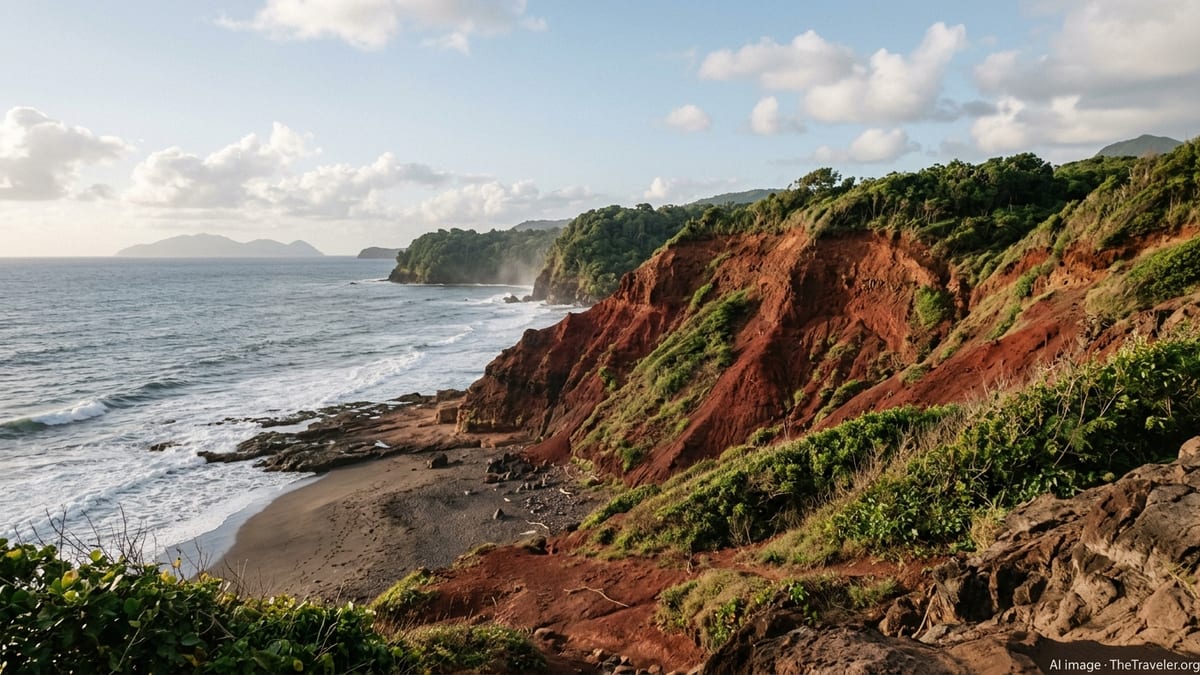
North Coast Volcanic Landscape Steps Into the Spotlight
Red Rocks is a striking sweep of iron-rich volcanic clay cliffs overlooking the Atlantic, set just east of Calibishie on Dominica’s northeast coast. Publicly available travel guides describe a landscape of sculpted red headlands, black sand coves, and wind-carved gullies that stand in vivid contrast to the island’s lush interior rainforest. The area forms part of a broader coastal scenery that many sources identify as among Dominica’s most dramatic shorelines.
Recent destination coverage highlights Red Rocks alongside Pointe Baptiste Beach and nearby rivers as a compact cluster of natural attractions on the north coast. Tour descriptions emphasize that the cliffs are the result of long-term erosion of volcanic deposits, creating layered rock faces and crumbling plateaus that feel markedly more rugged than the sheltered bays on Dominica’s Caribbean side. Visitors are typically advised to come prepared for exposed sun, uneven ground, and strong Atlantic breezes.
In 2026, Red Rocks is increasingly featured in itineraries that position Dominica as a “Nature Island” alternative to conventional resort destinations. Editorial travel roundups that spotlight the country for adventure tourism often reference the contrast between the island’s inland waterfalls and boiling lakes and its raw, wave-battered northern coast, with Red Rocks singled out as a visually distinctive highlight for photographers and hikers.
Growing Range of North Coast Tours and Experiences
New and updated tour programs for 2025 and 2026 show Red Rocks woven into a growing network of organized excursions on Dominica’s north and northeast coasts. Sailing and yachting events based in Portsmouth, such as winter rendezvous weeks, are advertising “Northern Treasures” day tours that combine the Red Rocks geological formations, Pointe Baptiste Chocolate Factory, and nearby natural swimming pools into a single outing. These packages frame the site as part of a broader eco-adventure circuit rather than a stand-alone stop.
Regional tour operators and small accommodations are also marketing Red Rocks as a signature excursion from eco-lodges, guesthouses, and villas around Calibishie and Hampstead. Information published by local properties describes easy access to coastal paths leading to the cliffs, as well as combined experiences that link the red headlands with beaches, river estuaries, and lookouts toward the offshore French islands on clear days. Some operators pair a visit to the formations with tastings at craft distilleries or chocolate makers, positioning the north coast as a compact blend of natural and culinary attractions.
Recent travel schedules for 2026 island tours list Red Rocks as a named stop on full-day circuits of Dominica’s north, alongside Portsmouth, Cabrits National Park, and Hampstead Beach. These itineraries typically present the cliffs as a short hike or photo stop, with visitors walking from nearby parking areas or local eateries to explore the undulating clay surfaces and cliff edges under guided supervision.
Eco-Tourism Push Aligns With Dominica’s Nature-First Branding
The rising profile of Red Rocks is unfolding alongside a wider national emphasis on eco-tourism and low-impact outdoor recreation. Government planning documents for the northeast coast identify Calibishie and its surrounding beaches, including the Red Rocks area, as a key tourism development zone focused on nature-based activities. In late 2025, policy updates on eco-tourism site fees outlined a standardized structure for access to natural attractions, reflecting a broader effort to manage visitor flows and fund conservation.
International travel media naming Dominica among standout destinations for 2026 point repeatedly to the island’s emphasis on hiking, geothermal features, and protected landscapes over mass-market resort development. While much of this coverage centers on major projects and interior sites, the visibility of Red Rocks in tour listings and guidebooks suggests that the north coast is benefiting from this nature-first positioning. The headlands are often portrayed as a relatively accessible way to experience Dominica’s volcanic origins without committing to strenuous multi-hour hikes.
Industry analyses of Caribbean tourism trends in 2025 and 2026 note that Dominica is experiencing steady growth driven largely by visitors seeking smaller-scale, environmentally focused experiences. Within that context, the Red Rocks formations offer a distinctive visual emblem for the island’s geology and a marketable image for campaigns promoting rugged, uncrowded coastal scenery.
Local Businesses Leverage Red Rocks for Coastal Tourism
On the ground, local businesses are increasingly using Red Rocks as a reference point in their marketing for 2025 and 2026. Accommodation providers in and around Calibishie describe the cliffs as a nearby landmark, with some properties noting walking-distance access to the formations via coastal trails. Travel listings frequently mention Red Rocks alongside Hodges, Hampstead, and Batibou beaches, reinforcing the area’s reputation as one of Dominica’s most scenic stretches of shoreline.
Hospitality ventures located directly beside the formations are also shaping the visitor experience. A coastal restaurant described in recent guides as Red Rock Cuisine is positioned on the cliff edge near Pointe Baptiste, allowing guests to dine within sight of the red clay headlands and Atlantic swells. Tour descriptions indicate that organized visits often conclude or pause here, turning the site into a combined landscape viewpoint and social gathering spot.
Eco-cottages and small resorts on nearby bluffs highlight panoramic views toward Red Rocks, Morne aux Diables, and the offshore islands of Guadeloupe and Marie-Galante. Promotional material emphasizes the ability for guests to start the day on forest trails, continue to rivers or hidden coves, and end with sunset light washing over the red cliffs, reinforcing the north coast’s appeal as a base for multi-activity stays.
Practical Considerations for Visiting in 2026
Travel advice published in recent months underscores that Red Rocks remains a relatively undeveloped natural site in 2026. Visitors are typically advised that the surface underfoot can be uneven and slippery after rain, as the iron-rich clay turns slick when wet. Recommendations commonly include sturdy footwear, sun protection, and caution near cliff edges, where there are few, if any, built barriers.
The area is generally accessible year-round, with travel writers and local guides suggesting that the drier season from December to May offers clearer skies and more reliable road conditions. The north and east coasts are directly exposed to Atlantic weather, however, so conditions can change quickly. Publicly available transport and tour information indicates that most visitors reach Red Rocks by road from either Douglas–Charles Airport or the towns of Portsmouth and Roseau, often as part of guided day trips that include other north coast attractions.
Recent traveler reports shared on forums in early 2026 describe Red Rocks as a highlight of stays in Calibishie, while also noting that Dominica in general is better suited to active travelers than to those seeking traditional beach resorts. For visitors planning a 2026 trip, the emerging prominence of the Red Rocks formations suggests that the island’s north coast will continue to attract hikers, photographers, and eco-tourists looking for dramatic scenery with relatively light crowds.