

More news on this day
Indian Railways is rapidly reshaping access to the Dooars, with new tourist-focused services, upgraded corridors and proposed high-speed links combining to ignite a surge of interest in one of eastern India’s most picturesque regions.
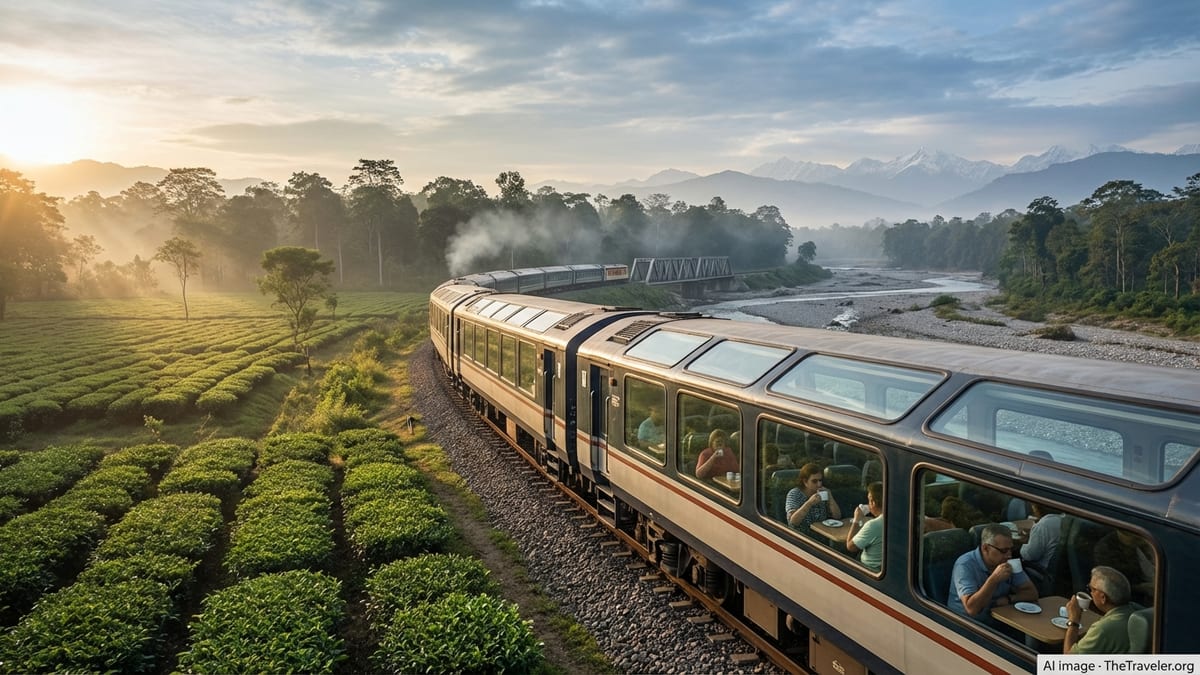
Tourist Express Puts Dooars’ Classic Scenic Route in the Spotlight
At the heart of the Dooars rail revival is the New Jalpaiguri–Alipurduar Tourist Express, a dedicated tourist train that has become the flagship for rail-based sightseeing in North Bengal. Introduced in August 2021 and now running daily, the service links New Jalpaiguri Junction with Alipurduar Junction over 168 kilometres of some of the sub-Himalayan region’s most dramatic landscapes. The train is operated by the Northeast Frontier Railway and is built around comfort and visibility, with modern LHB coaches and multiple classes including standard chair cars, second sitting and premium Vistadome-style executive coaches offering sweeping views.
The route has quickly earned a reputation as one of India’s most scenic daytime journeys. Over a relaxed schedule of around five hours and forty minutes, the train threads past lush tea gardens, river valleys and dense forests that form part of the Terai and Dooars belt. Travellers gaze out over the Mahananda Wildlife Sanctuary, cross the iconic Sevoke Railway Bridge, and follow glacier-fed rivers such as the Teesta and Jaldhaka as they spill out of the eastern Himalayas into the plains. Large windows and comfortable seating turn the journey itself into a full-fledged excursion rather than simply a transfer between destinations.
For tourism stakeholders in North Bengal, the train has provided a reliable, repeatable product that tour operators can package throughout the year. Its daytime timings allow day-trippers from Siliguri as well as longer-stay visitors headed for forest lodges and homestays near Jaldapara National Park, Buxa Tiger Reserve and Chapramari Wildlife Sanctuary. On select days, passengers are welcomed by local dance and cultural performances at smaller stations such as Chalsa and Hasimara, turning routine halts into curated experiences that celebrate Dooars’ communities alongside its landscapes.
Vistadome Coaches and a New Era of Scenic Rail Experiences
The Tourist Express’ signature draw is its Vistadome-style coach, introduced to the Dooars sector as part of a broader Indian Railways push to develop glass-domed, panoramic services in high-scenic corridors. The coach is fitted with large, side-to-ceiling windows, glass panels in the roof and rotating recliner seats so passengers can pivot toward river crossings, forest stretches or tea garden vistas without obstruction. Air conditioning, modern interiors and an in-coach entertainment system complete the experience, aligning the product with international tourist trains found in Europe and South America.
The idea is to turn the slow pace of the route into an advantage. Travelling at an average speed of around 29 kilometres per hour, the train lingers over river bridges and forest edges, giving wildlife enthusiasts and photographers a chance to scan for elephants, deer and birdlife along the tree line. The route also connects to key gateways for safaris in Jaldapara and Buxa, where visitors hope to spot one-horned rhinos, leopards and a wide range of migratory birds. For many travellers, the combination of a glass-roofed coach and a wildlife-rich corridor makes the Dooars Vistadome one of the most immersive rail journeys currently available in India.
Despite its strengths, railway officials have recently acknowledged that the premium coach has not always run at full capacity, especially outside peak holiday seasons. Discussions within the Northeast Frontier Railway have explored schedule changes and even potential route tweaks via Malbazar and Gorumara to better align with tourist flows and connect additional forest destinations. Local tour operators argue that fine-tuning departure times, particularly from New Jalpaiguri, could dramatically improve load factors by making it easier for overnight arrivals from Kolkata and other cities to board the train the same morning.
New Capacity on Feeder Corridors Supercharges Access
The surge in interest in the Dooars is not only about one tourist train. A wave of rail infrastructure approvals and upgrades across North and East India is quietly reshaping how quickly travellers can reach New Jalpaiguri and the wider Northeast Frontier Railway network. In mid-2025, the Union Cabinet cleared construction of additional third and fourth lines between Aluabari Road and New Jalpaiguri in North Bengal, a critical trunk section that carries long-distance trains from Kolkata, Delhi and other metros into the region. The new lines are designed to expand capacity, reduce congestion and make room for more passenger and tourist-oriented services alongside heavy freight.
Parallel moves in neighbouring states are also set to benefit Dooars-bound itineraries. The Cabinet’s approval of the doubling of the Bhagalpur–Dumka–Rampurhat corridor, which cuts across Bihar, Jharkhand and West Bengal, is expected to shorten journey times and make it easier to schedule through-services connecting the Ganges basin to North Bengal. Tourism planners say that these incremental projects, once completed, will collectively remove bottlenecks that have long constrained the number and punctuality of trains feeding into New Jalpaiguri, Siliguri and Alipurduar.
Industry insiders note that for travellers, the impact will be felt less in the form of dramatic new flagship trains and more through subtle improvements: more choice of departure times from major cities, fewer delays during the busy winter and autumn festival seasons, and better chances of securing berths on popular routes. For resorts in Lataguri, Madarihat and Jayanti, and homestays in small tea villages across the Dooars, this translates into a more stable flow of guests and easier logistics for bundled rail-and-stay packages.
High-Speed Vision Brings Dooars Closer to the Heartland
Even as conventional lines are upgraded, the most transformative announcements for North Bengal have come in the form of proposed high-speed rail corridors. In the 2026–27 Union Budget, the government identified a future Varanasi–Siliguri high-speed route as part of an expanded national grid of bullet train lines. Although still at the feasibility-study stage and likely many years away from operation, the corridor is intended to connect Bihar and northern West Bengal to the country’s emerging network of 300 to 350 kilometre-per-hour services.
For Dooars tourism, the significance of this plan lies in dramatically reduced access times from central and northern India. Today, many travellers from cities such as Varanasi or Lucknow rely on overnight express trains or multi-leg journeys to reach New Jalpaiguri, often taking 11 to 17 hours. With a mature high-speed network linking Delhi to Varanasi and onward to Siliguri, the same trip could, in time, be compressed into a handful of hours. Tour operators in Siliguri and Alipurduar are already discussing how such a shift could recast the Dooars as a viable long-weekend destination for a far wider catchment of travellers.
Officials and analysts caution that high-speed rail remains a long-horizon project, with detailed surveys, land acquisition and financing still ahead. Yet the inclusion of the Varanasi–Siliguri link in the national blueprint sends a strong signal about the centrality of North Bengal to India’s future mobility map. Combined with existing tourist trains and incremental capacity enhancements, it underlines a strategic bet that the Eastern Himalayas, including the Dooars, will anchor a growing share of the country’s domestic tourism economy over the coming decades.
New Premium Services Elevate the Rail Experience into North Bengal
While the Dooars Vistadome train has become the face of scenic travel within North Bengal, other new services are upgrading long-haul access into the region. In January 2026, the Northeast Frontier Railway launched the Howrah–Kamakhya Vande Bharat Sleeper Express, India’s first sleeper-configured Vande Bharat service, connecting Kolkata with Guwahati via New Jalpaiguri and New Bongaigaon. The fully air-conditioned, semi-high-speed train operates six days a week, pairing faster journey times with modern amenities such as large panoramic windows, improved suspension and on-board catering tailored for overnight travellers.
For tourists heading to the Dooars, the train effectively raises the comfort bar for the long east–west stretch from Kolkata. Overnight passengers can disembark at New Jalpaiguri in the morning, connect to the Tourist Express or regional trains, or proceed by road to forest resorts. Travel agents in Kolkata describe a noticeable uptick in enquiries for North Bengal packages that combine a Vande Bharat leg with at least one scenic regional train or road safari. The perception of rail travel to the Northeast as slow and utilitarian is gradually being replaced by an image of clean, modern and comparatively swift services.
Railway planners say that the Vande Bharat Sleeper is also a testbed for adding premium capacity on other corridors feeding into the Northeast Frontier zone. Success on the Howrah–Kamakhya axis could pave the way for additional semi-high-speed services that pass through New Jalpaiguri or nearby junctions, effectively layering different types of trains atop the same upgraded infrastructure to cater to budget, mid-range and premium travellers alike.
Local Tourism Industry Rides a Wave of New Demand
On the ground, hoteliers, homestay owners and adventure operators in the Dooars describe a palpable shift in visitor patterns as new and improved trains come online. Easier rail access has broadened the region’s appeal beyond its traditional base of tourists from Kolkata and other parts of West Bengal. Increasingly, families and young travellers are arriving from Bihar, Jharkhand, Uttar Pradesh and even farther afield, often with itineraries that pair a Dooars forest stay with a few days in Darjeeling, Gangtok or Kalimpong.
Homestay associations report that the reliability of daytime tourist trains has encouraged more visitors to opt for public transport rather than private cars or taxis, reducing trip costs and, in some cases, lowering the environmental footprint of their journeys. The ability to book rail tickets well in advance, combined with the predictability of fixed tourist services, has made it easier for small operators to guarantee check-in times and coordinate transfers from lesser-known stations such as Hasimara, Rajabhatkhawa and Chalsa.
At the same time, the rapid growth in arrivals is sharpening the focus on carrying capacity and sustainability. Forest departments and local administrations are increasingly mindful of balancing tourist numbers with the need to protect sensitive wildlife corridors, particularly along sections of track that cut through elephant habitats. There is renewed attention on enforcing speed restrictions in designated stretches, improving fencing and signage, and educating visitors about responsible behaviour near railway lines and forest edges.
Balancing Scenic Demand with Sustainability and Safety
The very attributes that make Dooars rail journeys so compelling also pose challenges for operators and policymakers. Tracks that run close to rivers and forests are vulnerable to monsoon-related erosion and landslides, while the presence of wildlife near the line requires constant monitoring. Railway engineers and forest officials routinely coordinate on track maintenance, culvert design and vegetation management to minimise disruptions and reduce the risk of animal–train collisions, especially during the night and in foggy winter conditions.
Environmental advocates argue that the expansion of tourism-linked services must be matched by investments in safety and mitigation. They point to the need for more underpasses and overpasses for animal movement, better early-warning systems in known elephant corridors, and stricter enforcement of speed limits where fauna frequently cross tracks. For their part, railway authorities emphasise that new infrastructure, such as additional lines and modern signalling, allows them to manage train flows more precisely, potentially reducing unscheduled halts and idling in sensitive stretches of forest.
Within the tourism sector, there is growing interest in positioning rail travel as the preferred, lower-impact way to reach the Dooars compared with private cars or short-haul flights. Travel companies are experimenting with packages that include carbon-footprint information, encourage longer stays rather than rapid-fire hopping between multiple destinations, and spotlight community-led experiences in villages along the rail corridor. If managed carefully, industry experts say, the boom in Dooars rail tourism could support both livelihoods and conservation rather than setting the two in opposition.
What Travellers Can Expect in the Coming Seasons
For travellers planning a trip in late 2026 and beyond, the message from both railway officials and local businesses is clear: expect more trains, more flexibility and a steadily improving experience, rather than a single game-changing service. As additional capacity comes online between Aluabari Road and New Jalpaiguri and along connecting routes, railway timetables are likely to see minor but meaningful tweaks that give visitors more options to arrive in Siliguri and the Dooars at convenient times of day.
Seasoned North Bengal operators recommend that visitors build at least one long scenic train segment into their itinerary, whether on the New Jalpaiguri–Alipurduar Tourist Express or another daylight service threading through tea gardens and river valleys. With premium options such as the Howrah–Kamakhya Vande Bharat Sleeper offering a more comfortable overnight leg from Kolkata, it is increasingly possible to craft a completely rail-based holiday that feels both efficient and experiential.
As India’s broader rail modernisation gathers pace, the Dooars stand out as a case study in how targeted tourist trains, capacity upgrades and future high-speed visions can combine to transform a remote, biodiverse landscape into an accessible yet still largely unspoiled escape. For now, the ultimate scenic experience in the Dooars remains firmly tied to the rhythm of the rails, as travellers settle into their seats, tilt their heads toward the glass and watch the forests and rivers of North Bengal roll slowly by.