

More news on this day
Air travel through Calgary International Airport faced renewed disruption today, with 52 delayed flights and three cancellations affecting services by Air Canada, WestJet, United Airlines, KLM and Porter to key hubs in Canada, the United States, Mexico and Europe.
Get the latest news straight to your inbox!
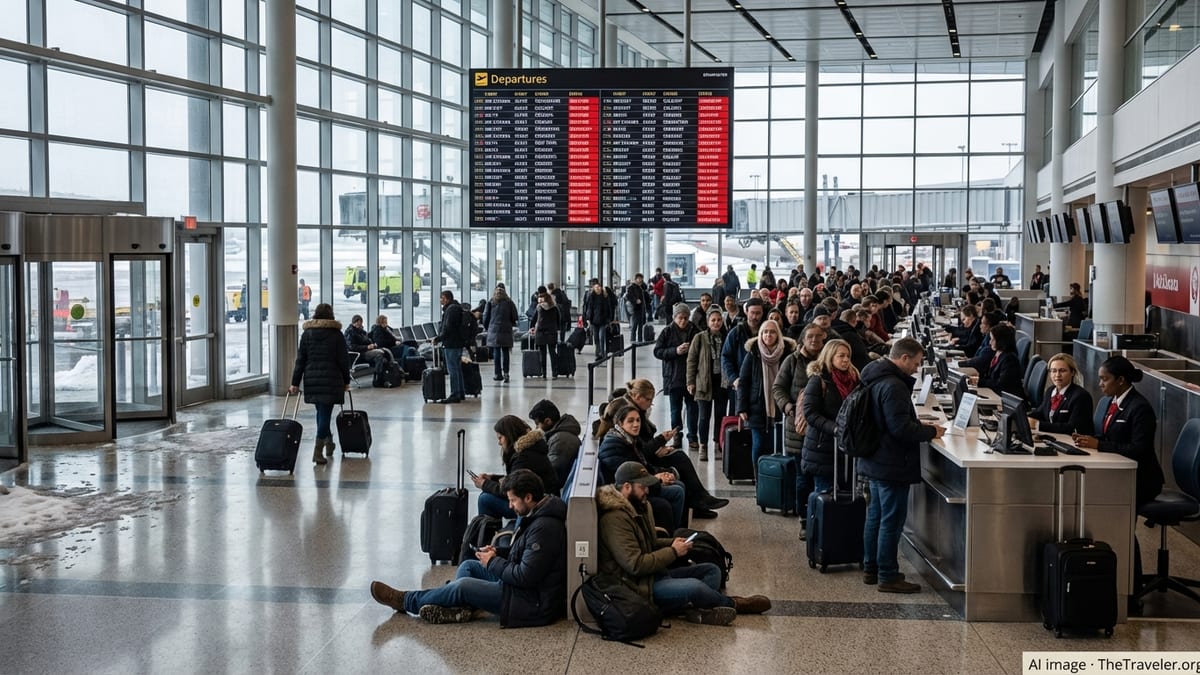
Delays Mount at Calgary as Operations Strain
Publicly available airport and aviation tracking data indicate that Calgary International Airport has logged 52 flight delays and three cancellations within a single operational window, concentrating disruption among major carriers Air Canada, WestJet, United Airlines, KLM and Porter. The issues are affecting a mix of domestic and international services, particularly routes linking Calgary with Toronto, Vancouver, Montreal, Paris, Tokyo and Cancun.
Calgary’s role as a major western Canada hub means even a modest number of local schedule changes can rapidly cascade across airline networks. Recent operational summaries for Canadian airports show that when Calgary records several dozen delays and low single-digit cancellations, those figures combine with higher volumes at Toronto, Montreal and Vancouver to create a broader national picture of disruption.
Published coverage of Canadian air travel in late March and early April 2026 points to recurring operational pressures at Calgary, including weather-related slowdowns and knock-on effects from busy transcontinental and transborder schedules. Aviation enthusiasts and passenger reports have also highlighted recent ground stops and holds that contributed to earlier rounds of delays, suggesting today’s figures are part of a continuing pattern of strain on schedules.
While the absolute number of cancellations at Calgary remains limited compared with larger hubs, the 52 delays are significant in a market where many flights serve as critical connections onward to other Canadian cities and major international gateways. Even short disruptions on those departures and arrivals can lead to missed onward flights and extended travel times for passengers.
Ripple Effects Across Canada, the United States and Mexico
The disruption at Calgary is being felt well beyond Alberta. According to recent nationwide tallies, Toronto Pearson, Montreal–Trudeau and Vancouver International have all endured heavy delay burdens in recent days, with Toronto and Montreal in particular reporting substantial numbers of delayed and cancelled flights. When Calgary’s schedule is unsettled at the same time, the resulting network effects intensify, especially for passengers travelling on multi-leg itineraries.
Routes connecting Calgary with Toronto, Vancouver and Montreal form the backbone of many domestic and international journeys, serving as feeders to long-haul flights destined for the United States, Mexico and Europe. Delays on these domestic legs can cause tight connections at major hubs to be missed, forcing rebookings onto later flights or even next-day departures, depending on seat availability.
Services between Calgary and popular leisure destinations such as Cancun are particularly vulnerable during periods of disruption. Recent travel-industry reporting has highlighted the sensitivity of sun destination schedules to any operational or weather-related setback in Canada, where winter and shoulder-season conditions can change quickly and interfere with punctual operations. When a single Calgary–Cancun rotation runs late, the return flight may also be delayed, compounding inconvenience for passengers at both ends.
Connections into the United States are also affected. United Airlines’ operations through Calgary feed into a wider North American network, and any delay departing Calgary can have follow-on effects for flights out of American hubs. In an already busy North American airspace environment, a localized disruption in western Canada can therefore contribute to broader scheduling challenges for transborder travellers.
Transatlantic and Transpacific Routes Face Knock-On Disruptions
The current wave of irregular operations at Calgary is intersecting with key long-haul corridors, particularly services to Europe and Asia. Published data from earlier disruption events show that KLM and other transatlantic carriers have previously faced Calgary-related delays, with even a single late or cancelled departure influencing connections in Amsterdam and beyond. With Paris cited among today’s affected destinations, European-bound passengers from Calgary face heightened risk of missed onward flights within Europe.
Long-haul itineraries between Calgary and Tokyo, often routed via Vancouver, Toronto or other partner hubs, can be especially susceptible to relatively small schedule slips at the start of a journey. When a Calgary–Vancouver or Calgary–Toronto leg departs behind schedule, minimum connection times for transpacific departures may no longer be met, obliging airlines to reroute customers through alternative gateways or place them on later flights.
Industry commentary over the past year has emphasized how long-haul operations rely on tightly timed aircraft and crew rotations. A delayed wide-body arrival to Calgary can push back the next departure, which in turn may arrive late at an overseas hub and affect follow-on segments the next day. This pattern appears to be repeating as Calgary’s mix of domestic, transborder and intercontinental flights strains to absorb the present round of delays.
For passengers, the practical impact often manifests as longer layovers, unexpected overnight stays and the rebooking of connecting segments on partner airlines. While cancellations at Calgary remain relatively limited in number, the timing and placement of delayed flights within long-haul networks mean that the disruption can feel more severe for those undertaking complex itineraries.
Airlines Balance Recovery Schedules and Passenger Rights
Publicly accessible schedule and performance data show Air Canada and WestJet carrying the bulk of traffic through Calgary, with newer competitors such as Porter building a growing presence on select routes. When irregular operations arise, these carriers must juggle recovery flying, crew duty limitations and aircraft availability while also complying with passenger rights frameworks in Canada and, where applicable, foreign jurisdictions.
Recent guidance documents and consumer-focused publications on Canadian air passenger protection rules outline entitlements that depend on the cause and length of a delay or cancellation, as well as whether a flight is domestic, transborder or international. For flights touching the United States or Europe, additional regulatory regimes, including American transportation rules and European compensation frameworks, can come into play, adding further complexity to how disruptions are managed.
The current pattern of delays and scattered cancellations at Calgary highlights the challenge carriers face when separate regulatory systems overlap on a single multi-leg itinerary. A passenger travelling from Calgary to Paris via Toronto or from Calgary to Cancun via another hub may interact with different sets of passenger rights on each segment, depending on which country’s rules apply and how responsibility for the disruption is assigned.
Travel-industry analysts note that airlines increasingly encourage customers to monitor their bookings through mobile apps and digital channels, where rebooking options, travel waivers and digital vouchers can be processed more quickly during disruption events. The present round of delays at Calgary is likely testing these systems, as multiple carriers work concurrently to stabilize their schedules and move affected travellers onward.
What Travellers Through Calgary Should Expect Next
Given Calgary International Airport’s experience with intermittent weather and operational bottlenecks over recent weeks, reports suggest that travellers planning to pass through the hub should continue to anticipate potential schedule changes. Historical patterns indicate that even after an initial disruption day, residual delays can linger as airlines reposition aircraft and crews.
Passenger discussions and online travel forums frequently emphasize the value of longer connection times through Calgary when possible, particularly for those linking into long-haul flights to Europe or Asia. With 52 delays recorded today alongside a smaller number of cancellations, itineraries that previously appeared comfortably timed may now be at higher risk of misconnection if inbound flights slip further behind schedule.
For those already en route, publicly available guidance recommends keeping boarding passes, receipts and written confirmations of any delay or cancellation, which may be necessary when seeking compensation or reimbursement under airline policies or applicable regulations. Travellers whose plans involve multiple airlines, such as a combination of Air Canada, United or KLM segments, may need to engage with more than one carrier to resolve disrupted journeys.
While conditions at Calgary can improve quickly once weather and traffic flows normalize, the present disruptions underscore how a relatively small cluster of delays and cancellations at a key Canadian hub can have disproportionate effects across domestic, transborder and intercontinental networks, touching cities from Toronto and Vancouver to Paris, Tokyo and Cancun.