

More news on this day
Passengers at George Bush Intercontinental Airport in Houston faced significant disruption as 97 flight delays and 11 cancellations rippled through the schedule, compounding existing strains on one of the nation’s busiest aviation hubs.
Get the latest news straight to your inbox!
Heavy Disruptions Hit a Key U.S. Hub
The disruption at Houston’s main international gateway unfolded against the backdrop of already heightened pressure on air travel. Publicly available tracking data showed dozens of departures and arrivals pushed back, with delays ranging from modest schedule slips to multi-hour holdups. Cancellations, while fewer in number, added to the sense of uncertainty for travelers attempting to connect through the airport.
George Bush Intercontinental Airport is a major hub for domestic and international traffic, handling tens of millions of passengers each year. The concentration of connections through Houston means that even a limited number of local disruptions can cascade across airline networks, affecting itineraries far beyond Texas. With 97 delayed flights logged on the board on the affected day, the operational knock-on effect extended well into the afternoon.
Reports indicate that airlines relied heavily on rebooking systems and digital notifications to manage the backlog. Passengers were encouraged to use mobile apps and self-service kiosks for updated departure times, gate changes and same-day itinerary adjustments, a pattern that has become increasingly common during periods of irregular operations.
The timing of the disruption coincided with elevated travel demand linked to spring events and business travel. As a result, many flights were operating near capacity, leaving fewer spare seats for rebooked customers and compounding the challenge of accommodating those displaced by cancellations.
Weather, Staffing and System Strain Converge
While the immediate causes of the 97 delays and 11 cancellations varied by flight, recent patterns show that operations at Houston have been pressured by a mix of weather, staffing and wider system constraints. Thunderstorms and fast-changing weather in southeast Texas frequently trigger ground delays, air traffic flow restrictions and holding patterns, all of which ripple through the schedule at a hub airport.
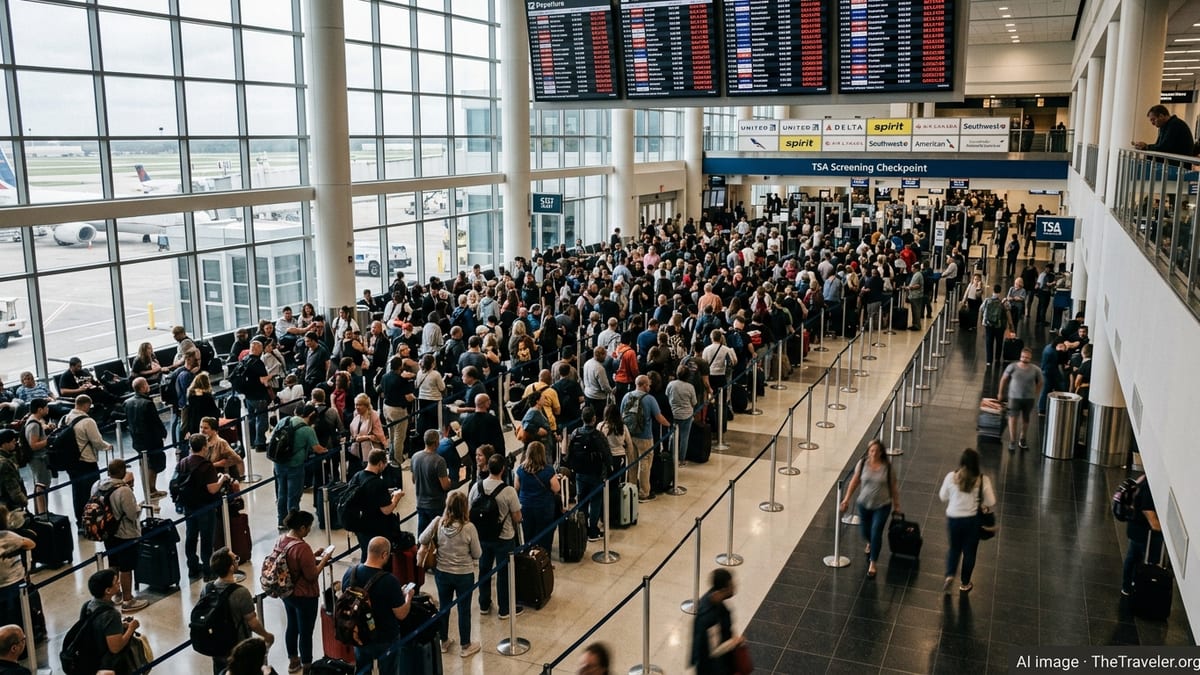
In parallel, national reports describe ongoing strains on security and screening capacity. Publicly available information over recent days has highlighted extended wait times at checkpoints at Bush Intercontinental, with travelers sharing accounts of multi-hour queues. Even when weather conditions are favorable, prolonged processing at security and check-in can delay boarding and push back departure slots, complicating efforts to keep the day’s operation on time.
Houston’s role in the broader air traffic network further amplifies these challenges. The airport sits within the busy Houston Air Route Traffic Control Center airspace, which manages high volumes of flights over the Gulf Coast and southern United States. When storms, congestion or staffing issues affect this region, route adjustments and flow limitations can slow departures and arrivals into Houston, forcing airlines to pad schedules or hold flights on the ground.
Operational bulletins and industry analyses have also pointed to residual effects from large-scale weather systems across North America in recent weeks, which have tightened aircraft and crew availability. When aircraft arrive late from other affected cities, subsequent Houston departures have less margin to recover, increasing the likelihood that earlier disruptions will spill into later bank periods.
Passenger Experience: Long Lines and Frayed Connections
For many travelers, the numbers on the departure board translated into long waits and a scramble to rescue time-sensitive plans. Social media posts and traveler forums from the Houston area in recent days describe extended security queues and crowded gate areas as passengers attempted to navigate changing departure times and uncertain connections.
Reports indicate that the most impacted travelers were those on tight layovers, as even minor delays left limited room to cross between terminals or clear additional security checks where required. At a multi-terminal hub with both an airside train and underground people mover systems, extra transit time between gates can become critical when boarding is compressed by upstream delays.
Families traveling with children and international passengers with complex itineraries appeared particularly vulnerable to the disruption. Rebooking across multiple segments, navigating customs and immigration requirements and adjusting hotel and ground transport plans added layers of complexity beyond the stress of a single delayed flight. With 11 flights canceled outright, some passengers faced overnight stays or complete rerouting via other hubs.
Travel industry observers note that the strain in Houston reflects a broader pattern seen at several large U.S. airports during peak travel periods. When staffing, weather and aircraft availability all tighten at once, the system has limited spare capacity, leaving travelers exposed to longer lines and higher odds of missed connections.
Operational Responses and Ongoing Recovery Efforts
Airlines operating at Bush Intercontinental moved to stabilize schedules as the disruption unfolded, drawing on standard irregular-operations playbooks. Publicly available information shows that carriers consolidated some lightly booked flights, added larger aircraft on select routes where possible and prioritized restoring core hub connections that feed the widest range of onward destinations.
Airport operations teams focused on crowd management in key pinch points such as check-in halls, security checkpoints and boarding areas. Messaging on terminal displays and public channels urged passengers to arrive early, verify their flight status before leaving home and allow extra time to move between terminals. These measures aimed to reduce last-minute surges and help keep the remainder of the day’s operation predictable.
Industry data suggests that once a morning or early afternoon bank suffers heavy delays, it can take many hours for the operation to reset. Turn times for aircraft get compressed, crews approach duty limits and available gates become bottlenecks as late arrivals overlap with scheduled departures. The 97 delays logged at Houston represented not just isolated incidents but a significant test of how much disruption the system can absorb before schedules have to be thinned to regain stability.
Observers note that recent capital investment and terminal modernization at Houston are designed, in part, to give airlines and the airport more flexibility during irregular operations. Additional wide-body capable gates, expanded hold rooms and reconfigured security areas are expected to make it easier to reroute passengers and redistribute crowds when large banks are affected.
What Travelers Can Expect in the Coming Days
With the immediate disruption centered on a single day of 97 delays and 11 cancellations, attention now turns to how quickly operations at Bush Intercontinental can normalize. Published schedule data indicates that airlines intend to operate a full slate of flights in the coming days, though some residual delays are possible as aircraft and crews are repositioned.
Travel experts advise passengers flying through Houston to monitor their bookings closely, particularly those with early morning departures or evening connections that are more vulnerable to knock-on effects from earlier disruptions. Building additional buffer time into connections, checking in online and arriving at the airport well ahead of departure remain widely recommended strategies.
For those with flexibility, selecting mid-day flights may offer a modest advantage, as these departures can sometimes benefit if morning operations recover faster than expected. However, given the hub role of Bush Intercontinental, any new weather issues or system-wide constraints could again tighten available slack, making advance preparation and real-time monitoring crucial.
The day of 97 delays and 11 cancellations underscores the sensitivity of large hub airports to even short-lived shocks. As travel demand remains strong and the aviation system continues to operate close to capacity, episodes of concentrated disruption in Houston are likely to have outsized visibility, reinforcing the importance of resilient infrastructure, robust staffing and clear communication with passengers.