

More news on this day
Travelers across the United States are facing fresh disruption this morning as more than 60 departures and arrivals involving Southwest Airlines, United Airlines, British Airways and regional carrier SkyWest have been delayed at Denver International Airport, with three flights cancelled and knock-on impacts reported for passengers originating in Los Angeles, Chicago, New York and other major U.S. cities.
Operational Snarls Hit Key Routes Through Denver
The wave of delays at Denver International Airport began building in the early hours, as ground operations and aircraft rotations fell behind schedule on several high-demand routes. Airline data showed a concentration of delayed departures and arrivals on flights linking Denver with coastal and Midwestern hubs, particularly Los Angeles, Chicago and New York, where aircraft and crews are tightly scheduled.
By midmorning, a combined total of roughly 60 flights involving Southwest, United, British Airways and SkyWest had been pushed back, some by less than half an hour but others by more than an hour. While the majority of services were still expected to operate, three flights were cancelled, forcing passengers to rebook and stretching already busy customer service teams at the airport.
Denver serves as a major connecting hub for both domestic and transatlantic traffic, which has heightened the impact of the disruption. A delayed departure from Los Angeles or Chicago can cascade into missed connections for travelers bound for mountain destinations in Colorado or onward international services, compounding frustration across the network.
Airport officials said they were monitoring the situation closely and working with airline station managers to prioritize connections where possible. However, with many flights running near capacity at the tail end of the busy winter travel period, options for same-day rebooking were limited on some routes.
Passengers Face Long Lines, Missed Connections and Uncertain Plans
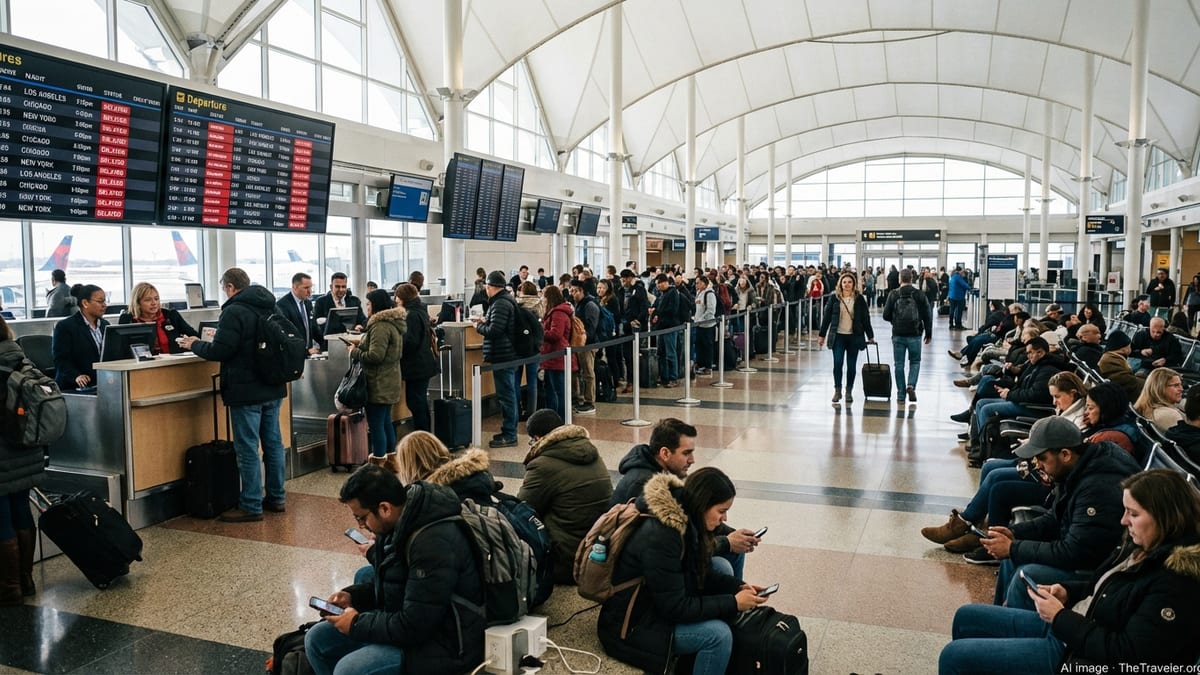
Inside Denver International’s concourses, the delays were immediately visible in growing crowds around departure boards and service counters. Families returning from ski trips, business travelers trying to make meetings on the East Coast, and international passengers heading for onward connections all reported being caught up in the disruption.
Passengers arriving from Los Angeles and Chicago on delayed inbound flights found their connections to New York and other major cities already boarding or closed, leaving them scrambling to secure alternative options. Those holding separate tickets for domestic and international segments were especially vulnerable, as they often lack the automatic protection and rebooking support offered on a single itinerary.
Customer service lines for Southwest and United snaked through sections of the terminal as travelers sought meal vouchers, hotel accommodations or new flights. Airline staff, facing a crush of rebooking requests, warned some customers that the next available seats out of Denver to key hubs might not be until later in the day or even the following morning.
The atmosphere in the departure halls oscillated between resigned patience and rising frustration. While many travelers expressed understanding that delays are an inevitable part of air travel, others criticized what they saw as a lack of timely communication about schedule changes and gate shifts, particularly through airline apps and text alerts.
Airlines Cite Tight Turnarounds and Weather Upstream
Airline representatives pointed to a combination of factors behind the morning’s disruption, including tight aircraft turnarounds at busy hubs, earlier weather-related slowdowns at outstation airports, and minor mechanical checks that pushed some departures beyond their scheduled times. Even relatively short holdups on a handful of flights can ripple through a tightly choreographed daily schedule.
United and Southwest, both of which operate large Denver hubs, were managing late inbound aircraft from other parts of the country, including congested airports in the Midwest and on the East Coast. A late-arriving plane from Chicago or New York can easily delay its onward leg from Denver, particularly when crew duty-time limits and required maintenance windows come into play.
British Airways, which operates transatlantic services linking Denver with London, was also affected, with arriving passengers facing tighter-than-usual connection windows to domestic partners. SkyWest, flying regional routes under major-carrier brands, reported delays on several feeder flights into Denver, which in turn affected passengers connecting to long-haul services.
While conditions at Denver itself remained relatively stable, airline operations managers said they were still working through residual effects from earlier days of nationwide disruptions, where winter weather and congestion at other hubs had thrown off normal patterns for aircraft and crew positioning.
Guidance for Stranded Travelers at Denver International
Travel experts advise passengers caught up in Denver’s delays to act quickly but calmly. Those with upcoming departures are encouraged to check their airline’s app or website frequently rather than relying solely on fixed departure board times, as estimated departure and arrival times can shift rapidly in fluid conditions.
Travelers who face missed connections are generally advised to contact their airline’s customer service via app chat, phone or social media while also queuing at the airport, increasing the chance of securing scarce seats. For passengers whose flights are cancelled outright, rebooking options are often more flexible, but wait times can be longer as entire planeloads of customers seek alternatives.
At Denver International, additional seating areas and charging points in the concourses offered some relief to those waiting out extended delays. Airport staff reminded passengers to hold onto receipts for meals and incidentals in case they qualify for reimbursement under airline policies or, on international itineraries, under applicable passenger-protection rules.
With the day’s schedule still unfolding, airlines were working to clear backlogs and return operations to a more normal rhythm. For now, though, Denver’s role as a central crossroads in the U.S. aviation network means that even a relatively contained cluster of delays and cancellations can have outsized consequences for travelers from Los Angeles, Chicago, New York and far beyond.