

More news on this day
Travelers passing through San Jose Mineta International Airport on Friday faced mounting disruption as 39 flights were reported delayed, affecting a mix of domestic and international routes on American Airlines, Delta Air Lines, United Airlines and Alaska Airlines bound for Seattle, Los Angeles, Chicago, New York and Mexico City.
Get the latest news straight to your inbox!
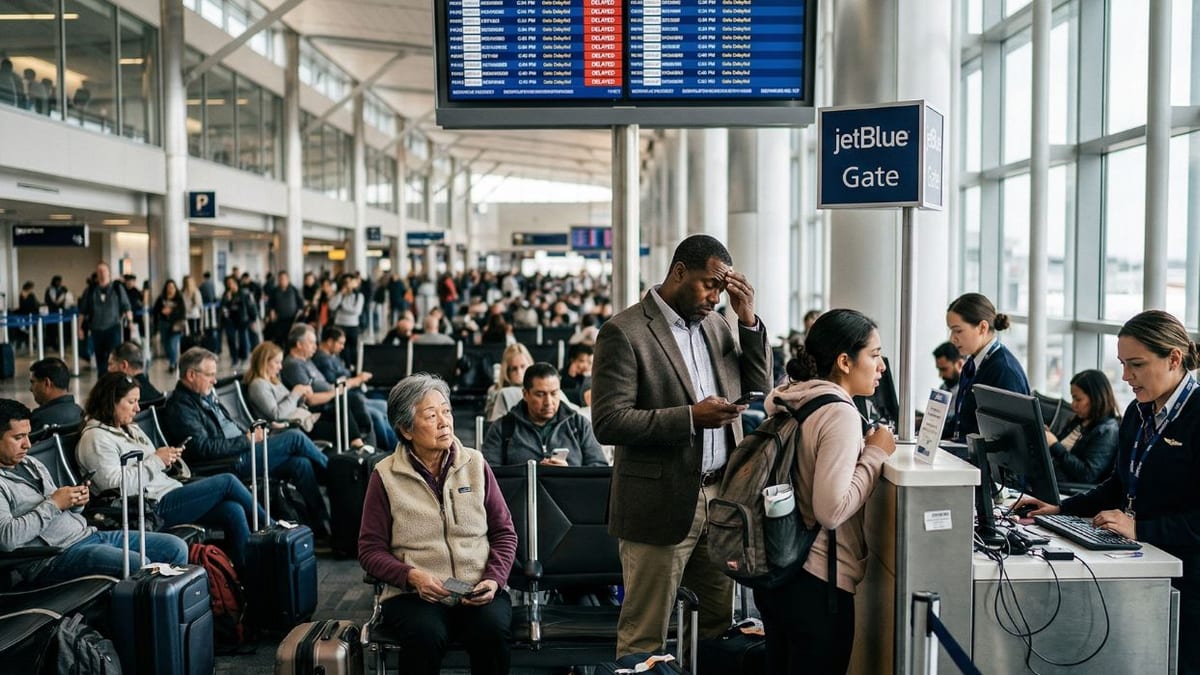
Wave of Delays Disrupts Key West Coast Gateway
Published flight-status dashboards and aviation tracking platforms showed a concentrated cluster of delays at Mineta San Jose International Airport, with 39 departures and arrivals pushed back from their scheduled times. The disruption touched several of the airport’s busiest corridors, including short-haul links to Seattle and Los Angeles and longer routes serving major hubs in Chicago and New York, as well as cross-border traffic to Mexico City.
Publicly available data indicate that the affected services were spread across the morning and afternoon peaks, extending wait times at gates and check-in counters. While some aircraft departed with modest delays, others were held long enough to create a ripple effect for passengers with onward connections through large hub airports.
Airport schedule documents and route maps show that American Airlines, Delta Air Lines, United Airlines and Alaska Airlines collectively operate a dense web of frequencies between San Jose and these key cities. That concentration of service means even a few dozen delayed flights can be felt widely, particularly for travelers relying on tight layovers to reach destinations across the United States and Latin America.
Operational summaries from recent months already placed San Jose among mid-sized US airports where roughly one in seven flights can experience some form of delay during busy periods. The latest disruptions fit into that broader national pattern, where weather, air traffic control constraints and airline scheduling pressures have combined to produce intermittent surges of late-running services at multiple hubs.
American, Delta, United and Alaska Among Most Affected
According to published coverage and airline route information, the carriers most exposed to Friday’s problems at San Jose were American Airlines, Delta Air Lines, United Airlines and Alaska Airlines, each of which maintains multiple daily links to at least one of the affected destinations. Schedules show Alaska and Delta with strong presences on West Coast shuttle-style routes to Seattle and Los Angeles, while American and United lean heavily on Chicago and New York as connection points for domestic and international networks.
Industry delay statistics compiled over the past two years suggest that Delta and Alaska typically record relatively strong on-time performance compared with some competitors, while American and United manage larger volumes across sprawling hub systems. When irregular operations occur at a spoke airport such as San Jose, even carriers with solid reliability metrics can see punctuality deteriorate quickly as aircraft and crews fall out of their planned rotations.
Network maps illustrate how closely intertwined these operations are. A delayed San Jose departure to Seattle can cause missed evening links to Anchorage or the US Midwest, while a late pushback on a San Jose to Los Angeles or Chicago service may imperil onward flights to the East Coast, Europe or Central America. In that context, a tally of 39 delayed flights at a single field in one day can translate into hundreds of disrupted connections elsewhere.
Public reports on previous nationwide disruption days highlight similar patterns, with American, Delta, United and Alaska frequently appearing among the larger carriers most affected simply because of their scale. Analysts note that as demand for air travel has rebounded, these airlines have less slack in their fleets and staffing, leaving schedules more susceptible to cascading impacts from even minor operational hiccups.
Routes to Seattle, Los Angeles, Chicago, New York and Mexico City Hit Hardest
San Jose’s published schedules show that services to Seattle and Los Angeles rank among its highest-frequency routes, with multiple daily departures marketed by Alaska, Delta, American, United and other carriers. Any disruption on these corridors tends to be highly visible to travelers, as crowded departure boards quickly fill with revised times and gate changes.
Connections to Chicago and New York, while less frequent than the short-haul West Coast shuttles, are critical long-haul links. Chicago O’Hare and New York’s major airports serve as indispensable hubs for one-stop journeys to the East Coast, Midwest and overseas destinations. Delays on these flights can be especially problematic for business travelers and international passengers whose itineraries leave little margin for missed transfers.
Cross-border services to Mexico City add another layer of complexity. According to airport announcements and route-launch statements, San Jose has positioned itself as a growing gateway for Silicon Valley travelers heading to key Latin American markets, including the Mexican capital. When flights on that route are delayed, passengers may face more limited rebooking options than on dense domestic corridors, potentially extending disruptions over multiple days.
Travel behavior studies suggest that these five destinations collectively account for a significant share of San Jose’s outbound traffic, both for leisure and corporate travel. As a result, even a short burst of irregular operations targeting these particular routes can give the impression of systemwide turmoil for passengers passing through the airport on a busy day.
National Pattern of Strain on US Airline Operations
The San Jose disruption comes amid a broader period of strain across the US aviation network. Recent analyses of delay and cancellation data point to repeated waves of operational difficulty at major hubs such as Atlanta, Chicago, Los Angeles, Houston, Denver, Boston and Las Vegas, driven by a mix of thunderstorms, congestion in key airspace segments and staffing challenges in both airline and air traffic control operations.
On some of the most challenging days, publicly reported tallies have reached into the thousands of delayed flights nationwide, with triple-digit cancellation counts. In that environment, smaller but still significant clusters of delays at secondary airports like San Jose can either originate from or contribute to systemwide knock-on effects.
Industry observers note that delays no longer remain confined to a single geographic region. A bottleneck at a hub such as Chicago O’Hare can slow aircraft rotations feeding West Coast routes, while weather over the Rockies or the Northeast can reverberate throughout the network by forcing reroutes, longer flight times or temporary ground stops. San Jose’s latest wave of 39 delays appears consistent with this pattern of interconnected congestion.
Historical data from federal transportation agencies indicate that roughly one in five US flights can be delayed on busier travel days, with average waits approaching two hours for impacted passengers. While performance has improved in some periods, the overall picture remains one of recurring stress on a network operating close to capacity, particularly during holiday peaks, summer storms and weekend getaway surges.
What Travelers Can Do as Disruptions Continue
With San Jose’s latest disruptions adding to a season of elevated delay risk, aviation experts and consumer advocates continue to emphasize basic strategies for minimizing the impact of late-running flights. Public guidance commonly highlights the importance of monitoring flight status through airline apps and airport information boards, allowing travelers to spot schedule changes as early as possible.
Many airlines now issue automated alerts by text message or push notification when departure times shift, gates change or connections look vulnerable. Passengers who respond quickly often have a better chance of securing alternative routings through other hubs or adjusting seats on later departures before those options fill.
Advisories from travel-rights organizations also recommend building additional buffer time into itineraries that involve connections, especially when traveling through busy hubs or during seasons prone to severe weather. For San Jose passengers heading to long-haul destinations via Seattle, Los Angeles, Chicago, New York or Mexico City, adding an extra hour or two between flights can reduce the likelihood that a modest delay at the origin airport cascades into an overnight stay.
Finally, consumer information resources encourage travelers to familiarize themselves with airline policies on meal vouchers, hotel accommodations and rebooking options when delays become lengthy. While rules vary by carrier and circumstance, having a clear understanding of available remedies can help passengers navigate an already stressful situation with greater confidence when the next round of disruptions hits the departure boards at San Jose or beyond.