

More news on this day
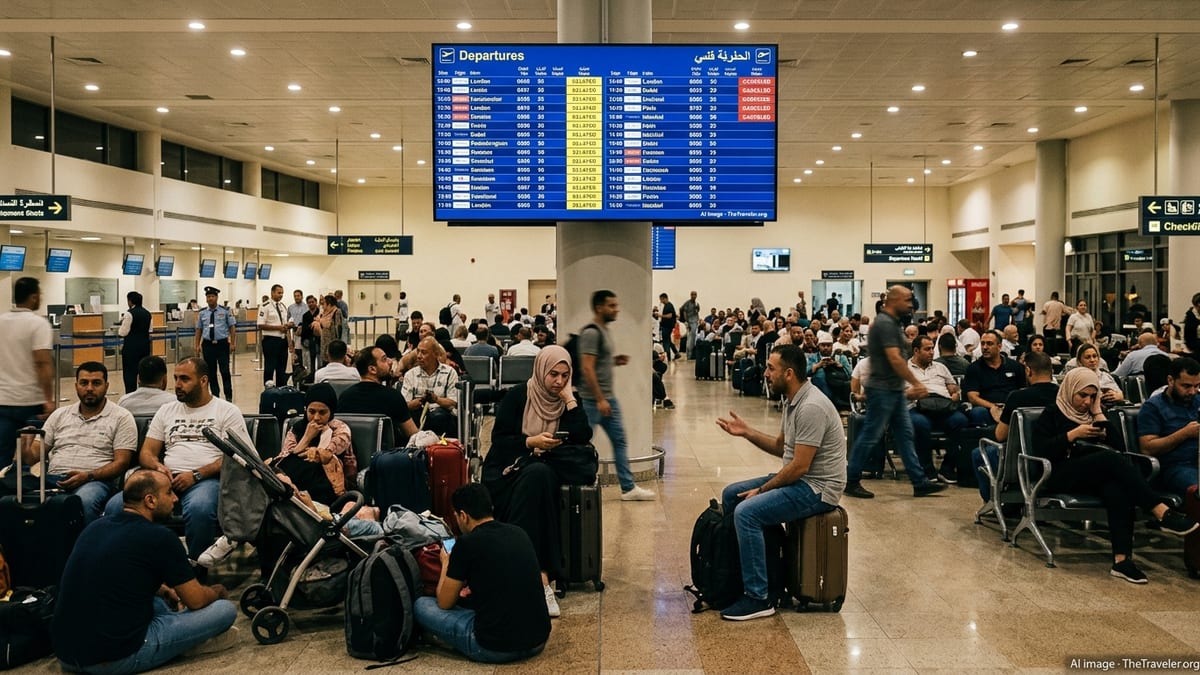
Passengers traveling through Amman’s Queen Alia International Airport on March 28 faced widespread disruption as 47 flights were delayed and three were canceled, affecting major carriers and key routes linking Europe, the Middle East, and Asia.
Get the latest news straight to your inbox!
Major Carriers Hit as Schedules Unravel
According to live flight-tracking boards and published aviation data for March 28, operations at Queen Alia International Airport were severely constrained through much of the day. Departures and arrivals involving Royal Jordanian, Turkish Airlines, EgyptAir, Lufthansa, Emirates, and several regional and Asian carriers showed extended delays, rolling reschedules, and a handful of outright cancellations.
The impact was felt on flagship routes connecting Amman with major hubs such as Istanbul, Cairo, Frankfurt, Dubai, and key European and Asian destinations. Several Royal Jordanian flights within the Middle East and to European capitals appeared in prolonged delay status, while Turkish Airlines and EgyptAir services to and from their respective hubs in Istanbul and Cairo were also pushed back, creating knock-on effects for onward connections.
Published coverage on the wider regional aviation picture in recent weeks has already highlighted how increased congestion and reconfigured air corridors across the Middle East have created fragile schedules. Today’s disruption in Amman added another layer of uncertainty for travelers already navigating an unsettled operating environment.
For some passengers, the delays ran into many hours as aircraft, crews, and slots were repositioned. With three flights canceled outright, travelers on those services faced full rebooking or overnight arrangements, depending on their final destinations and available alternatives.
Regional Tensions and Airspace Constraints in the Background
The disruption in Amman unfolded against the backdrop of heightened regional tensions and a series of airspace restrictions that have reshaped east west traffic patterns since late February. Publicly available advisories from governments, aviation regulators, and travel security firms in March describe a Middle East network under unusual strain, with multiple carriers forced to suspend or reroute services across parts of the region.
Jordan’s location at the crossroads of Europe, the Gulf, and broader Asia means Queen Alia International Airport plays a key role as both a national gateway and a transit node. When flight paths are shifted and neighboring airspace is restricted or carries additional risk, traffic can be compressed into narrower corridors, creating heavy demand on remaining routes and control sectors. Reports on regional air traffic in early March have pointed to saturated air traffic control workloads and longer routings that leave airlines with less operational flexibility.
While today’s delays in Amman were concentrated on commercial passengers, they came after weeks in which civil aviation across the Middle East has been repeatedly tested by evolving security considerations. Airlines serving Jordan, including Royal Jordanian and foreign carriers such as Turkish Airlines, Lufthansa, EgyptAir, and Emirates, have already issued travel waivers or schedule adjustments for parts of the winter and early spring period. The latest wave of disruption at Queen Alia underscores how quickly conditions can shift for travelers even when airports remain open.
Detailed cause information for individual flights at Queen Alia was not immediately available in public databases, but the clustering of delays and cancellations on March 28 is consistent with a mix of upstream disruptions, rerouted aircraft, and tight crew and slot availability, all magnified by ongoing regional instability.
Stranded Passengers Face Missed Connections and Limited Options
For affected passengers, the operational complexities translated into long lines at transfer desks and uncertain onward journeys. Travelers connecting through Amman on itineraries to Europe, the Gulf, and Asia faced missed connections when inbound flights arrived hours late, leaving limited options to rebook on the same day.
Royal Jordanian, as the home carrier, bore much of the visible pressure, with its ground handling and customer service channels working to reaccommodate travelers on later services or alternative routings. On multi leg trips involving partner airlines in Europe and Asia, passengers often had to be shifted onto different combinations of carriers and hubs as availability opened up, sometimes requiring extra stops or overnight stays.
Foreign airlines operating at Queen Alia, including Turkish Airlines, EgyptAir, Lufthansa, and Emirates, also had to manage disrupted connections at their home hubs when Amman departures left behind schedule. A delayed departure from Amman to Istanbul or Dubai can cause passengers to miss tightly timed onward flights to cities across Europe and Asia, with ripple effects that may stretch into the next day’s schedule.
Travelers already on the ground in Jordan faced a difficult choice between waiting out rolling delays, accepting rebookings that significantly changed arrival times, or canceling segments altogether where flexible fare rules or travel waivers allowed. Social media posts and traveler forums through March have illustrated how quickly hotel availability near major hubs can tighten when large clusters of flights are affected at once.
Knock On Effects Across Europe, the Middle East, and Asia
Because many services at Queen Alia feed into global networks, the disruption extended far beyond Jordan’s borders. Flights from Amman into major European hubs such as Frankfurt and other continental gateways connect onward to a wide range of destinations in Western and Central Europe. Delays on those first legs can lead to missed evening banks of departures, forcing passengers to overnight in hub cities or accept substantial reroutes.
In the Middle East, services linking Amman with Gulf airports and key regional centers are vital for both business and migrant worker travel. Disruptions on routes to cities such as Dubai or Cairo reverberate through busy networks that connect onward to South and Southeast Asia. Carriers like Emirates and EgyptAir rely on synchronized schedules to funnel passengers through their hubs; when an Amman flight misses its slot in that pattern, it can trigger extended layovers or full rebookings for travelers headed to destinations as varied as India, Pakistan, Thailand, and Malaysia.
Asia bound connections were particularly vulnerable where itineraries depended on tight transfers at intermediate hubs. Longer routings imposed across parts of the Middle East this month, together with congested airspace and occasional airport ground holds, mean that even small schedule shifts can cascade across long haul journeys. Today’s cluster of delayed and canceled flights at Queen Alia added one more stress point in a region wide system already short of slack.
Published aviation analysis in recent weeks has warned that the combination of rerouted traffic, reduced direct services to some conflict affected areas, and concentrated demand through remaining hubs would leave little margin for error. The experience of passengers in Amman on March 28 illustrates how a relatively small number of cancellations and a larger group of extended delays can still translate into widespread travel disruption across three continents.
What Travelers Through Amman Should Do Next
Travel and risk advisories issued this month consistently urge passengers heading to or transiting through the Middle East to monitor their flights closely and build additional buffer time into itineraries. For journeys touching Queen Alia International Airport over the coming days, publicly available guidance points to several practical steps to reduce the risk of extended disruption.
Passengers are encouraged to check flight status frequently on airline and airport channels rather than relying on itinerary details issued at the time of booking. With conditions shifting quickly, schedules that appear confirmed can change within hours if upstream aircraft or crews are delayed. Travelers with complex itineraries involving multiple carriers or tight connections in Europe, the Gulf, or Asia may wish to speak with their airline or travel agent about options to lengthen connection times or switch to more robust routings.
A number of airlines serving Jordan, including some of those most affected today, have active flexibility policies tied to the current regional situation. These measures may include free date changes, rerouting options, or the ability to cancel in exchange for travel credits on certain tickets and dates. Carefully reviewing the applicable conditions before departure can help passengers make faster decisions if their flights are disrupted at short notice.
For those already in Amman, travel experts advise having contingency funds and accommodation plans in mind in case of overnight delays, as well as keeping essential medications, chargers, and documents in carry on bags. As today’s events at Queen Alia demonstrate, even when the airport remains open, a combination of regional tensions, congested airspace, and tight airline operations can leave passengers unexpectedly stranded, with ripple effects reaching far beyond Jordan’s borders.