

More news on this day
Travelers across the United States faced another wave of disruption this weekend as 66 flights were delayed and 40 canceled at Chicago Midway International Airport, forcing passengers to fan out through alternative hubs in Atlanta, Orlando, Tampa, Phoenix and other cities in a scramble to salvage spring travel plans.
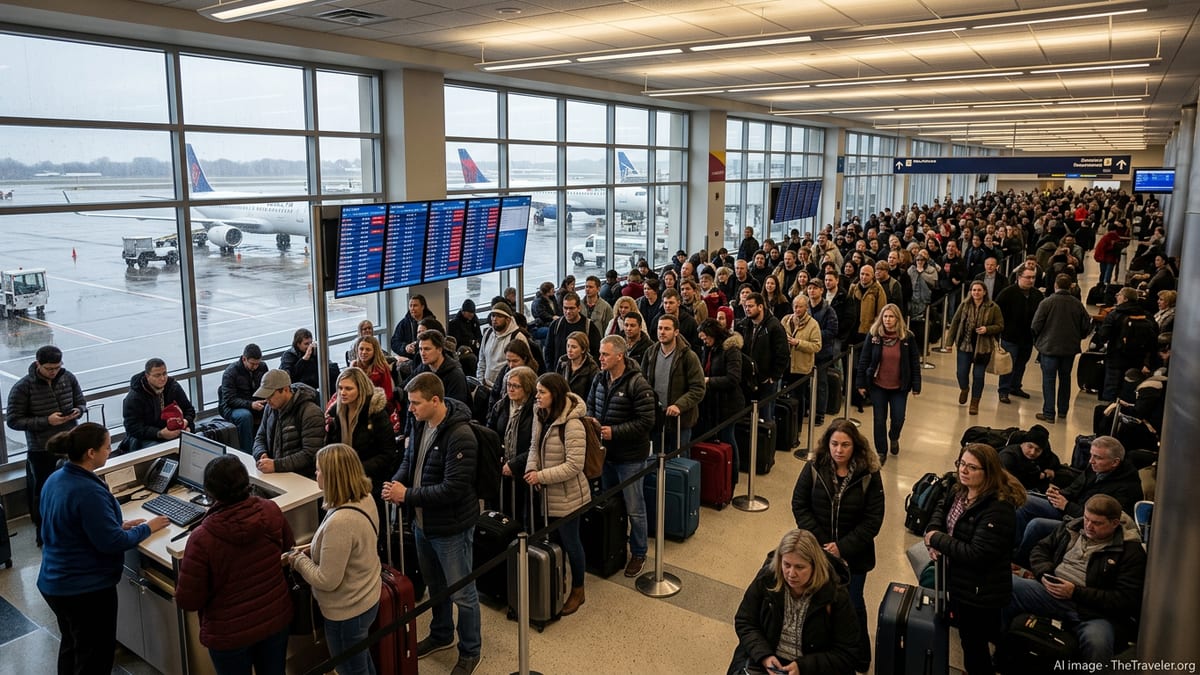
Weather, Congestion and Crew Issues Converge at Midway
The fresh round of disruption at Midway unfolded as unstable weather patterns over the Midwest collided with already tight airline schedules during the first busy weekends of the spring break period. Low clouds, scattered thunderstorms and lingering operational backlogs from earlier systems combined to slow arrivals and departures across the Chicago region.
While nearby O’Hare has absorbed much of the national attention for recent ground stops and rolling delays, Midway’s role as a key point-to-point hub meant that even a relatively small number of cancellations translated into outsized pain for leisure travelers. With 66 flights held for extended periods and 40 dropped from the schedule over the course of the day, gate areas quickly filled with stranded passengers and long queues at customer service desks.
Airlines cited a mix of weather-related air traffic control programs, crew reassignments and late inbound aircraft as primary causes. In several cases, aircraft scheduled to operate Midway departures were themselves arriving late from earlier storms in Denver, Houston and the Southeast, creating a cascade of knock-on delays that stretched well into the evening.
For many travelers, the most immediate impact came in the form of missed connections and abandoned weekend plans as departure boards at Midway shifted repeatedly between “delayed,” “estimated” and “canceled” throughout the day.
Ripple Effects Across Atlanta, Orlando, Tampa and Phoenix
The disruption in Chicago quickly radiated outward through some of the country’s busiest domestic corridors. Flights linking Midway to major leisure and connecting markets in Atlanta, Orlando, Tampa and Phoenix were among the hardest hit, according to schedule data reviewed on Saturday.
In Atlanta, additional passengers from canceled Midway departures arrived throughout the day on rebooked itineraries, adding pressure to an already crowded hub coping with its own weather-related slowdowns. Lines at rebooking counters wrapped through concourses as travelers tried to reroute from Chicago to destinations across the Southeast and Caribbean.
Orlando and Tampa, both heavily used by Midwestern travelers heading to Florida beach and theme park vacations, saw similar spikes in rebooked Midway passengers. Airline agents at both airports reported a sharp rise in same-day changes onto remaining evening departures to Chicago and other Midwest cities, as visitors cut trips short in hopes of avoiding further disruptions.
In Phoenix, a key desert escape for Chicagoans during late winter, several Midway services were delayed or canceled outright, pushing travelers onto later departures or connecting routings via Dallas, Denver and Las Vegas. The result was an uneven patchwork of full flights, last-minute standby lists and exhausted travelers arriving hours or even a full day behind schedule.
Airlines Rebook, But Seats and Crews Are Tight
Airlines operating at Midway moved quickly to consolidate lightly booked departures, upgauge some flights to larger aircraft where possible and encourage passengers whose trips were not time-sensitive to accept travel credits in exchange for flying on later dates. Even so, capacity remained constrained throughout the day.
With spring break travel demand surging, many flights from Midway to warm-weather destinations were already nearly full before the disruption began. Once dozens of additional passengers needed seats from canceled services, options narrowed sharply. Some customers were offered routings that added multiple stops or required overnight stays in connection cities such as Atlanta or Dallas.
Staffing also proved to be a limiting factor. Several airlines acknowledged that while aircraft might be available to add or retime flights, pilot and flight attendant schedules were stretched near legal duty limits after a week of on-and-off weather and air traffic control programs. That left little flexibility to mount extra “rescue” flights until crews could reset their hours.
Travelers reported mixed experiences with customer service. Some were able to rebook within minutes using airline apps, while others waited in line for more than an hour to speak with an agent, only to find that remaining same-day options required significant detours through hubs in the South and West.
Passengers Turn to Plan B: Trains, Cars and Secondary Airports
As the day wore on and it became clear that many of the 40 canceled flights would not be reinstated, passengers increasingly abandoned hopes of flying directly from Midway and turned to alternative modes and airports.
Rental car counters at and around Midway saw brisk business as families banded together to drive overnight to cities such as Atlanta, Nashville and Kansas City to catch onward flights the next morning. Others opted to complete entire journeys by car, sharing vehicles with fellow stranded passengers heading in the same direction.
Regional rail and intercity bus operators serving Chicago also reported a modest uptick in last-minute bookings, particularly on routes to Milwaukee, St. Louis, Detroit and Indianapolis. Some travelers chose to reposition to those cities in order to access flights with more open seats on Sunday, hoping to bypass Chicago’s bottlenecks.
A portion of Midway’s displaced passengers shifted to Chicago O’Hare, where a larger mix of carriers and flight frequencies provided additional options, albeit with their own risk of weather-induced delays. Others looked farther afield, rebooking out of regional airports in Rockford, South Bend and central Illinois in search of more stable operations.
What Travelers Should Know for the Days Ahead
Aviation analysts warned that while the worst of the immediate disruption at Midway should ease as weather systems move on, residual effects may linger for at least another 24 to 48 hours. Aircraft and crews displaced by cancellations often take multiple days to fully return to their normal rotations, particularly during peak travel periods.
Passengers scheduled to fly through Chicago, Atlanta, Orlando, Tampa or Phoenix in the coming days are being advised to monitor their flight status frequently, arrive early at the airport and build additional time into connections where possible. Same-day standby lists on popular leisure routes may remain long as airlines work through the backlog of rebooked customers from Saturday’s cancellations.
Travel planners say the episode underscores how quickly conditions at a single airport like Midway can reverberate throughout the national network, especially when weather strikes multiple regions at once. A relatively modest number of canceled flights in Chicago can still leave hundreds of travelers sleeping in terminals from Florida to Arizona when schedules are tight and spare capacity is limited.
For now, airlines and airports across the affected cities are focusing on restoring regular operations while bracing for the next round of unsettled spring weather that could again test the resilience of the US air travel system.