

More news on this day
Hundreds of travelers were left stranded at Honolulu’s Daniel K. Inouye International Airport on Friday as 38 flights were delayed and nine canceled, disrupting operations for Hawaiian Airlines, United, American Airlines and other major carriers on busy routes to Los Angeles, New York, Tokyo, Vancouver and Sydney.
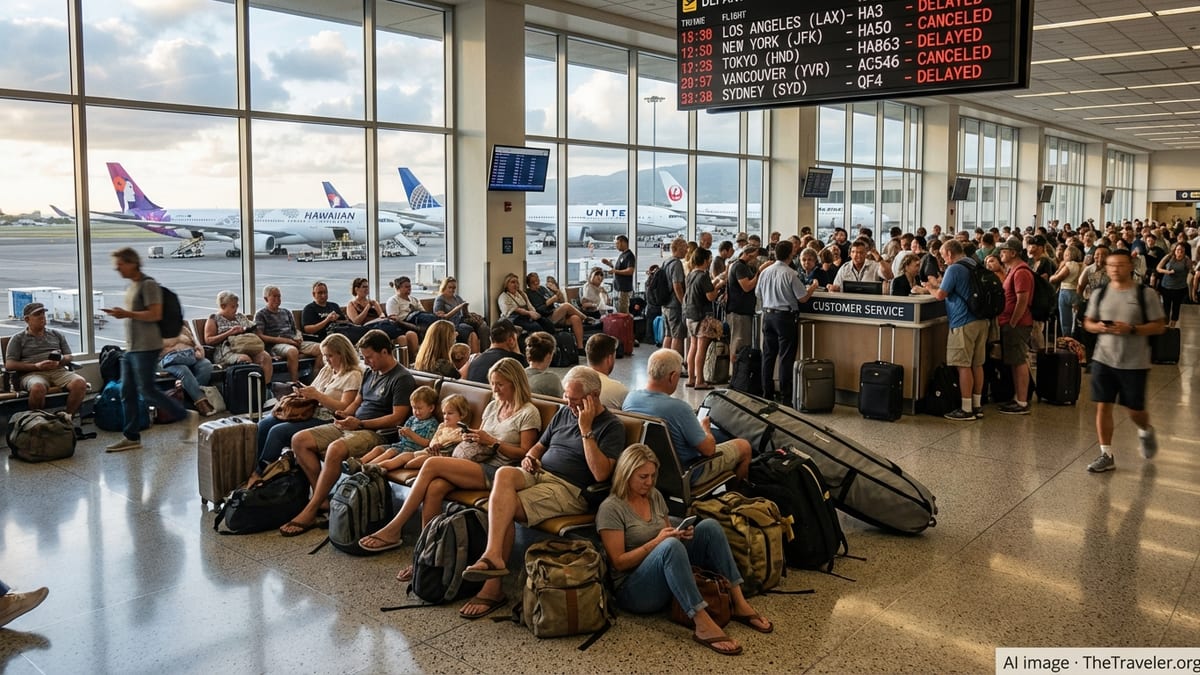
Delays Ripple Across Domestic and International Networks
The disruption unfolded through the day at Daniel K. Inouye International Airport, one of the primary aviation gateways for the Pacific region. While the airport is typically among the best-performing U.S. hubs for on-time operations, the wave of delays and cancellations quickly filled concourses with frustrated passengers waiting for updates and rebooking assistance.
Flights to major North American cities including Los Angeles, New York and Vancouver were hit by rolling delays, forcing airlines to juggle aircraft and crew schedules. Several long-haul services connecting Honolulu with Asia-Pacific gateways such as Tokyo and Sydney were also affected, compounding the knock-on impact for travelers with onward connections in both directions.
Airport staff and airline ground teams worked to manage mounting queues at customer service counters as departure boards showed shifting times throughout the afternoon and evening. Travelers reported waiting hours for new itineraries and hotel vouchers, while many opted to stay in the terminal rather than risk missing rebooked red-eye departures.
Although exact passenger counts were not immediately available, aviation analysts estimate that several thousand travelers could feel the effects of a disruption involving nearly 50 flights at a hub that serves as the primary bridge between Hawaii, the U.S. mainland and key Asian and Oceania markets.
Hawaiian, United and American Among Hardest Hit
Local flagship carrier Hawaiian Airlines bore a significant share of the disruption, with multiple interisland and mainland services delayed or scrubbed. Honolulu is Hawaiian’s main hub, meaning any schedule shock at Daniel K. Inouye International Airport can quickly cascade across the carrier’s network to the neighbor islands and onward mainland cities.
United Airlines, which operates a mix of widebody and narrowbody flights linking Honolulu with West Coast and hub airports on the mainland, also reported affected departures and arrivals. New York–bound travelers faced extended waits and, in some cases, unexpected overnight stays as limited spare seats on alternative flights made same-day rebooking difficult.
American Airlines and other U.S. carriers with Honolulu services, including codeshare partners, were drawn into the disruption as aircraft rotations tightened and crew duty-time limits approached. At the same time, international operators serving Tokyo, Vancouver and Sydney worked to coordinate with overseas hubs on revised departure slots and connection guarantees for onward passengers.
Airline representatives urged customers to use mobile apps and call centers to manage rebooking where possible, noting that high demand at airport counters slowed in-person assistance. Some carriers implemented travel waivers, allowing passengers to change affected itineraries without additional fees within a set time window.
Operational Strain Amid Airfield Works and Busy Winter Travel
The latest disruption comes as Honolulu’s airport is undergoing airfield works that have temporarily shifted some widebody operations and increased pressure on remaining gates and taxiways. Industry observers noted that while such projects are routine and planned in advance, they can reduce an airport’s ability to recover quickly when irregular operations strike.
Friday’s problems coincided with a period of strong winter-season demand, as visitors travel to and from Hawaii for holidays and mainland residents seek warmer weather escapes. High load factors on many flights meant that finding open seats for stranded passengers became increasingly challenging as the day went on.
Weather across the wider U.S. and Pacific region has also been volatile in recent days, with storms and high winds periodically disrupting schedules at major mainland hubs. Even when conditions at Honolulu remain relatively stable, knock-on effects from earlier delays at connecting airports can cascade into the islands, leaving aircraft and crews out of position for subsequent departures.
Aviation experts say that when an airport like Honolulu, which normally enjoys relatively smooth operations, is hit with a cluster of delays and cancellations, the impact can feel particularly acute. Long-haul travelers on routes to Tokyo, Vancouver and Sydney are especially vulnerable, as those flights typically operate only once daily and rely heavily on precise timing for onward international connections.
Passengers Face Long Waits, Missed Connections and Overnight Stays
Inside the terminal, the human toll of the disruption played out in crowded gate areas and lines snaking past customer service desks. Families returning to the mainland after vacations, students traveling between Hawaii and the continental U.S., and international tourists bound for Asia-Pacific destinations all found themselves unexpectedly grounded.
Some passengers reported missing cruises, group tours and important work commitments after their flights were delayed beyond connection windows in Los Angeles, New York, Tokyo and other hubs. Others scrambled to secure last-minute hotel rooms near the airport as airlines exhausted their allotted accommodation blocks for distressed travelers.
With many flights pushed into late-night or early-morning slots, airport restaurants and shops stayed busy serving stranded passengers who chose to wait airside. Travelers stretched out across gate seating and on terminal floors, improvising makeshift rest areas as they monitored departure boards and airline apps for any sign of improvement.
Despite the frustration, reports from the scene suggested that most interactions between passengers, airline staff and airport workers remained calm, if tense. Many travelers expressed appreciation for front-line employees attempting to manage the disruption, even as they voiced concern over long waits for information and limited options to reach their final destinations in a timely manner.
What Travelers Should Do If Flying Through Honolulu
Travel experts advise anyone scheduled to travel through Daniel K. Inouye International Airport in the coming hours to check their flight status frequently and allow extra time at the airport. Even as airlines work to restore schedules, residual delays can persist while aircraft and crews are repositioned.
Passengers are urged to complete check-in and seat selection as early as possible through airline apps or websites, which can also be used to request rebooking in the event of a disruption. Those with tight connections in Los Angeles, New York, Tokyo, Vancouver or Sydney may wish to explore alternative routings or ask airlines about protection on later flights to avoid missed onward segments.
Travel insurance that includes trip interruption benefits can provide some financial relief for additional hotel nights, meals and ground transport, though coverage varies by policy. Consumer advocates also recommend that passengers keep receipts for out-of-pocket expenses and document any extended delays or cancellations in case compensation or goodwill gestures are offered later.
While Friday’s events highlight how quickly conditions can change even at an airport known for reliability, industry analysts say Honolulu’s strong historical performance and ongoing infrastructure upgrades should help it recover and maintain its role as a vital link between the islands, the mainland U.S. and the wider Pacific region.