

More news on this day
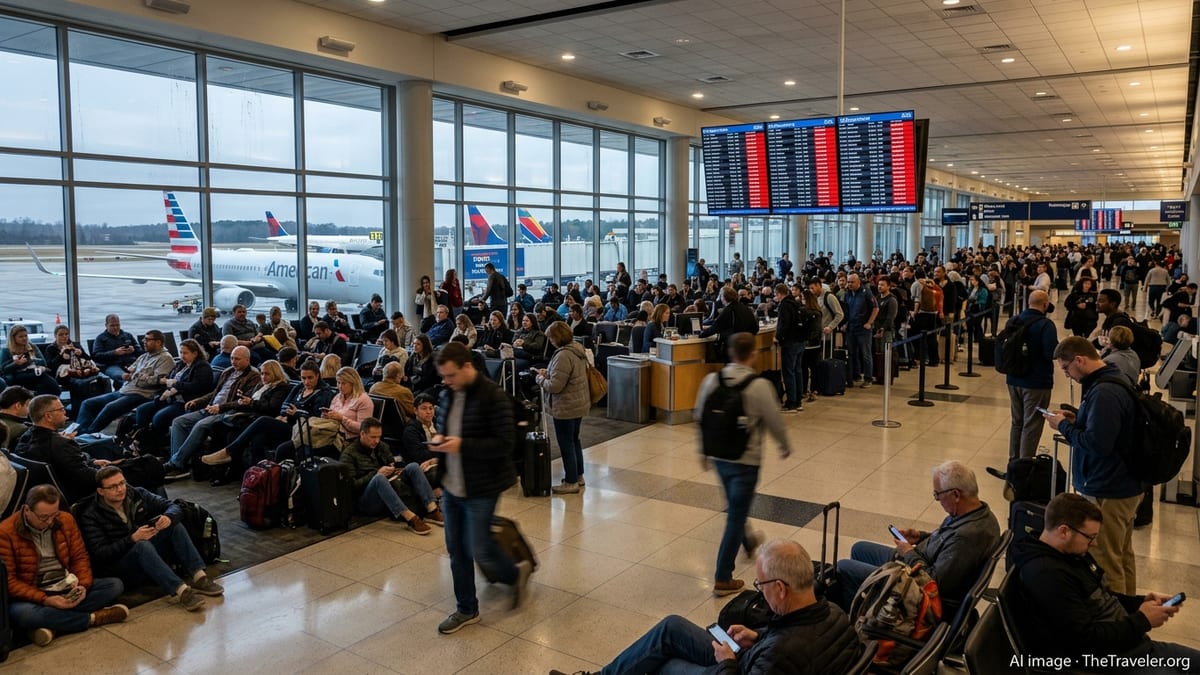
Hundreds of passengers at Raleigh-Durham International Airport in North Carolina faced hours-long disruptions as publicly available data showed 57 flight delays and three cancellations affecting key routes to major hubs including New York, Chicago and Atlanta.
Get the latest news straight to your inbox!
Dozens of Flights Affected Across Major Carriers
Tracking services for U.S. air traffic on March 22 indicated that Raleigh-Durham International Airport experienced a concentrated wave of disruption, with 57 flights delayed and three canceled over the course of the day. The numbers placed RDU among the more heavily affected mid-sized airports during an already challenging spring travel period across the country.
Publicly available information on airline operations showed that the delays touched a mix of domestic departures and arrivals, while cancellations were clustered around peak travel windows. While the overall number of cancellations remained limited compared with larger hubs, the imbalance between delays and outright scrubs contributed to extended queues at departure gates and customer service counters.
American Airlines, Delta Air Lines and Southwest Airlines were among the carriers most visible on departure boards as the irregular operations unfolded. Reports from travelers and airport status tools suggested that disruptions rippled outward to regional partners and other airlines sharing the same gates and airspace, compounding congestion throughout the day.
Many affected flights were short-haul connections to major East Coast and Midwestern hubs that normally underpin business and leisure travel from the Research Triangle region. When those flights slipped behind schedule, missed onward connections became a central concern for travelers trying to reach destinations across the United States and beyond.
Routes to New York, Chicago and Atlanta Hit Hardest
RDU’s network includes frequent links to New York area airports, Chicago and Atlanta, and those corridors featured prominently among the delays. Flight status boards showed slippages on departures to New York, where congestion at downline airports has been elevated throughout a broader spell of unsettled weather and heavy traffic.
Connections to Chicago, another major hub for both business and connecting traffic, also experienced schedule disruptions. Even moderate delays on those routes can quickly cascade, since aircraft and crews are often routed through multiple cities in a single day. When an RDU departure left late for Chicago, subsequent legs in the sequence were more likely to depart out of sync.
Service to Atlanta, one of the most important southern hubs in the U.S. network, was similarly affected. According to published coverage on recent national disruptions, Atlanta has already been dealing with significant operational pressure in March, and irregular operations upstream can spill over into satellite airports such as RDU. On Saturday, that meant passengers bound for Atlanta faced not only delayed boarding but also uncertainty about their ability to make later flights departing from that hub.
Other popular destinations including additional East Coast and Midwest cities saw knock-on effects as airlines attempted to reshuffle aircraft and crews to restore their schedules. The closely connected nature of hub-and-spoke networks meant that even a small cluster of canceled flights at RDU could translate into scattered delays in multiple states by nightfall.
Weather and Network Strain Behind the Disruptions
The disruption at RDU did not occur in isolation. Nationally, airlines have been working to stabilize operations after a series of March storms and strong frontal systems swept across large sections of the country, affecting airports from the Midwest to the East Coast. Recent reporting on U.S. air travel has linked thousands of delays and cancellations to these systems, which have challenged both ground operations and air traffic management.
Raleigh-Durham itself was not in the direct path of the most severe weather, but its role as a spoke for multiple hubs left it exposed to upstream and downstream congestion. When flights into New York, Chicago or Atlanta encounter holding patterns, ground stops or reduced arrival rates, departures from feeder airports often slow in response, even under relatively calm local skies.
Operational decisions by airlines also played a role. Industry analysis frequently notes that carriers sometimes preemptively thin schedules and consolidate flights during periods of stressed capacity to reduce the risk of more serious breakdowns later in the day. The three cancellations at RDU appeared consistent with this broader strategy, allowing airlines to focus resources on keeping a higher number of remaining flights operating, even if late.
Air traffic control constraints, crew scheduling limits and the need to reposition aircraft for future flights further complicated recovery efforts. Once early departures slipped, the knock-on effect through the afternoon and evening left many passengers facing rolling delay estimates and repeated gate changes.
Impact on Travelers and the Local Region
For passengers at RDU, the numbers translated into crowded concourses, long rebooking lines and a sharp increase in last-minute itinerary changes. Weekend travelers attempting to return home or start vacations reported extended waits at departure gates as boarding times were repeatedly pushed back, while those with tight connections through major hubs had to seek alternative routings or overnight stays.
The disruptions carried particular weight for the Research Triangle’s business community, which relies heavily on predictable air links to New York and Chicago for corporate travel, finance and technology sector connections. Missed meetings, rescheduled presentations and uncertainty around return timings all added to the sense of unease as the day’s operations unfolded.
Families and leisure travelers were also caught in the tangle of delays. Some attempting to begin spring vacations found themselves still in Raleigh-Durham hours after their scheduled departure, while others returning from trips faced the prospect of arriving home well past midnight or being separated from checked baggage that continued on different aircraft.
Local ground transportation and nearby hotels experienced an uptick in demand as stranded travelers sought last-minute rooms and late-night rides. While the scale of disruption remained far below that of nationwide holiday meltdowns seen in previous years, the concentrated effect on a Saturday in late March still created a noticeable ripple through the region’s travel-related businesses.
What Passengers Can Expect Next
Based on patterns in recent national disruptions, recovery from a day of irregular operations at a mid-sized hub like RDU can take several flight cycles. Even after the immediate wave of delays and cancellations subsides, aircraft and crew imbalances may persist for a day or more, affecting early-morning departures and late-night arrivals.
Publicly accessible airline advisories in March have emphasized the importance of monitoring flight status closely, arriving at airports earlier than usual and allowing longer connection times, especially when traveling through congestion-prone hubs. The experience at RDU on Saturday underscored those recommendations, as travelers with more generous layovers were better positioned to absorb the impact of rolling delays.
Industry observers note that while airlines have invested in technology and scheduling tools to reduce the cascade effect of weather and system disruptions, the complexity of modern networks means that mid-season storms and traffic surges can still leave pockets of passengers stranded. The situation at RDU highlighted how quickly a handful of cancellations, combined with dozens of delayed departures, can translate into hundreds of disrupted journeys.
As carriers continue to adjust their spring schedules and respond to shifting weather patterns, travelers using Raleigh-Durham International are likely to see a combination of schedule fine-tuning and ongoing emphasis on flexibility. For now, the day’s tally of 57 delayed flights and three cancellations stands as another reminder of the delicate balance underpinning modern air travel in one of the Southeast’s fastest-growing regions.