

More news on this day
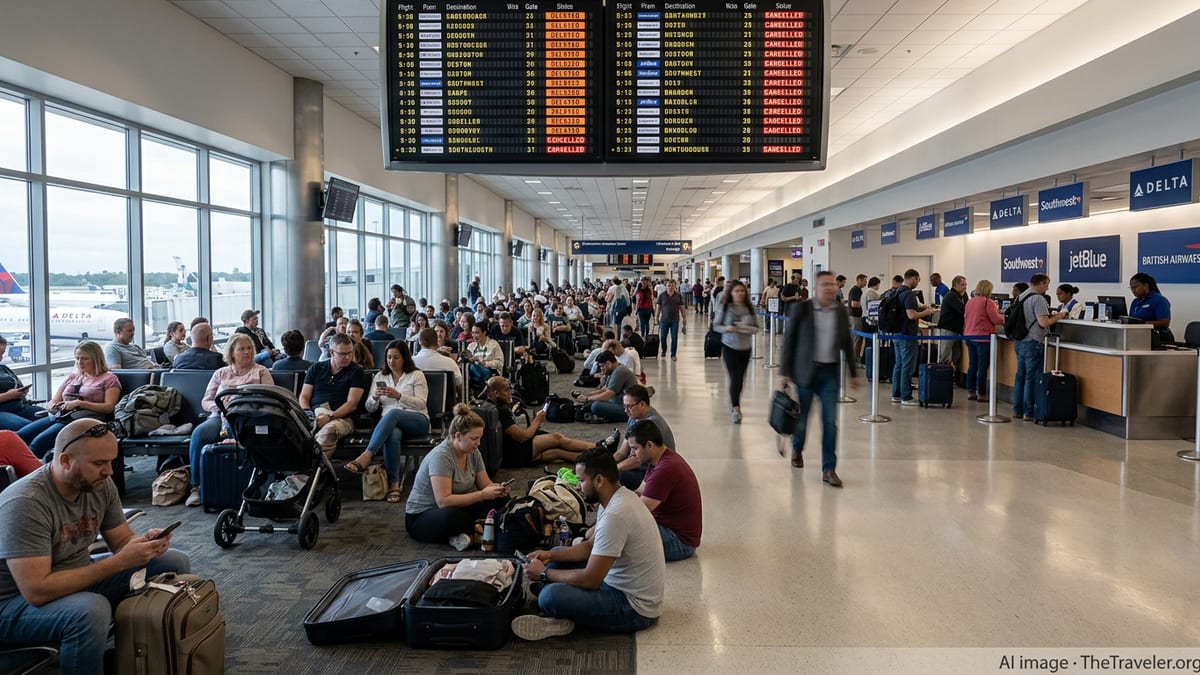
Passengers at Tampa International Airport faced hours of disruption on Monday as at least 55 flights were delayed and five were cancelled across major carriers including Delta Air Lines, Southwest Airlines, JetBlue Airways and British Airways, disrupting travel plans to New York, London, Cancun, Orlando and major cities across the United States.
Chain Reaction of Delays Hits Key Domestic and International Routes
Departure boards at Tampa International filled with orange and red status alerts through the morning and afternoon, as rolling delays compounded earlier schedule slippages across the national air network. Flights to New York area airports, including John F. Kennedy, LaGuardia and Newark, saw some of the longest hold times, with aircraft pushed back repeatedly as connecting hubs wrestled with congestion and staffing constraints.
International services were not spared. British Airways departures linking Tampa with London experienced schedule disruptions that rippled into onward European connections, while leisure travelers on Delta and JetBlue flights to Cancun reported extended waits at the gate and on the tarmac. Several Orlando-bound services were also affected, underscoring how closely linked Central Florida’s airports are when wider system pressures emerge.
The five cancellations recorded at Tampa forced some passengers to seek last-minute rebookings through alternate hubs such as Atlanta, Miami and Charlotte, or to abandon air plans altogether in favor of rental cars and intercity buses. For travelers at the start or end of spring holidays, the abrupt changes translated into missed hotel nights, forfeited theme park tickets and additional accommodation costs.
Airlines Struggle to Reprotect Customers Amid System Strain
Delta, Southwest, JetBlue and British Airways each faced long lines at their customer service counters as travelers sought answers and new itineraries. Agents worked to rebook customers onto later departures from Tampa or to reroute them through less congested hubs, but tightly booked cabins during the busy March travel period limited options for same-day recovery.
Several passengers reported that initial delay notifications in airline apps underestimated the eventual disruption, shifting by 20 or 30 minutes at a time before stretching into multi-hour waits. That pattern, increasingly common during high-demand periods, left many travelers unsure whether to leave the gate area for food and amenities or to remain nearby in case boarding was suddenly announced.
For those headed to international destinations such as London and Cancun, missed connections added further complications. Some travelers found that rebooked routings required overnight stays in transit hubs, triggering questions over who would pay for hotels and meals. Others opted to cancel trips entirely when the earliest available alternatives would have cut short already brief vacations.
Weather, Congestion and Security Pressures Combine
The problems in Tampa unfolded against a backdrop of nationwide strain on the U.S. aviation system, with federal data and tracking services registering thousands of delays and hundreds of cancellations across the country in recent days. Storm systems affecting major hubs, together with heightened spring break demand and ongoing staffing challenges, have narrowed the buffer airlines typically rely on to absorb operational shocks.
At Tampa International, relatively modest security wait times masked pressure points elsewhere in the system. While local checkpoint lines generally moved within 15 to 30 minutes, flights arriving from and departing to other busy airports, including New York, Boston, Atlanta and Orlando, faced air traffic control programs that slowed the flow of aircraft into already saturated airspace.
Aviation analysts note that when weather and congestion affect key hubs, the resulting ground stops, flow restrictions and crew time-out rules can quickly strand aircraft and crews out of position. Once that happens, mid-sized airports like Tampa, which depend heavily on connections through larger gateways, can experience a disproportionate number of delayed and cancelled flights relative to their overall schedule.
Stranded Travelers Weigh Limited Options
Inside Tampa’s terminals, the human impact of the disruptions was visible throughout the day. Families with young children stretched out on the floor near power outlets, business travelers took conference calls from crowded seating areas, and international passengers clutched paper boarding passes that had already been reissued multiple times.
With many later flights selling out quickly, some passengers resorted to piecing together complex one-way journeys on separate tickets, accepting connections through secondary cities in order to reach New York or other major destinations by the following day. Others searched for rental cars to drive to Orlando, Miami or even farther afield in hopes of finding more reliable departures from those larger hubs.
For travelers returning from vacations in Cancun and Orlando, the delays at Tampa often represented the final, most frustrating chapter of their trips. Several passengers described arriving early to the airport in an effort to beat anticipated crowds, only to spend much of the day waiting at the gate while watching their planned arrival times at home slip further into the night.
Airport and Airline Advice for Upcoming Flyers
With spring break travel still near its peak and weather patterns remaining unsettled, both airport officials and airline representatives urged upcoming travelers at Tampa International to build extra time and flexibility into their plans. They recommended arriving earlier than usual, monitoring flight status frequently, and confirming that contact details are correctly entered in airline profiles so that delay and rebooking notifications arrive promptly.
Passengers holding same-day connections, particularly those traveling internationally to cities such as London and Cancun, were advised to consider longer layovers where possible to reduce the risk of misconnecting if initial legs from Tampa depart late. Travel advisers also encouraged customers to familiarize themselves with airline policies on meal vouchers, hotel accommodations and refund eligibility in the event of significant delays or cancellations.
While Monday’s total of 55 delays and five cancellations at Tampa International falls far short of the most severe nationwide meltdowns seen in recent years, the episode highlights the fragility of the air travel system during high-demand periods. For the hundreds of passengers whose plans were upended, it was a stark reminder that even a relatively small number of disrupted flights can reverberate widely when cabins are full, schedules are tight and spare aircraft and crews are in short supply.