

More news on this day
Dream Cruises is reshaping the entertainment landscape at sea in Southeast Asia, rolling out Broadway-style productions, technology-led shows and expanded nightlife across its regional itineraries to position its ships as floating resort destinations.
Get the latest news straight to your inbox!
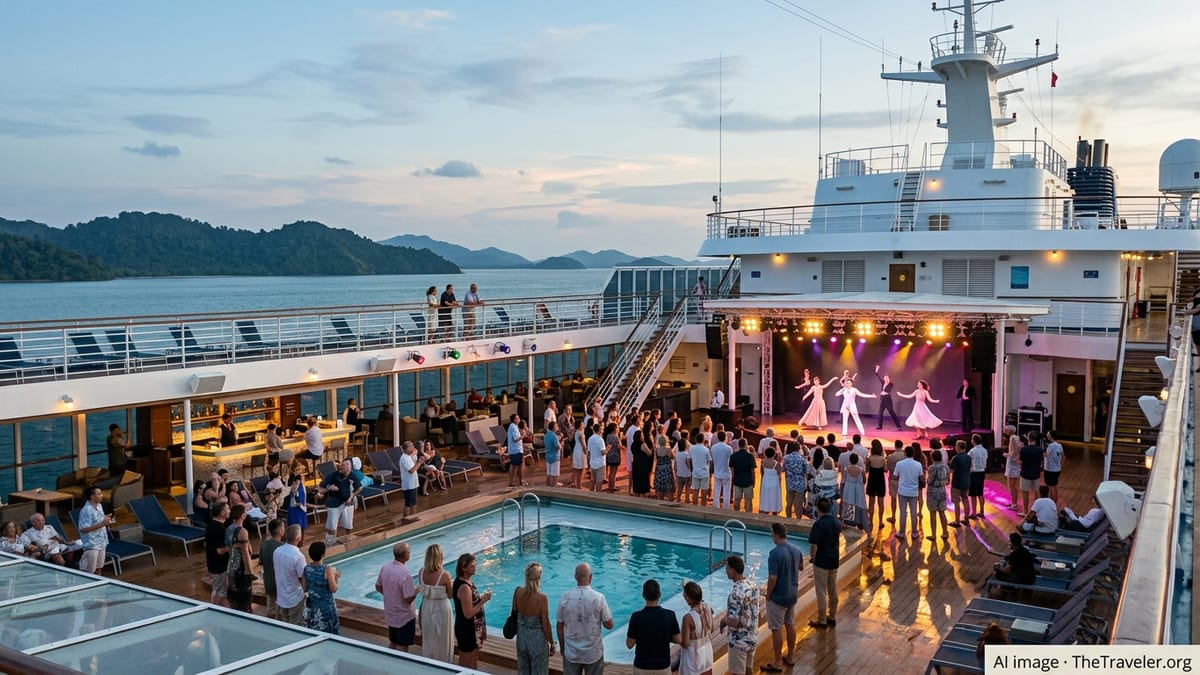
Broadway-Inspired Productions Take Center Stage
Recent coverage of Dream-branded operations in Asia indicates that Broadway-style revues and large-scale stage spectacles are becoming central to the cruise line’s appeal in Southeast Asia. Onboard reviewers describe high-energy shows that blend musical theater with acrobatics, illusion and contemporary dance in purpose-built venues designed to mirror land-based show lounges. Signature productions developed for the Genting Dream, including earlier titles such as Voyage of a Lover’s Dream, have set the template for narrative-driven performances that unfold with elaborate sets, aerial choreography and multimedia backdrops.
Travel and cruise commentators note that these productions are staged in full-size theaters configured with tiered seating, powerful sound and extensive lighting rigs, supporting fast-paced revues that echo Broadway and West End presentation styles. Guests typically encounter multiple production titles on a single itinerary, combining family-friendly shows with late-evening offerings tailored to adults. This diversification reflects a broader shift in Asian cruising, where entertainment is becoming a primary motivator rather than a secondary onboard amenity.
Publicly available brochures for Genting Dream describe the theatre programming as “Broadway-style live production shows,” underscoring the ambition to rival land-based venues. Collaborations with in-house creative teams and international performers have helped shape lineups that move between classic show tunes, pop medleys and original concepts built around the ship’s design and artwork.
Industry observers suggest that the focus on theatrical spectacle is particularly important on shorter Southeast Asian sailings, where passengers expect immersive experiences throughout sea days and evenings. By anchoring each voyage around one or more marquee productions, Dream-branded cruises are seeking to differentiate themselves in a busy regional market that includes large global brands.
Immersive Nightlife From Zodiac Theatre to Zouk Beach Club
Alongside the large-scale shows, Dream-linked itineraries in Southeast Asia feature a dense nightlife program that spans multiple venues, from the main theatre to club-style spaces and open-air decks. Information from cruise partners highlights the Zodiac Theatre on Genting Dream as the focal point for big production numbers, acrobatic performances and guest illusionists, often scheduled across several nights of a voyage.
Beyond the main theatre, the ship’s Zouk and Zouk Beach Club bring a well-known Singapore nightlife brand to sea, creating a bridge between urban club culture and resort cruising. Reports describe late-night DJ sets, poolside parties, themed celebrations and movie screenings under the stars, with dance floors extending around shallow pools and tiered seating that looks out to sea. This multi-venue approach allows the line to run parallel programs for different age groups and interests, from families to nightlife-focused couples and groups of friends.
Recent write-ups by cruise specialists point out that evening entertainment on these ships often continues well after the main shows conclude, with live bands, tribute acts and lounge performances in bars and atrium spaces. Venues such as Bar City, Tributes and other music lounges are typically programmed with rotating lineups of singers, acoustic duos and small ensembles, encouraging passengers to move between spaces throughout the night.
For Southeast Asia homeports such as Singapore and Port Klang, where many guests may be on short two-, three- or four-night getaways, this concentration of nighttime activity has become a key selling point. It effectively extends the shore-side city-break experience onto the ship, with itineraries marketed as “resort at sea” escapes that combine theatre, live music and club culture in one setting.
Family-Friendly Fun and Multigenerational Appeal
While the new Broadway-style entertainment is a major draw for adult guests, the Dream-branded approach in Southeast Asia is also geared toward multigenerational travel. Cruise literature and partner agencies highlight a wide spectrum of activities that run alongside the mainstage programming, ensuring that families can find age-appropriate entertainment throughout the day.
On Genting Dream, dedicated kids’ clubs and youth spaces are designed to host supervised activities, crafts and games, giving younger passengers their own social environment while adults attend shows or explore nightlife venues. Water slides, rope courses with ziplines and sports courts add a theme-park dimension that complements the theatrical offerings, creating a resort-style atmosphere suited to school holidays and regional festive periods.
Evening schedules often include family-oriented shows early in the night, followed by more mature themes later on. Open-air movie nights on deck, interactive game shows in lounges and talent showcases featuring crew or passenger performers broaden the concept of onboard entertainment beyond scripted theatre. This layering of options reflects a wider cruise-industry trend in Asia, where sailings increasingly cater to groups spanning grandparents, parents and children traveling together.
For Southeast Asian passengers who may be taking a first-time cruise, publicly available reviews suggest that this variety helps position the voyage as an all-inclusive holiday. With food, accommodation and entertainment packaged into one fare, the promise of Broadway-style productions and resort-level activities is marketed as a strong value proposition compared with land-based theme parks or city stays.
Technology Upgrades Elevate the Entertainment Experience
Investment in technology is further transforming the onboard entertainment profile of Dream-linked cruises in the region. In 2024, Resorts World Cruises, which operates Genting Dream, announced an agreement to deploy an integrated satellite connectivity solution across its flagship, combining Medium Earth Orbit and Low Earth Orbit services. Public statements around the rollout emphasize that the enhanced bandwidth is intended to support high-demand applications throughout the ship, including first-class entertainment venues.
Stronger connectivity underpins several aspects of the entertainment ecosystem. High-capacity networks can support live-streamed content, interactive audience participation, synchronized lighting and projection systems, and more responsive mobile apps that allow passengers to check show times, make reservations or receive real-time updates about performances. For productions that rely on complex multimedia elements, stable connectivity and robust onboard infrastructure are increasingly viewed as essential.
Beyond networking, theatre spaces on Genting Dream and sister operations in Asia are fitted with advanced LED screens, programmable lighting grids and multi-channel sound systems. Cruise reviewers describe sequences where digital backdrops shift scenes instantly, blending pre-rendered visual effects with live performers on stage. These capabilities enable Broadway-style shows that can be adapted, shortened or reworked to suit different itineraries and passenger demographics without rebuilding sets from scratch.
As competition intensifies among cruise lines homeporting in Singapore and other Southeast Asian hubs, this emphasis on technology-enabled spectacle is likely to grow. Operators are using upgraded connectivity, audio-visual systems and show control platforms to differentiate their experiences, with Dream-branded ships positioning themselves as early adopters in the regional market.
Southeast Asia Positions Itself as a Stage at Sea
The expansion of Dream Cruises’ entertainment model aligns with a broader repositioning of Southeast Asia as a year-round cruising destination that can support high-investment shows and long-term production runs. Regional tourism authorities and port operators have promoted homeporting in Singapore, Malaysia and Thailand, attracting vessels that are equipped with large theaters and multi-venue entertainment districts.
Destination guides and industry reports describe how these ships serve as mobile stages that bring Broadway-influenced productions to passengers who may not regularly travel to New York, London or other major theatre capitals. Shorter cruise lengths, often focused on weekend and holiday travel, mean that the shows are repeatedly staged for new audiences, justifying the development of bespoke productions anchored in Asian themes, music and visual motifs.
For Dream-branded operations, embedding this entertainment strategy into new season itineraries through 2026 and 2027 helps to reinforce brand identity in a crowded field. Marketing materials for upcoming Southeast Asia programs highlight live production shows, immersive nightlife and family entertainment as pillars of the onboard promise, presented alongside culinary experiences and shore excursions.
As fleets operating in the region continue to evolve, observers expect that the boundary between land-based and sea-based entertainment will narrow further. With Broadway-style spectacles, advanced technology and curated nightlife now standard features on many itineraries, Dream Cruises and its successor brands are contributing to a new era in which Southeast Asia’s cruise ships function as full-scale entertainment districts sailing between some of the region’s most popular ports.